• About Me Card

Max Hemingway

~ Musings as I work through life, career and everything.

Max Hemingway

Category Archives: Productivity

Pen based Productivity Tools – Chronodex Daily Scheduler and GTD

28 Monday Sep 2015

Posted by Max Hemingway in Productivity, Tools

≈ 2 Comments

Tags

GTD, Productivity, Tools

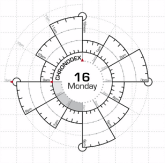
ChronodexI have blogged about the Chronodex a couple of times now as a Pen based Productivity Tool.

  • Pen based Productivity Tools – The Chronodex
  • Pen based Productivity Tools – The Chronodex – Part 2

This tool has now been enhanced and developed further into a Daily Scheduler and GTD (Get Things Done) Pen based tool.

Chronodex Daily Scheduler and GTD To-do List.pdf

Whilst nothing new in realms of GTD Tools, this is for the Midori Travellers Notebook for those who prefer a paper based “thing” opposed to an electronic “thing” and sets out an easy to use daily page. It can be used in a standalone version if a Midori is not owned.

Source :http://scription.typepad.com/

Share this:

  • Share on Facebook (Opens in new window) Facebook
  • Share on LinkedIn (Opens in new window) LinkedIn
  • Email a link to a friend (Opens in new window) Email
  • Share on Pinterest (Opens in new window) Pinterest
  • Share on Reddit (Opens in new window) Reddit
  • Share on X (Opens in new window) X
  • Share on Tumblr (Opens in new window) Tumblr
  • Share on Pocket (Opens in new window) Pocket
  • Share on Telegram (Opens in new window) Telegram
  • Share on Threads (Opens in new window) Threads
  • Share on WhatsApp (Opens in new window) WhatsApp
  • Share on Mastodon (Opens in new window) Mastodon
  • Share on Bluesky (Opens in new window) Bluesky
  • Share on Nextdoor (Opens in new window) Nextdoor
Like Loading...

Pen based Productivity Tools – The Chronodex – Part 2

12 Friday Jun 2015

Posted by Max Hemingway in Productivity, Tools

≈ 1 Comment

Tags

GTD, Productivity, Tools

If you have been using The Chronodex (I blogged about this back in January) you will soon be coming to the end of the 6 months in the tool. Patrick Ng has now released the next part for the second half of the year.

Download available from here

The format of the Chronodex is meant for the Midori Traveller Notebook style of (http://www.midori-japan.co.jp/tr/english/) but you don’t need one of these to use it.

Chronodex

Upon first glance it looks a bit quirky and hard to use, but once you get used to the format of the Chronodex it does become an interesting tool to use. A bit different from a normal day to a page diary with times down the side.

Using shading, colours or other types of marking you can block out parts of the Chronodex for tasks/appointments and add keys or words alongside the areas filled out.

Source: http://scription.typepad.com/

Share this:

  • Share on Facebook (Opens in new window) Facebook
  • Share on LinkedIn (Opens in new window) LinkedIn
  • Email a link to a friend (Opens in new window) Email
  • Share on Pinterest (Opens in new window) Pinterest
  • Share on Reddit (Opens in new window) Reddit
  • Share on X (Opens in new window) X
  • Share on Tumblr (Opens in new window) Tumblr
  • Share on Pocket (Opens in new window) Pocket
  • Share on Telegram (Opens in new window) Telegram
  • Share on Threads (Opens in new window) Threads
  • Share on WhatsApp (Opens in new window) WhatsApp
  • Share on Mastodon (Opens in new window) Mastodon
  • Share on Bluesky (Opens in new window) Bluesky
  • Share on Nextdoor (Opens in new window) Nextdoor
Like Loading...

Google I/O 2015 Event – Keynote Speech – Notes

28 Thursday May 2015

Posted by Max Hemingway in Innovation, IoT, Open Source, Productivity, Programming, Security, Wearable Tech

≈ Leave a comment

Tags

Innovation, IoT, Wearable Tech

Here are some notes from the Google I/O 2015 – Keynote Speech

Android Overview

  • Android – Supporting over 400 OEMs and over 4000 Devices
  • Android Wear – 7 Models Supported
  • Android Auto – Supporting 35 Brands
  • Andriod TV – Sony, Sharp, Philips shipping with Android. Many more to come
  • 17m ChromeCast Devices – 1.5B Cast Button Presses

M Developer Preview

  • Back to Basics – Solved thousands of Bugs
  • Focus on Quality
  • Improving the core User Experience

App Permissions
– Simplifying App Permissions
– Apps asking permission when using that feature at first use rather than at install
– Faster to get users up and running – updates are seamless – app control process

Web Experience + App Links
– App Dev’s care about the experience that the users get
– Linking App to Web smoother
-Chrome Custom Tabs
– Apps can auto verify links at install time to verify the app owns the links it says it does

Mobile Pay
– Standardising Fingerprint Support

Power & Charging
– Doze Feature using activity to monitor when less power is needed in the device
– up to 2x longer in power length
– USB Type C charger to increase charging by 3x to 5x
– Can be charged or feature to act as a charger

Other new features
– Easier word selection
– Direct Share
– Simplified volume controls
Android Wear

  • Wearable Apps
  • Always on Apps
  • Wrist Gestures (such as scroll up/scroll down
  • Emoji Recogniser (draw emoji’s that are then recognised and correct emoji is displayed then sent)
  • Launcher (improved)

Project Brillo – Underlying IOT Operating System

  • Derived from Android
  • Minimal system requirements
  • Broad Silicon support
  • Easy to secure
  • Q3 Developer Preview

Weave – IOT Communcations layer where things can talk to each other

  • Common Language
  • Standard Schema’s
  • Developers APIs
  • Run with Brillo
  • Cross Platform
  • Q4 2015 full stack released

Now On Tap

  • Takes advantage of M Developer
  • Provides deeper interaction through access to Googles back end systems and deep machine learning networks
  • Enhanced user experience with access to information in real time

Google Photos

  • Built a new experience
  • Home for photos private and secure – available any device
  • Organise
  • Share

Chrome

  • Lite Search Results supporting more countries
  • Optimised search page results load 4 x faster, 80% less bytes and 80MB reduction in memory usage
  • Network Quality Estimator – to load pages to quality of bandwidth
  • Improved Offline Support – Saves of pages

YouTube

  • YouTube Offline – up to 48 Hours to view the video

Maps

  • Offline Maps
  • Offline Navigation – step by step

Developers

Developing Apps
Android Studio 1.3
– Improved Gradle build speed
– New memory profiler
– Support for C/C++

Polymer 1.0
– Elements to easily drop in features

iOS
– Cocoapods for SDK distribution

Testing
– Cloud Test Lab – Automate testing of mobile apps
– Runs test across top 20 devices across the world

Engage

– App Indexing (50 billion app links)
– Cloud Messaging (70 billion messages a day)
– will support iOS
– Topic subscription

Mobile Web
– Push Notfications
– Add to Homescreen

App Install Ads
– Universal App Campains – auto campain based on budget
– Measure App Install Ads

Google Play
– Conversion Funnel – Dashboard across app
– Play Store Listing Experiments
– Developer Pages – Own Google Play Home Page

Earn
– AdMob & Google Analytics
– AdMob Mediation – 40 Ad Networks

Google Cardboard – Over 1 million users

  • Improved viewer – screens up to 6 inches
  • Cardboard SDK – build for Android and iOS
  • Expeditions – Education Travel for Schools – Synchronized phones and tables

Google Balloons

  • 100+ days in the air
  • 10 Mbps connectivity
  • 500m accuracy
  • 4 x coverage area
  • Local partners

Share this:

  • Share on Facebook (Opens in new window) Facebook
  • Share on LinkedIn (Opens in new window) LinkedIn
  • Email a link to a friend (Opens in new window) Email
  • Share on Pinterest (Opens in new window) Pinterest
  • Share on Reddit (Opens in new window) Reddit
  • Share on X (Opens in new window) X
  • Share on Tumblr (Opens in new window) Tumblr
  • Share on Pocket (Opens in new window) Pocket
  • Share on Telegram (Opens in new window) Telegram
  • Share on Threads (Opens in new window) Threads
  • Share on WhatsApp (Opens in new window) WhatsApp
  • Share on Mastodon (Opens in new window) Mastodon
  • Share on Bluesky (Opens in new window) Bluesky
  • Share on Nextdoor (Opens in new window) Nextdoor
Like Loading...

Email Overload

13 Monday Apr 2015

Posted by Max Hemingway in Productivity, Social Media, Tools

≈ Leave a comment

Tags

Communication, Email

stampsHaving just had a few days off I have come back to the usual full mailbox and a quota that’s blown so need to clear items out before I can send anything.

This is a very common place occurrence for people now, but how do we actually behave with and use email?

A recent study “Evolution of Conversations in the Age of Email Overload” carried out by Yahoo and Cornell University studied more than 2 million users exchanging 16 billion emails over several months.

The study itself shows some interesting results, but is based between pairs of people who send more than 5 replies to each other and have opted in to surveys which provides a level of bias into the survey.

Youngest email users, teens, have the fastest reply times; as users get older they become slower to reply to emails.

Email

The survey provides details on the response times (medians of results)

  • 13 minutes for Teens
  • 16 minutes for Young Adults (20–35 years old)
  • 24 minutes for Adults (36–50 years old)
  • 47 minutes for Mature users (51 and older)

These figures for me show how the Younger Generations are more reliant on technology and interact with social media at a more frequent rate than their peers. It would be interesting to see the results on a wider distribution of users and email interactions though and if that has a skew on the results, also what device the users have access to which may dictate the speed of the reply.

Source : http://arxiv.org/abs/1504.00704

Share this:

  • Share on Facebook (Opens in new window) Facebook
  • Share on LinkedIn (Opens in new window) LinkedIn
  • Email a link to a friend (Opens in new window) Email
  • Share on Pinterest (Opens in new window) Pinterest
  • Share on Reddit (Opens in new window) Reddit
  • Share on X (Opens in new window) X
  • Share on Tumblr (Opens in new window) Tumblr
  • Share on Pocket (Opens in new window) Pocket
  • Share on Telegram (Opens in new window) Telegram
  • Share on Threads (Opens in new window) Threads
  • Share on WhatsApp (Opens in new window) WhatsApp
  • Share on Mastodon (Opens in new window) Mastodon
  • Share on Bluesky (Opens in new window) Bluesky
  • Share on Nextdoor (Opens in new window) Nextdoor
Like Loading...

Professional vs Personal Social Media

26 Thursday Mar 2015

Posted by Max Hemingway in Productivity, Social Media

≈ 2 Comments

Tags

GTD, Productivity, Social Media

Having read an article from HBR on “How to Separate the Personal and Professional on Social Media” I decided to look at the Social Media tool I often use and in what part of my Professional and Personal life they fall.

Working on from my Personal Knowledge Management System there are a couple of others shown in the diagram. This is just my quick classification of SMT (Social Media Tools) – everyone else may have a different view such as Facebook for business to reach consumers in particular markets. However it is worth looking if you class the tools as Professional or Personal. A few do sit in the middle for me as they have a place on both sides of the page.

Some of the tools are clearly for Professional use, but some do step either way across the line.

One potential way of keeping things apart is multiple accounts on a platform, one personal and one professional, but it is important to understand and set some guidelines on how you use these.

SocialPP

If you are communicating on Social Media representing an employer, always check their policy on Social Media and communications.

If you don’t have any, there are a number of good rules available.  Kevan Lee has done some research into these and had come up with a list of 29 Social Media Rules

For all social networks

1. Share several times a day, but space out your posts every few hours.

2. Respond to all comments as quickly as you can.

3. Know the art of the hashtag. 1 hashtag is fine. 10 hashtags are not.

4. Always keep the 80/20 rule! Entertain and inform your audience first, sell to them second.

5. Use first person plural when talking about your company brand (We, Us).

For Twitter

6. Don’t automatically direct message people that follow you.

7. Don’t use all 140 characters. Give people room to retweet with a reply.

8. Don’t hijack another company’s hashtag.

9. Don’t buy followers.

10. Don’t stuff your tweets with keywords.

For Facebook

11. Don’t Like your own post.

12. Don’t post or tag photos of fans, customers, or employees without permission.

13. Don’t tag people or pages that aren’t relevant to your post.

14. Don’t ask for Likes, Comments, or Shares.

LinkedIn

15. Personalize your connection requests. Tell them WHY you’re connecting.

16. Once connected, send a “welcome” message.

17. Don’t join groups and immediately start selling yourself.

18. Don’t ignore the more professional tone of the network.

Google+

19. Always +mention users when commenting on their posts.

20. When sharing a post, always add your own commentary to it first.

21. Share to Circles to target your content.

22. Use Google+ formatting for your text—bold, italics, and strikethrough.

Pinterest

23. Don’t neglect to provide good descriptions for your pins.

24. Always link back to the original source and give credit.

25. Don’t use images that have nothing to do with your clickthrough content to get more pins or clicks.

26. Don’t pin just your own material.

Instagram

27. Don’t ask people to follow you or use hashtags like #tagsforlikes – it’s unprofessional.

28. Don’t overgram. No one likes their feed filled up with one user.

29. Use hashtags for your brand appropriately. The golden number of hashtags is 11.

– Kevan Lee (https://blog.bufferapp.com/social-media-rules-etiquette)

Social Media seems to have taken the theory of Six Degrees of Separation and in some cases turned it into One or Two Degrees of Separation!

Share this:

  • Share on Facebook (Opens in new window) Facebook
  • Share on LinkedIn (Opens in new window) LinkedIn
  • Email a link to a friend (Opens in new window) Email
  • Share on Pinterest (Opens in new window) Pinterest
  • Share on Reddit (Opens in new window) Reddit
  • Share on X (Opens in new window) X
  • Share on Tumblr (Opens in new window) Tumblr
  • Share on Pocket (Opens in new window) Pocket
  • Share on Telegram (Opens in new window) Telegram
  • Share on Threads (Opens in new window) Threads
  • Share on WhatsApp (Opens in new window) WhatsApp
  • Share on Mastodon (Opens in new window) Mastodon
  • Share on Bluesky (Opens in new window) Bluesky
  • Share on Nextdoor (Opens in new window) Nextdoor
Like Loading...

Lunch? No I’ve got a meeting!

19 Thursday Mar 2015

Posted by Max Hemingway in Productivity

≈ 3 Comments

Tags

GTD, Productivity

A recent study from the University of Toronto looked at Restorative Lunch Breaks and the effect of having a good relaxing lunch break on employees.

The study found that relaxing activities during lunch, freely-chosen by workers, led to the least amount of reported fatigue at the end of the day.  Getting work done resulted in employees appearing more tired, but that effect was reduced when employees felt it was their decision.Socializing, however, also led to higher levels of fatigue; something the paper says has to do with whether workers feel free to decide if they want to socialize and who they’re socializing with.

Bupa state that “UK companies are losing close to £50 million a day in lost productivity as workers fail to take a lunch break”.

Bupa also point out that the levels of productivity plummet in the afternoon if no lunch break is taken. A similar finding to the University of Toronto.

The UK Government state that “Workers have the right to one uninterrupted 20 minute rest break during their working day (this could be a tea or lunch break), if they work more than 6 hours a day.” But how many workers are actually doing this?

To get around this I have block booked a whole year of Lunch Breaks in my diary to try and reclaim sometime around Lunch to disengage and get away from the keyboard. An ambitious move! time will tell if it works. The challenge to this approach though is that people booking slots into your diary do not often use the booking tools to identify a free/busy time and book it because they are free at that time.

Share this:

  • Share on Facebook (Opens in new window) Facebook
  • Share on LinkedIn (Opens in new window) LinkedIn
  • Email a link to a friend (Opens in new window) Email
  • Share on Pinterest (Opens in new window) Pinterest
  • Share on Reddit (Opens in new window) Reddit
  • Share on X (Opens in new window) X
  • Share on Tumblr (Opens in new window) Tumblr
  • Share on Pocket (Opens in new window) Pocket
  • Share on Telegram (Opens in new window) Telegram
  • Share on Threads (Opens in new window) Threads
  • Share on WhatsApp (Opens in new window) WhatsApp
  • Share on Mastodon (Opens in new window) Mastodon
  • Share on Bluesky (Opens in new window) Bluesky
  • Share on Nextdoor (Opens in new window) Nextdoor
Like Loading...

Recording your CPD

02 Monday Mar 2015

Posted by Max Hemingway in Productivity

≈ 8 Comments

Tags

CPD, learning, Productivity

There are many methods for recording your CPD (Continuous Professional Development) plans available on the internet and through various professional bodies.

For me I prefer a Spreadsheet with a few column headings. Its what goes into those headings that makes the record though:

Date

Date the training took place

Training

This is the title of the training and any course number/reference

Category

I split the training up into various categories such as:

  • Architecture Training
  • Finance
  • Innovation
  • Leadership
  • Security
  • Strategy
  • Technical Training
  • Vendor Training

Sub Category

Under each of the Categories I then divide into a number of Sub Categories so I can view how much training I have undertaken on a particular subject. These can vary as each Category can have many Sub Categories, however I do not split more than around 5 per one Category.

For example I split Leadership into:

  • Communication
  • Emotional & Business Intelligence
  • Engagement
  • Leadership
  • Staff Management

Source

This is normally a URL or name of site/book

Training Type

This is the type of training such as:

  • MOOC
  • Online Class
  • Replay
  • Webinar

Time

This is the length of time that you spend learning. Even a 5 minute video here and there on a subject you are learning adds up.

Key Learning

Under this heading I list the key points from the training as a reminder as to the learning points. Bit like a flash card. This is normally a list of the key points.

Using a CPD Cycle reminds me to reflect on what I have learnt and how I will apply it. Also what I need to relearn or expand on in future training.

CPD Cycle

Share this:

  • Share on Facebook (Opens in new window) Facebook
  • Share on LinkedIn (Opens in new window) LinkedIn
  • Email a link to a friend (Opens in new window) Email
  • Share on Pinterest (Opens in new window) Pinterest
  • Share on Reddit (Opens in new window) Reddit
  • Share on X (Opens in new window) X
  • Share on Tumblr (Opens in new window) Tumblr
  • Share on Pocket (Opens in new window) Pocket
  • Share on Telegram (Opens in new window) Telegram
  • Share on Threads (Opens in new window) Threads
  • Share on WhatsApp (Opens in new window) WhatsApp
  • Share on Mastodon (Opens in new window) Mastodon
  • Share on Bluesky (Opens in new window) Bluesky
  • Share on Nextdoor (Opens in new window) Nextdoor
Like Loading...

Architecture Thought Tool: Working out your Risks

24 Tuesday Feb 2015

Posted by Max Hemingway in Architecture, Enterprise Architecture, Governance, Productivity, Tools

≈ Leave a comment

Tags

Architecture, Productivity, Tools

An Architecture Thought Tool I use when looking to identify any Risks in a projects or assignment is to use the STORMCLOUD method.

This involves identifying the risks by going through the following areas:

  • ScheduleRisk
  • Technology
  • Organisation
  • Resources
  • Methods
  • Compatibility
  • Lifecycle
  • Over-engineering
  • Users
  • Dependencies
  • Suppliers

Once identified its then a case of mitigating the risks that can be and calling out those that cannot.

Using this method is just one of many, but helps focus on the important areas to consider.

Share this:

  • Share on Facebook (Opens in new window) Facebook
  • Share on LinkedIn (Opens in new window) LinkedIn
  • Email a link to a friend (Opens in new window) Email
  • Share on Pinterest (Opens in new window) Pinterest
  • Share on Reddit (Opens in new window) Reddit
  • Share on X (Opens in new window) X
  • Share on Tumblr (Opens in new window) Tumblr
  • Share on Pocket (Opens in new window) Pocket
  • Share on Telegram (Opens in new window) Telegram
  • Share on Threads (Opens in new window) Threads
  • Share on WhatsApp (Opens in new window) WhatsApp
  • Share on Mastodon (Opens in new window) Mastodon
  • Share on Bluesky (Opens in new window) Bluesky
  • Share on Nextdoor (Opens in new window) Nextdoor
Like Loading...

Cherish, Adorn and Construct

19 Thursday Feb 2015

Posted by Max Hemingway in Productivity

≈ Leave a comment

Tags

Journal, Productivity

In the front of each of my Journals I normally write a quote to help inspire the words I am crafting to tell my tale.

The one I use the most is by Clough Williams-Ellis which I find helps me when considering problems and solutions as well as writing:

Cherish the past, adorn the present and construct for the future

– Clough William-Ellis

Maybe it will help to inspire you to…….

Share this:

  • Share on Facebook (Opens in new window) Facebook
  • Share on LinkedIn (Opens in new window) LinkedIn
  • Email a link to a friend (Opens in new window) Email
  • Share on Pinterest (Opens in new window) Pinterest
  • Share on Reddit (Opens in new window) Reddit
  • Share on X (Opens in new window) X
  • Share on Tumblr (Opens in new window) Tumblr
  • Share on Pocket (Opens in new window) Pocket
  • Share on Telegram (Opens in new window) Telegram
  • Share on Threads (Opens in new window) Threads
  • Share on WhatsApp (Opens in new window) WhatsApp
  • Share on Mastodon (Opens in new window) Mastodon
  • Share on Bluesky (Opens in new window) Bluesky
  • Share on Nextdoor (Opens in new window) Nextdoor
Like Loading...

#YourActionBob! – Hashtags in Emails

12 Thursday Feb 2015

Posted by Max Hemingway in Productivity, Social Media

≈ Leave a comment

Tags

#, Communication, Email, Hashtag, Social Media

hashtag

Hashtags, either love them or hate them, but they are here for the long term and they are spreading.

Recently I have started to receive a number of emails (from different people) using the Hashtags for things such as #Max to indicate the bit that I need to read in the email when its gone to multiple recipients or #Action for the things I need to do.

Typically I have always received emails with the words Max or Action in them, but the addition of the # is more recent. It certainly makes the words on the page noticed a bit more as its a character my eyes are not normally used to seeing.

There is certainly an ever decreasing line between social media and work communication etiquette.

Maybe its time to update the definition to include emails.

hashtag
ˈhaʃtaɡ/
noun
a word or phrase preceded by a hash sign (#), used on social media sites such as Twitter to identify messages on a specific topic.

-Google-

(PS. If anyone called Bob is reading this its not really your action)

Share this:

  • Share on Facebook (Opens in new window) Facebook
  • Share on LinkedIn (Opens in new window) LinkedIn
  • Email a link to a friend (Opens in new window) Email
  • Share on Pinterest (Opens in new window) Pinterest
  • Share on Reddit (Opens in new window) Reddit
  • Share on X (Opens in new window) X
  • Share on Tumblr (Opens in new window) Tumblr
  • Share on Pocket (Opens in new window) Pocket
  • Share on Telegram (Opens in new window) Telegram
  • Share on Threads (Opens in new window) Threads
  • Share on WhatsApp (Opens in new window) WhatsApp
  • Share on Mastodon (Opens in new window) Mastodon
  • Share on Bluesky (Opens in new window) Bluesky
  • Share on Nextdoor (Opens in new window) Nextdoor
Like Loading...
← Older posts
Newer posts →

Follow Me on LinkedIn

www.linkedin.com – Click to Follow 

RSS Feed

RSS Feed RSS - Posts

Other Publications I contribute to

https://sparrowhawkbushcraft.com/

Recent Posts

  • Graceful Speech & Timeless Tales: Unlocking the Power of Tone
  • Why Boards Overlook Enterprise Architecture
  • Graceful Speech & Timeless Tales: The Elements of Elocution
  • 2026 PKMS Updates: Boost Productivity and Knowledge Retention
  • Graceful Speech & Timeless Tales: Breathing

Categories

  • 21st Century Human
  • 3D Printing
  • AI
  • Applications
  • ArchiMate
  • Architecture
  • Arduino
  • Automation
  • BCS
  • Big Data
  • Certification
  • Climate Change
  • Cloud
  • Cobotics
  • Connected Home
  • Data
  • Data Fellowship
  • Data Science
  • Development
  • DevOps/OpsDev
  • Digital
  • DigitalFit
  • Drone
  • Enterprise Architecture
  • F-TAG
  • Governance
  • Health
  • Innovation
  • IoT
  • Machine Learning
  • Metaverse
  • Micro:Bit
  • Mindset
  • Mobiles
  • Networks
  • Open Source
  • Podcasts
  • Productivity
  • Programming
  • Quantum
  • Raspberry Pi
  • Robotics
  • Scouting
  • Scouts
  • Security
  • Smart Home
  • Social Media
  • Space
  • STEM
  • Story Telling
  • Technologists Toolkit
  • Tools
  • Uncategorized
  • Wearable Tech
  • Windows
  • xR

Archives

Reading Shelf

Archives

Recent Posts

  • Graceful Speech & Timeless Tales: Unlocking the Power of Tone
  • Why Boards Overlook Enterprise Architecture
  • Graceful Speech & Timeless Tales: The Elements of Elocution
  • 2026 PKMS Updates: Boost Productivity and Knowledge Retention
  • Graceful Speech & Timeless Tales: Breathing

Top Posts & Pages

  • Why Boards Overlook Enterprise Architecture
  • Results from IT Professionals and CPD Survey
  • Configuring the Raspberry PI with Ansible and AWSCLI
  • Taking your coding to the next level - Scratch to Python
  • Understanding ETSI TS 104 223 and ISO/IEC 42006
  • Continuous Delivery Visualisations
  • Digital Fit in 2018: Build up a Readership

Category Cloud

21st Century Human Architecture Automation Big Data Cloud Data Data Science Development DevOps/OpsDev Digital DigitalFit Enterprise Architecture Innovation IoT Machine Learning Mindset Open Source Podcasts Productivity Programming Raspberry Pi Robotics Security Social Media STEM Story Telling Technologists Toolkit Tools Uncategorized Wearable Tech

Tags

3D Printing 21st Century Human AI Applications ArchiMate Architecture artificial-intelligence Automation BCS Big Data Blockchain business Certification Cloud Cobot Cobotics Coding Communication Connected Home CPD creativity cybersecurity Data Data Fellowship Data Science Delivery Development DevOps Digital DigitalFit Digital Human Drone Email Enterprise Architecture GTD Infographic Information Theory Innovation IoT Journal Knowledge learning Machine Learning Metaverse MicroLearning Mindset Mixed Reality Networks Open Source OpsDev PKMS Podcasts Productivity Programming Proving It Quantum R RaspberryPI Robot Robotics Scouts Security Smart Home Social Media STEM Story Telling Technologists Toolkit technology Technology Couch Podcast Thinking Tools Visualisation Voice Wearable Tech xR

License

Creative Commons Licence
This work is licensed under a Creative Commons Attribution-NonCommercial-ShareAlike 4.0 International License.

Meta

  • Create account
  • Log in
  • Entries feed
  • Comments feed
  • WordPress.com

Blog at WordPress.com.

  • Subscribe Subscribed
    • Max Hemingway
    • Join 82 other subscribers
    • Already have a WordPress.com account? Log in now.
    • Max Hemingway
    • Subscribe Subscribed
    • Sign up
    • Log in
    • Report this content
    • View site in Reader
    • Manage subscriptions
    • Collapse this bar
 

Loading Comments...
 

    %d