• About Me Card

Max Hemingway

~ Musings as I work through life, career and everything.

Max Hemingway

Category Archives: Security

IoT Device Security Considerations and Security Layers – Sensor/Instruments

12 Monday Oct 2015

Posted by Max Hemingway in Architecture, IoT, Security

≈ 4 Comments

Tags

Architecture, IoT, Security

ThingsNext in the blog series “IoT Device Security Considerations and Security Layers” is Sensors and Instruments.

There are many different sensor types ranging from the consumer available to those used in industry and specialised, e.g:

  • Barometric Pressure sensor
  • Temperature sensor
  • Altitude sensor
  • Colour sensor
  • Accelerometer sensor
  • Compass sensor
  • Humidity sensor
  • Proximity sensor
  • Motion sensor
  • Light sensor
  • Roation sensor
  • Water sensor
  • Heat sensor

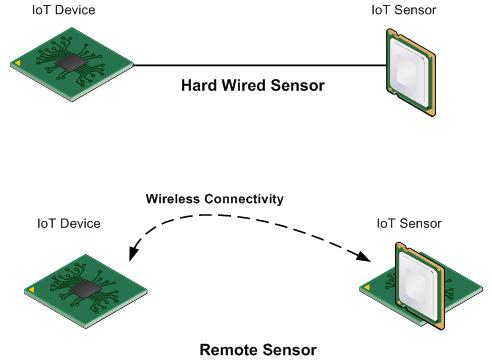
Sensors will typically be connected hard wired or remote.

IoT Sensors by Max Hemingway

Security for Wired sensors will be inherently secure as the connectivity is over a physical wire.

Where there is wireless connectivity the type of wireless used should be considered with security in mind. This is called a WSN (Wireless Sensor Network)

The list of considerations could be listed as:

  • Wireless Protocol
  • Authentication
  • Encryption
  • Pairing
  • Signal strengths and limitations
  • Certificates

Some good white papers that cover WSN’s and security considerations are:

  • Internet of Things: Wireless Sensor Networks
  • Wireless Sensor Networks and the Internet of Things: Do We Need a Complete Integration?

Share this:

  • Click to share on Facebook (Opens in new window) Facebook
  • Click to share on LinkedIn (Opens in new window) LinkedIn
  • Click to email a link to a friend (Opens in new window) Email
  • Click to share on Pinterest (Opens in new window) Pinterest
  • Click to share on Reddit (Opens in new window) Reddit
  • Click to share on Tumblr (Opens in new window) Tumblr
  • Click to share on Pocket (Opens in new window) Pocket
  • Click to share on Telegram (Opens in new window) Telegram
  • Click to share on Threads (Opens in new window) Threads
  • Click to share on WhatsApp (Opens in new window) WhatsApp
  • Click to share on Mastodon (Opens in new window) Mastodon
  • Click to share on X (Opens in new window) X
  • Click to share on Bluesky (Opens in new window) Bluesky
Like Loading...

IoT Device Security Considerations and Security Layers – Storage/Data

08 Thursday Oct 2015

Posted by Max Hemingway in Architecture, IoT, Security

≈ 4 Comments

Tags

Architecture, IoT, Security

ThingsThe next layer to cover in my blog series on IoT Device Security Considerations and Security Layers is that of Storage and Data.

Breaking IoT down to a basic form there will be two main sorts of IoT devices:

  • Those with local data storage on the IoT Device
  • and those without

That’s not to say that there would be a local storage system nearby such as sensors in a car having an on-board storage system for data that is then sent to a central system somewhere.

Either way, the future data economy will be huge. The IoT is predicted to create masses of data. Cisco have predicted this growing to 403 zettabytes a year by 2018.

Internet of Everything (IoE) Potential Impact on Cloud

●   Globally, the data created by IoE devices will reach 403 ZB per year (33.6 ZB per month) by 2018, up from 113.4 ZB per year (9.4 ZB per month) in 2013.

●   Globally, the data created by IoE devices will be 277 times higher than the amount of data being transmitted to data centers from end-user devices and 47 times higher than total data center traffic by 2018.

(Source Cisco)

That’s a lot of data to secure!

When looking at Storage and Data security the main consideration on securing data should be around data relevancy and what should actually be stored. This can be done locally at the IoT device with the programme/application collecting data at specific intervals or back at a collection system that applies policies to the data and filters out the relevant data, deleting the rest (Both could be done).

IoT Data by Max Hemingway

(Click diagram for a larger version)

Defining a Data Life Cycle is a key part to IoT Data Security.

Security of data on the device will depend upon the local security designed. There may be nothing stopping a sensor physically being stolen or tampered with, however electronically and through software other measures can be taken.

Storing data on a centralised solution and applying a level of security around that would provide a more secure environment as data transmitted could be encrypted through the network elements used.  Back end solutions will probably use standard solutions available today with well defined security standards and options available to secure data.

Where data is stored locally on the IoT device adding things like encryption at rest to data on a device may be necessary in some cases, but the flip side is an impact to the responsiveness of the device and data retrieval. This also adds to the complexity of the device and ultimately cost.

Personal security may also factor into the IoT Device solution, such as a wearable device on the wrist to record fitness data. As it is worn and secured onto the consumers wrist it may be classed as secure until the consumer went to a data point to upload their latest statistical data and analyse the results. Data is stored locally in this use case and then uploaded to a central point afterwards.

To summarise a list of considerations:

  • Local or Central Storage
  • Data Life Cycle
  • Data relevancy
  • Data retention policies
  • Encryption
  • Back end system data security
  • Security by use (ie. wearables)

Share this:

  • Click to share on Facebook (Opens in new window) Facebook
  • Click to share on LinkedIn (Opens in new window) LinkedIn
  • Click to email a link to a friend (Opens in new window) Email
  • Click to share on Pinterest (Opens in new window) Pinterest
  • Click to share on Reddit (Opens in new window) Reddit
  • Click to share on Tumblr (Opens in new window) Tumblr
  • Click to share on Pocket (Opens in new window) Pocket
  • Click to share on Telegram (Opens in new window) Telegram
  • Click to share on Threads (Opens in new window) Threads
  • Click to share on WhatsApp (Opens in new window) WhatsApp
  • Click to share on Mastodon (Opens in new window) Mastodon
  • Click to share on X (Opens in new window) X
  • Click to share on Bluesky (Opens in new window) Bluesky
Like Loading...

IoT Device Security Considerations and Security Layers – Chipset

07 Wednesday Oct 2015

Posted by Max Hemingway in Architecture, IoT, Security

≈ 4 Comments

Tags

Architecture, IoT, Security

ThingsContinuing the theme of IoT Security as first discussed in my post IoT Device Security Considerations and Security Layers, the next layer to look at is the Chipset.

There are lots of different chipsets available that can be used for IoT devices such as ARM, Intel, TI, etc. There are also lots of development platforms utilising these and other chipsets such as Raspberry Pi, Beagle, MinnowBoard MAX, Contiki, TinyOS, Nano-RK, Launchpad etc that consume these chipsets.

Chipset manufacturers have already recognised the importance of having a good security layer and security features within and supported by the chipsets manufactured for the IoT.

To build on this capability some manufactures are buying security solutions to complement and enhance, whilst others are creating.

  • ARM Expands IoT Security Capability with Acquisition of Sansa Security
  • Intel working with McAfee

These developments by Chipset manufacturers means that IoT Security is high on their agenda and provides the industry and consumer with a large amount of choice on additional security features based on chip and that can work with the chip in form of software.

As the IoT develops so will the security enhancements and capabilities of these devices.

Share this:

  • Click to share on Facebook (Opens in new window) Facebook
  • Click to share on LinkedIn (Opens in new window) LinkedIn
  • Click to email a link to a friend (Opens in new window) Email
  • Click to share on Pinterest (Opens in new window) Pinterest
  • Click to share on Reddit (Opens in new window) Reddit
  • Click to share on Tumblr (Opens in new window) Tumblr
  • Click to share on Pocket (Opens in new window) Pocket
  • Click to share on Telegram (Opens in new window) Telegram
  • Click to share on Threads (Opens in new window) Threads
  • Click to share on WhatsApp (Opens in new window) WhatsApp
  • Click to share on Mastodon (Opens in new window) Mastodon
  • Click to share on X (Opens in new window) X
  • Click to share on Bluesky (Opens in new window) Bluesky
Like Loading...

IoT Device Security Considerations and Security Layers – Power Source

06 Tuesday Oct 2015

Posted by Max Hemingway in Architecture, IoT, Security

≈ 4 Comments

Tags

Architecture, IoT, Security

ThingsFollowing on from my post on IoT Device Security Considerations and Security Layers the subject of this blog post is to look at the Power Source layer.

Power Sources for IoT Devices will differ depending upon the type of IoT Device being used or designed and its use, however they will fall into 3 main source of power.

  • Mains
  • Battery
  • Wireless

So how secure is a power source? There have been demonstrations on how data can be hacked through power outlets (How to use electrical outlets and cheap lasers to steal data) which have concentrated on using the fluctuations and noise in the power supply to work out what is being typed. This would effect both mains and wireless connections as these could be monitored in some way.  Battery presents a more secure method of providing a power supply.

At present any breaches using a power source are few and far between, however as the IoT connected world continues to evolve, perhaps this is one area that more security considerations are needed.

Not all IoT Devices will need mains power as there is a huge drive for wearables and mobile. The mains power would be aimed more at IoT devices within a business (such as plant machinery sensors) or a home system (turning on power or heating).

Mains also provides a medium to connect IoT devices such as Smart Meters or a Home Network over the mains using Ethernet to Power converters. IoT devices may well utilise this as a method to communicate back to a local hub, then off to a central hub via normal network connectivity.

There are already standards/rules for smart meters set out to protect devices and consumers around:

  • Data Access and Privacy
  • Security

(Smart meters and how they work)

Battery IoT Devices tend to be self contained for power and apart from a future change of the battery when its power expires connectivity and networking tend to be through the front end.

As the IoT advances there will be advancements in the protection for devices and in the rules that govern them. Not all devices will be equal with the same power needs, but one thing is constant. They all need power to operate in one form or another.

Some useful links:

  • IEEE IoT Standards
  • Groups and Communities currently discussing and creating IoT Standards

Share this:

  • Click to share on Facebook (Opens in new window) Facebook
  • Click to share on LinkedIn (Opens in new window) LinkedIn
  • Click to email a link to a friend (Opens in new window) Email
  • Click to share on Pinterest (Opens in new window) Pinterest
  • Click to share on Reddit (Opens in new window) Reddit
  • Click to share on Tumblr (Opens in new window) Tumblr
  • Click to share on Pocket (Opens in new window) Pocket
  • Click to share on Telegram (Opens in new window) Telegram
  • Click to share on Threads (Opens in new window) Threads
  • Click to share on WhatsApp (Opens in new window) WhatsApp
  • Click to share on Mastodon (Opens in new window) Mastodon
  • Click to share on X (Opens in new window) X
  • Click to share on Bluesky (Opens in new window) Bluesky
Like Loading...

IoT Device Security Considerations and Security Layers

05 Monday Oct 2015

Posted by Max Hemingway in IoT, Security

≈ 20 Comments

Tags

IoT, Security

ThingsSecurity is one of the main “IoT Standards” that a lot of groups, communities, vendors and manufacturers are currently tackling. The IoT is creating a vast amount of opportunities for sensors and devices to be created and used, but also creating a vast amount of security areas that need to be considered.

Due to the possible combinations of sensors and uses available for IoT devices this makes having a single standard or solution impossible. Instead security will evolve in a layered approach with the ability to be interlinked within a device in order to provide the layer of security needed. As well as combining these layers it is also important that any security applied is up to date and if possible has the ability to be kept up to date with latest patches and updates.

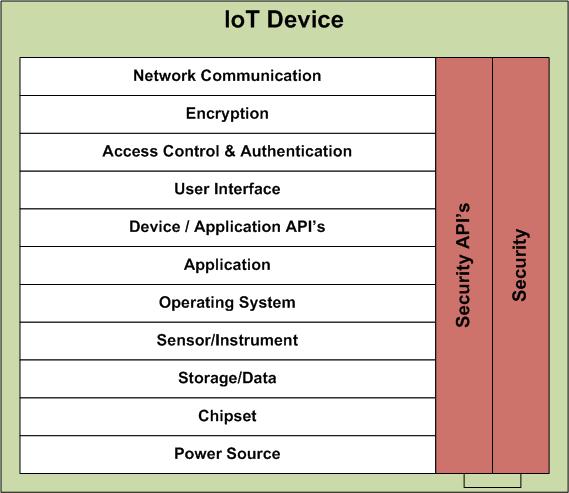
Below is an illustration of some possible layers that need to be considered when looking into designing an IoT device.

IoT Device Security

I will delve a bit deeper into each of these areas in following blog posts (Links below updated as each post is written)

  • Power Source
  • Chipset
  • Storage/Data
  • Sensor/Instrument
  • Operating System
  • Application
  • Device/Application API’s
  • User Interface
  • Access Control & Authentication
  • Encryption
  • Network Communication
  • Security/Security API’s

Share this:

  • Click to share on Facebook (Opens in new window) Facebook
  • Click to share on LinkedIn (Opens in new window) LinkedIn
  • Click to email a link to a friend (Opens in new window) Email
  • Click to share on Pinterest (Opens in new window) Pinterest
  • Click to share on Reddit (Opens in new window) Reddit
  • Click to share on Tumblr (Opens in new window) Tumblr
  • Click to share on Pocket (Opens in new window) Pocket
  • Click to share on Telegram (Opens in new window) Telegram
  • Click to share on Threads (Opens in new window) Threads
  • Click to share on WhatsApp (Opens in new window) WhatsApp
  • Click to share on Mastodon (Opens in new window) Mastodon
  • Click to share on X (Opens in new window) X
  • Click to share on Bluesky (Opens in new window) Bluesky
Like Loading...

The Internet of Security and Things

08 Tuesday Sep 2015

Posted by Max Hemingway in Big Data, Cloud, IoT, Security

≈ Leave a comment

Tags

Cloud, Data, IoT, Security

How secure is the Internet of Things?

Traditionally we have been used to MThingsalware protection and Anti-Virus on our PC’s, then moving to laptops and other devices. Now on phones and slowly moving towards
the Internet of Things.  One article in the news today caught my eye where it is reported that Malware is being found pre-installed on devices, in this case Mobile Phones. G Data Report

It would seem that the hackers are trying to get the jump on the industry well before the devices are falling into the hands of the consumer. This is not the first time such incidents have been reported.

The race for Internet of Things sensors, devices and “Things” is growing fast, however with these incidents of Malware being found, how long will it be before code is appearing on chips on sensors that shouldn’t be there.

There are lots of Operating Systems available for the IOT. These can be classed as the mainstream ones that appear in the news and everyone knows such as Microsoft, Raspberry Pi, Linux etc, to the less know ones that are used on chipsets such as Contiki, TinyOS, Nano-RK.   (See https://maxhemingway.com/2015/04/14/iot-operating-systems/).

There are a number of challenges for the IoT industry, businesses and consumers (this list is not exhaustive);

  • Authentication
  • Data Capture
  • Encryption
  • Intrusion – Application, Network and Physical
  • Location tracking
  • Malware/Anti-Virus
  • Service disruption
  • Taking control of devices

These threats will drive the Internet of Security to protect the Internet of Things.

Cisco is looking to tackle some of these by running a Security Grand Challenge to offer prizes to the best security solutions.

More competitions and challenges will probably emerge as the industries try to understand and protect against the risks and use a crowd source model to help protect the IoT.

Share this:

  • Click to share on Facebook (Opens in new window) Facebook
  • Click to share on LinkedIn (Opens in new window) LinkedIn
  • Click to email a link to a friend (Opens in new window) Email
  • Click to share on Pinterest (Opens in new window) Pinterest
  • Click to share on Reddit (Opens in new window) Reddit
  • Click to share on Tumblr (Opens in new window) Tumblr
  • Click to share on Pocket (Opens in new window) Pocket
  • Click to share on Telegram (Opens in new window) Telegram
  • Click to share on Threads (Opens in new window) Threads
  • Click to share on WhatsApp (Opens in new window) WhatsApp
  • Click to share on Mastodon (Opens in new window) Mastodon
  • Click to share on X (Opens in new window) X
  • Click to share on Bluesky (Opens in new window) Bluesky
Like Loading...

Google I/O 2015 Event – Keynote Speech – Notes

28 Thursday May 2015

Posted by Max Hemingway in Innovation, IoT, Open Source, Productivity, Programming, Security, Wearable Tech

≈ Leave a comment

Tags

Innovation, IoT, Wearable Tech

Here are some notes from the Google I/O 2015 – Keynote Speech

Android Overview

  • Android – Supporting over 400 OEMs and over 4000 Devices
  • Android Wear – 7 Models Supported
  • Android Auto – Supporting 35 Brands
  • Andriod TV – Sony, Sharp, Philips shipping with Android. Many more to come
  • 17m ChromeCast Devices – 1.5B Cast Button Presses

M Developer Preview

  • Back to Basics – Solved thousands of Bugs
  • Focus on Quality
  • Improving the core User Experience

App Permissions
– Simplifying App Permissions
– Apps asking permission when using that feature at first use rather than at install
– Faster to get users up and running – updates are seamless – app control process

Web Experience + App Links
– App Dev’s care about the experience that the users get
– Linking App to Web smoother
-Chrome Custom Tabs
– Apps can auto verify links at install time to verify the app owns the links it says it does

Mobile Pay
– Standardising Fingerprint Support

Power & Charging
– Doze Feature using activity to monitor when less power is needed in the device
– up to 2x longer in power length
– USB Type C charger to increase charging by 3x to 5x
– Can be charged or feature to act as a charger

Other new features
– Easier word selection
– Direct Share
– Simplified volume controls
Android Wear

  • Wearable Apps
  • Always on Apps
  • Wrist Gestures (such as scroll up/scroll down
  • Emoji Recogniser (draw emoji’s that are then recognised and correct emoji is displayed then sent)
  • Launcher (improved)

Project Brillo – Underlying IOT Operating System

  • Derived from Android
  • Minimal system requirements
  • Broad Silicon support
  • Easy to secure
  • Q3 Developer Preview

Weave – IOT Communcations layer where things can talk to each other

  • Common Language
  • Standard Schema’s
  • Developers APIs
  • Run with Brillo
  • Cross Platform
  • Q4 2015 full stack released

Now On Tap

  • Takes advantage of M Developer
  • Provides deeper interaction through access to Googles back end systems and deep machine learning networks
  • Enhanced user experience with access to information in real time

Google Photos

  • Built a new experience
  • Home for photos private and secure – available any device
  • Organise
  • Share

Chrome

  • Lite Search Results supporting more countries
  • Optimised search page results load 4 x faster, 80% less bytes and 80MB reduction in memory usage
  • Network Quality Estimator – to load pages to quality of bandwidth
  • Improved Offline Support – Saves of pages

YouTube

  • YouTube Offline – up to 48 Hours to view the video

Maps

  • Offline Maps
  • Offline Navigation – step by step

Developers

Developing Apps
Android Studio 1.3
– Improved Gradle build speed
– New memory profiler
– Support for C/C++

Polymer 1.0
– Elements to easily drop in features

iOS
– Cocoapods for SDK distribution

Testing
– Cloud Test Lab – Automate testing of mobile apps
– Runs test across top 20 devices across the world

Engage

– App Indexing (50 billion app links)
– Cloud Messaging (70 billion messages a day)
– will support iOS
– Topic subscription

Mobile Web
– Push Notfications
– Add to Homescreen

App Install Ads
– Universal App Campains – auto campain based on budget
– Measure App Install Ads

Google Play
– Conversion Funnel – Dashboard across app
– Play Store Listing Experiments
– Developer Pages – Own Google Play Home Page

Earn
– AdMob & Google Analytics
– AdMob Mediation – 40 Ad Networks

Google Cardboard – Over 1 million users

  • Improved viewer – screens up to 6 inches
  • Cardboard SDK – build for Android and iOS
  • Expeditions – Education Travel for Schools – Synchronized phones and tables

Google Balloons

  • 100+ days in the air
  • 10 Mbps connectivity
  • 500m accuracy
  • 4 x coverage area
  • Local partners

Share this:

  • Click to share on Facebook (Opens in new window) Facebook
  • Click to share on LinkedIn (Opens in new window) LinkedIn
  • Click to email a link to a friend (Opens in new window) Email
  • Click to share on Pinterest (Opens in new window) Pinterest
  • Click to share on Reddit (Opens in new window) Reddit
  • Click to share on Tumblr (Opens in new window) Tumblr
  • Click to share on Pocket (Opens in new window) Pocket
  • Click to share on Telegram (Opens in new window) Telegram
  • Click to share on Threads (Opens in new window) Threads
  • Click to share on WhatsApp (Opens in new window) WhatsApp
  • Click to share on Mastodon (Opens in new window) Mastodon
  • Click to share on X (Opens in new window) X
  • Click to share on Bluesky (Opens in new window) Bluesky
Like Loading...

IoT Operating Systems

14 Tuesday Apr 2015

Posted by Max Hemingway in Architecture, IoT, Programming, Security

≈ 1 Comment

Tags

Architecture, Development, Innovation, IoT

A recent paper from the Cornell University has been published that covers a “Survey of Operating Systems for the IoT Environment“. (IoT = Internet of Things). Things

It looks at the Operating Systems produced for the chipsets used in IoT sensors, RFID and devices.

The paper lists the following Operating Systems and provides an overview of their capabilities and aligned chipsets.

  • mbed (ARM)
  • RIOT OS
  • Contiki
  • TinyOS
  • Nano-RK
  • FreeRTOS

The paper is worth a read if you want a good overview of IoT Operating Systems and their capabilities.

Source: http://arxiv.org/ftp/arxiv/papers/1504/1504.02517.pdf

Share this:

  • Click to share on Facebook (Opens in new window) Facebook
  • Click to share on LinkedIn (Opens in new window) LinkedIn
  • Click to email a link to a friend (Opens in new window) Email
  • Click to share on Pinterest (Opens in new window) Pinterest
  • Click to share on Reddit (Opens in new window) Reddit
  • Click to share on Tumblr (Opens in new window) Tumblr
  • Click to share on Pocket (Opens in new window) Pocket
  • Click to share on Telegram (Opens in new window) Telegram
  • Click to share on Threads (Opens in new window) Threads
  • Click to share on WhatsApp (Opens in new window) WhatsApp
  • Click to share on Mastodon (Opens in new window) Mastodon
  • Click to share on X (Opens in new window) X
  • Click to share on Bluesky (Opens in new window) Bluesky
Like Loading...

Time to get chipped?

13 Friday Feb 2015

Posted by Max Hemingway in Security, Wearable Tech

≈ 3 Comments

Tags

Wearable Tech

There is a choice at the moment to wear or not to wear tech, but in the future will there be? An interesting article on the BBC tells of an office puts chips into staff. Whist this is not new – how long before you cant get your next job without getting chipped.

As there are no current standards on chips used you may end up with the below situation.

Hiyoumustbethecontractor

Share this:

  • Click to share on Facebook (Opens in new window) Facebook
  • Click to share on LinkedIn (Opens in new window) LinkedIn
  • Click to email a link to a friend (Opens in new window) Email
  • Click to share on Pinterest (Opens in new window) Pinterest
  • Click to share on Reddit (Opens in new window) Reddit
  • Click to share on Tumblr (Opens in new window) Tumblr
  • Click to share on Pocket (Opens in new window) Pocket
  • Click to share on Telegram (Opens in new window) Telegram
  • Click to share on Threads (Opens in new window) Threads
  • Click to share on WhatsApp (Opens in new window) WhatsApp
  • Click to share on Mastodon (Opens in new window) Mastodon
  • Click to share on X (Opens in new window) X
  • Click to share on Bluesky (Opens in new window) Bluesky
Like Loading...

IoT Cloak of Invisibility

10 Tuesday Feb 2015

Posted by Max Hemingway in Cloud, Innovation, IoT, Security

≈ Leave a comment

Tags

Cloud, Innovation, IoT, Security

With the upsurge in the IoT (Internet of Things), wearable tech and the desire to be constantly connected within the world, there is also now an emerging market of other things to protect yourself as security devices.

Once such item is an RFID Blocking Wallet that protects your debit and credit cards from giving off data or paying for things that you were not aware of – “Contactless ‘charging errors’ at Marks and Spencer”.

Redcoat

Maybe going forward may see a “Cloak of Invisibility” not as a garment to turn is completely invisible to the naked eye, but more a garment that blocks our signals from the IoT providing a high level of personal security or as a “Firewall Blanket” or a “Firewall Coat/Garment” maybe letting certain of your information through. Providing a layer of protection and security to the user.

I see this as maybe working at a thread level within the garment using low level power flows to disrupt the signals of the IoT or being used to broadcast a blocking frequency, only allowing certain frequencies/digital pulses out and in.

As the IoT develops, I’m sure the level of personal security will as well.

Share this:

  • Click to share on Facebook (Opens in new window) Facebook
  • Click to share on LinkedIn (Opens in new window) LinkedIn
  • Click to email a link to a friend (Opens in new window) Email
  • Click to share on Pinterest (Opens in new window) Pinterest
  • Click to share on Reddit (Opens in new window) Reddit
  • Click to share on Tumblr (Opens in new window) Tumblr
  • Click to share on Pocket (Opens in new window) Pocket
  • Click to share on Telegram (Opens in new window) Telegram
  • Click to share on Threads (Opens in new window) Threads
  • Click to share on WhatsApp (Opens in new window) WhatsApp
  • Click to share on Mastodon (Opens in new window) Mastodon
  • Click to share on X (Opens in new window) X
  • Click to share on Bluesky (Opens in new window) Bluesky
Like Loading...
Newer posts →

RSS Feed

RSS Feed RSS - Posts

Other Publications I contribute to

https://sparrowhawkbushcraft.com/

Recent Posts

  • Graceful Speech & Timeless Tales: Mastering the Art of Gesture
  • Graceful Speech & Timeless Tales: The Power of Pitch
  • Graceful Speech & Timeless Tales: Modulation
  • Graceful Speech & Timeless Tales: Harnessing Inflection
  • Adventure Games: Open Sourced Zork

Categories

  • 21st Century Human
  • 3D Printing
  • AI
  • Applications
  • ArchiMate
  • Architecture
  • Arduino
  • Automation
  • BCS
  • Big Data
  • Certification
  • Climate Change
  • Cloud
  • Cobotics
  • Connected Home
  • Data
  • Data Fellowship
  • Data Science
  • Development
  • DevOps/OpsDev
  • Digital
  • DigitalFit
  • Drone
  • Enterprise Architecture
  • F-TAG
  • Governance
  • Health
  • Innovation
  • IoT
  • Machine Learning
  • Metaverse
  • Micro:Bit
  • Mindset
  • Mobiles
  • Networks
  • Open Source
  • Podcasts
  • Productivity
  • Programming
  • Quantum
  • Raspberry Pi
  • Robotics
  • Scouting
  • Scouts
  • Security
  • Smart Home
  • Social Media
  • Space
  • STEM
  • Story Telling
  • Technologists Toolkit
  • Tools
  • Uncategorized
  • Wearable Tech
  • Windows
  • xR

Archives

Reading Shelf

Archives

Recent Posts

  • Graceful Speech & Timeless Tales: Mastering the Art of Gesture
  • Graceful Speech & Timeless Tales: The Power of Pitch
  • Graceful Speech & Timeless Tales: Modulation
  • Graceful Speech & Timeless Tales: Harnessing Inflection
  • Adventure Games: Open Sourced Zork

Top Posts & Pages

  • Graceful Speech & Timeless Tales: The Art of Articulation
  • Graceful Speech & Timeless Tales: Modulation
  • Graceful Speech & Timeless Tales: The Power of Pitch
  • Graceful Speech & Timeless Tales: Mastering the Art of Gesture
  • Mastering the CPD Cycle for Professional Growth
  • Adventure Games: Open Sourced Zork
  • 20 Informative Podcasts for 2025: Boost Your PKMS
  • Understanding ISO/IEC 42001: A Course Review
  • Building Cyber Resilience: Enterprise Architecture and ArchiMate for Strategic Security
  • Pen based Productivity Tools – The Chronodex 2025

Category Cloud

21st Century Human Architecture Automation Big Data Cloud Data Data Science Development DevOps/OpsDev Digital DigitalFit Enterprise Architecture Innovation IoT Machine Learning Mindset Open Source Podcasts Productivity Programming Raspberry Pi Robotics Security Social Media STEM Story Telling Technologists Toolkit Tools Uncategorized Wearable Tech

Tags

3D Printing 21st Century Human AI Applications Architecture artificial-intelligence Automation BCS Big Data Blockchain business Certification Cloud Cobot Cobotics Coding Communication Connected Home CPD creativity cybersecurity Data Data Fellowship Data Science Delivery Development DevOps Digital DigitalFit Digital Human Drone Email Enterprise Architecture GTD Infographic Information Theory Innovation IoT Journal Knowledge learning Machine Learning Metaverse MicroLearning Mindset Mixed Reality Networks Open Source OpsDev PKMS Podcasts Productivity Programming Proving It Quantum R RaspberryPI Robot Robotics Scouts Security Smart Home Social Media STEM Story Telling Technologists Toolkit technology Technology Couch Podcast Thinking Tools Training Visualisation Voice Wearable Tech xR

License

Creative Commons Licence
This work is licensed under a Creative Commons Attribution-NonCommercial-ShareAlike 4.0 International License.

Meta

  • Create account
  • Log in
  • Entries feed
  • Comments feed
  • WordPress.com

Blog at WordPress.com.

  • Subscribe Subscribed
    • Max Hemingway
    • Join 82 other subscribers
    • Already have a WordPress.com account? Log in now.
    • Max Hemingway
    • Subscribe Subscribed
    • Sign up
    • Log in
    • Report this content
    • View site in Reader
    • Manage subscriptions
    • Collapse this bar
 

Loading Comments...
 

    %d