• About Me Card

Max Hemingway

~ Musings as I work through life, career and everything.

Max Hemingway

Category Archives: Uncategorized

A-Z of Digital – B is for Blockchain

27 Tuesday Jun 2017

Posted by Max Hemingway in Digital, Uncategorized

≈ Leave a comment

Tags

Blockchain, Digital

LearningFollowing on from my blog post outlining an A-Z of Digital, here is “B is for Blockchain”

What is a Blockchain. Well there are lots of articles on Blockchains that explain them, so rather than repeat, I will reference a some colleagues blog posts.

A blockchain– originally block chain – is a distributed database that is used to maintain a continuously growing list of records, called blocks. Each block contains a timestamp and a link to a previous block. A blockchain is typically managed by a peer-to-peer network collectively adhering to a protocol for validating new blocks. By design, blockchains are inherently resistant to modification of the data. Once recorded, the data in any given block cannot be altered retroactively without the alteration of all subsequent blocks and the collusion of the network. Functionally, a blockchain can serve as “an open, distributed ledger that can record transactions between two parties efficiently and in a verifiable and permanent way. The ledger itself can also be programmed to trigger transactions automatically.”

Source: https://en.wikipedia.org/wiki/Blockchain

One common train of thought that can occur when talking about Blockchains is to also think about Bitcoins. Often associated due to Bitcoins using Blockchains for their transactions, there are other uses for Blockchains.  A colleague Neil Fagan covers this point in his blog on Bitcoins and Blockchains

Blockchains are secure by design (another colleague Faisal Siddiqi discusses this in his blog post Blockchains and Birthdays). The ledger method makes their use ideal in many industry sectors including, Healthcare, Banking, Insurance and Legal where transactions can be time stamped, verified automatically, encrypted and trusted. This helps reduce the amount of fraud with transactions being proved. Some of these verticals are covered in a number of posts by colleagues listed below with some excerpts from their blogs:

Exploring Blockchain in Banking

Blockchain or, more precisely, Distributed Ledger Technology (DLT) is currently one of the hot topics in the banking industry.

Its main focus is on clearing and settlement, where DLT can reduce reconcile efforts, address liquidity needs and accelerate processing. Several reports and studies suggest benefits and substantial savings – in particular, when DLT is applied in financial market infrastructures spanning multiple jurisdictions. But there are also a number of open points, not least in the legal and regulatory realms.

On the blockchain, nobody knows you’re a fridge

A compelling scenario could be an insurance policy blockchain smart contract with multiple transactions throughout its lifecycle. An initial purchase transaction would trigger an automatic deposit of monetary assets into the contract. A second transaction might add documentation proving ownership and value of real world property being insured. Subsequently, a loss notice event from an external claims system might trigger a Claim transaction which would execute autonomous Verification and Payout smart contracts. The policyholder would not need to file a claim, and the insurer would not have to administer it. This would reduce the potential for fraud, decrease administration costs and simplify the claims process.

Decentralization – The Napster-Metallica connection

In addition to the elegant technology behind distributed blockchain applications, there is a solid business proposition to be made. With Bitcoin having successfully demonstrated the decentralization of money, it becomes feasible to consider that all kinds of other transactions can also be decentralized on blockchains with similar benefits. Decentralized applications are being developed on blockchains for tracking the provenance of diamonds, simplifying interoperability of electronic health records, adding IoT smarts to the power grid and disrupting a range of industries with these other fascinating use cases.

Blockchain: Trusting the Genie in the Lamp

In some cultures, a handshake is as good as a contract. In some situations, emotional intelligence plays a role in shaping how a person responds to another person, and the trust level you build. In the blockchain world, this interaction will be unnecessary; a person will simply trust another through the use of a software program.

Additional Reading:

  • Blockchain in Healthcare: SWOT Analysis
  • Blockchain in Healthcare: From theory to reality

Share this:

  • Share on Facebook (Opens in new window) Facebook
  • Share on LinkedIn (Opens in new window) LinkedIn
  • Email a link to a friend (Opens in new window) Email
  • Share on Pinterest (Opens in new window) Pinterest
  • Share on Reddit (Opens in new window) Reddit
  • Share on X (Opens in new window) X
  • Share on Tumblr (Opens in new window) Tumblr
  • Share on Pocket (Opens in new window) Pocket
  • Share on Telegram (Opens in new window) Telegram
  • Share on Threads (Opens in new window) Threads
  • Share on WhatsApp (Opens in new window) WhatsApp
  • Share on Mastodon (Opens in new window) Mastodon
  • Share on Bluesky (Opens in new window) Bluesky
  • Share on Nextdoor (Opens in new window) Nextdoor
Like Loading...

Another step towards personal AI’s

28 Friday Apr 2017

Posted by Max Hemingway in Uncategorized

≈ Leave a comment

MachineThere have been many different attempts to create a J.A.R.V.I.S type of AI system to act as a personal assistant, able to interact with you and automate things.  (If your not sure what J.A.R.V.I.S is then you need to look up on Marvels Iron Man and his AI Assistant).

These have been from high profile people like Mark Zuckerberg (Facebook) creating a version on J.A.R.V.I.S in his home, voiced by Morgan Freeman. This system has linked simple things like lights, music and toasters which all have IoT devices that you can link together, to more elaborate items such as a t-shirt dispenser, motors to open the curtains and face recognition door system. The brains behind is based on a chat bot and mobile app that the user can integrate with. Details in Mark’s blog post: Building Jarvis

Video: Mark Zuckerberg’s AI – Personal Assistant – Jarvis – Home Automation

Other J.A.R.V.I.S examples and developments  range from simple lights and desktop interactions, to Amazon Alexa being used to control interactions with apps called J.A.R.V.I.S.

If you are looking to build an open source version there is JASPER using a Raspberry PI and other components.  You could always build a version of Alexa on a Raspberry PI

The explosion of IoT and Voice controls is driving innovation and making it easier to start building your own version of J.A.R.V.I.S. There have been several recent announcements from Amazon that help with this:

Amazon have announced the Amazon Echo Look which is a device that can take a photo of you through an Amazon Alexa providing voice commands for the look and then displaying on your app. Another addition is Style Check which can compare your photos and using machine learning check against the latest fashion advise.

Another announcement from Amazon is LEX, which is the program behind aLEXa (Alexa) which has been opened up for developers to start creating conversational chat bots using voice and text.

For those thinking about an actual Iron Man Suit – Richard Browning is certainly a step closer to that vision – Richard Browning and his Real-Life Iron Man Jet Pack Suit

“Adding J.A.R.V.I.S Project to To-Do List.”


Share this:

  • Share on Facebook (Opens in new window) Facebook
  • Share on LinkedIn (Opens in new window) LinkedIn
  • Email a link to a friend (Opens in new window) Email
  • Share on Pinterest (Opens in new window) Pinterest
  • Share on Reddit (Opens in new window) Reddit
  • Share on X (Opens in new window) X
  • Share on Tumblr (Opens in new window) Tumblr
  • Share on Pocket (Opens in new window) Pocket
  • Share on Telegram (Opens in new window) Telegram
  • Share on Threads (Opens in new window) Threads
  • Share on WhatsApp (Opens in new window) WhatsApp
  • Share on Mastodon (Opens in new window) Mastodon
  • Share on Bluesky (Opens in new window) Bluesky
  • Share on Nextdoor (Opens in new window) Nextdoor
Like Loading...

STEM Choosing your Subjects

14 Friday Apr 2017

Posted by Max Hemingway in Uncategorized

≈ 1 Comment

books-2158737_1920-e1492199588553.jpgIts easy for the older generations to look at the subjects available at Schools that relate to STEM (Science, Technology, Engineering and Mathematics) and understand the value that they hold in the workplace today, however looking through the lens of young person choosing their option subjects its not so easy.

How do I know? Well, I am basing this on what is going on in my family circle at the moment with my son having just gone through the myriad of options available and what he wants to do as his future career. We now are waiting to see if he has the subjects that he has chosen.

One of the challenges that we faced was that the subjects in the options are grouped into a set of choices and you are steered down a set of choosing one from group A, two from B etc. A formula that seems to be based on popularity of the subject, number of teachers of that subject and the national curriculum at that time. This can be a stress full time for a young person having to make a big life decision about what career path and subjects they should take.

The value of STEM subjects is invaluable to the knowledge and building blocks for a young persons career and for their future.

The internet has made it easier these days to research a career, as you can look at the many available and what types of qualifications are needed for them.

It is also important to look at the future and what is happening in the industries related to that career path. Many industries are increasingly utilising technologies such as IoT (Internet of Things) and Mixed Reality (Augmented Reality and Virtual Reality) to help drive innovation, growth and creativity. These will help shape career paths in the future, for example:

  • An Optician  may be prescribing prescription lenses with Mixed Reality capability and need an understanding of Computing/Information Technology to program the correct settings.
  • A Jeweller or Cobbler may need understanding of electronics and computing to include the latest IoT technology into a ring or the heel of a shoe.
  • A Fashion Designer bringing IoT and wearables into the fabrics and using chemistry, physics and engineering to make new conductive/wearable fabrics that interact with surroundings, mood and environment.
  • A Hairdresser using Mixed Reality via a mirror in front of a client to show the latest hair designs before cutting or colouring takes place.

STEM subjects are the core of most of the way that the world works today and will shape the future. Help challenge the way that we think and the way that we evolve.

When choosing your options, my advice is:

  • Research your chosen career
  • Look at the future directions
  • Research people in that career and what they have done/doing
  • Attend a career event,
    • Speak to people in that career
    • Ask questions
  • Choose your subjects
  • Study and pass the exams


Share this:

  • Share on Facebook (Opens in new window) Facebook
  • Share on LinkedIn (Opens in new window) LinkedIn
  • Email a link to a friend (Opens in new window) Email
  • Share on Pinterest (Opens in new window) Pinterest
  • Share on Reddit (Opens in new window) Reddit
  • Share on X (Opens in new window) X
  • Share on Tumblr (Opens in new window) Tumblr
  • Share on Pocket (Opens in new window) Pocket
  • Share on Telegram (Opens in new window) Telegram
  • Share on Threads (Opens in new window) Threads
  • Share on WhatsApp (Opens in new window) WhatsApp
  • Share on Mastodon (Opens in new window) Mastodon
  • Share on Bluesky (Opens in new window) Bluesky
  • Share on Nextdoor (Opens in new window) Nextdoor
Like Loading...

Scout STEM/Science Camp

20 Monday Mar 2017

Posted by Max Hemingway in Uncategorized

≈ 1 Comment

LegoAfter some months planning and organisation, at the weekend  (17th to 19th March 2017) I ran a Science Camp for around 50 Scouts at a local Scout Camp Site starting Friday night and finishing Sunday afternoon.

Also being a STEM Ambassador its another part of spreading the importance of STEM subjects to young people. STEM stands for Science, Technology, Engineering and Mathematics.

STEM Ambassadors are people with experience in one or many of these fields who use their knowledge, enthusiasm and commitment to encourage young people to enjoy STEM subjects.

With enlisted help from Manchester University, the main key theme of the camp was to highlight the importance of STEM subjects to the young people at the camp and to have some fun whilst doing this over a number of activity bases including;

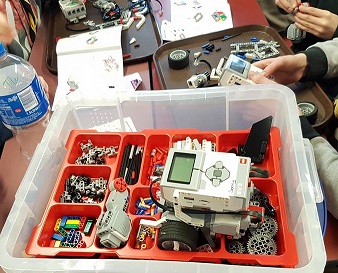
  • Building Lego Mindstorm Robots
  • Programming Lego Mindstorm Robots
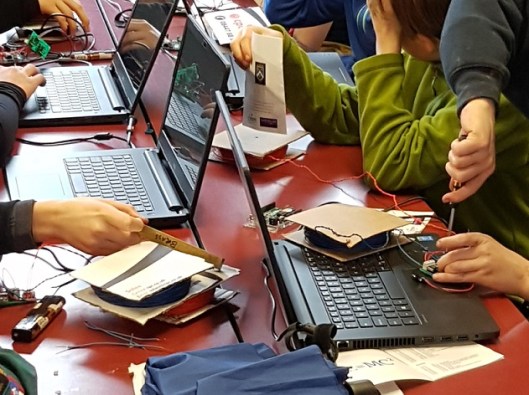
  • Building a Metal Detector
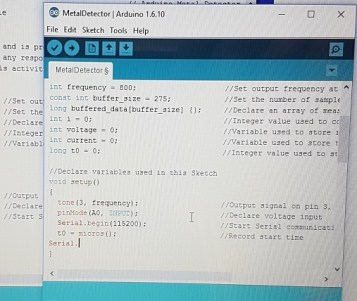
  • Programming the Metal Detector (Arduino)
  • Thermal Imaging
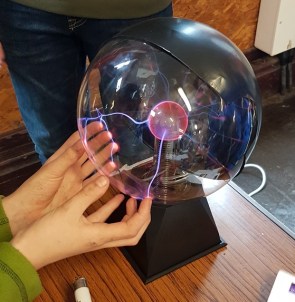
  • Science experimentation (hands on small fun experiments)
  • Bottle Rockets
  • Caucasian Divers

A great camp that worked well with the Scouts getting some great hands on and fun with science. The activities also contributed to the Scouts achieving stage 2 of the Digital Maker staged badge (https://maxhemingway.com/2016/01/25/digital-scouting/)


Ladybrook Valled Science Camp 2017Science 1Science 2Science 3

Science 4

A big thank you to Manchester University and the staff who attended the camp for their assistance and help with this camp.


Share this:

  • Share on Facebook (Opens in new window) Facebook
  • Share on LinkedIn (Opens in new window) LinkedIn
  • Email a link to a friend (Opens in new window) Email
  • Share on Pinterest (Opens in new window) Pinterest
  • Share on Reddit (Opens in new window) Reddit
  • Share on X (Opens in new window) X
  • Share on Tumblr (Opens in new window) Tumblr
  • Share on Pocket (Opens in new window) Pocket
  • Share on Telegram (Opens in new window) Telegram
  • Share on Threads (Opens in new window) Threads
  • Share on WhatsApp (Opens in new window) WhatsApp
  • Share on Mastodon (Opens in new window) Mastodon
  • Share on Bluesky (Opens in new window) Bluesky
  • Share on Nextdoor (Opens in new window) Nextdoor
Like Loading...

Basic Input – Then and Now

28 Tuesday Feb 2017

Posted by Max Hemingway in Uncategorized

≈ Leave a comment

I spent part of today helping to run a STEM (Science,Technology, Engineering and Mathematics) session with some pupils from a local school. One part of the day involved programming in Python and I set a project of a simple higher or lower game based on a random number generated.

Running the session took me back to when I was at school reading my weekly copy of “Input Magazine” and programming a ZX81. A lot has changed between then and now in terms of computing, however some things haven’t with pupils having access to “Magpi Magazine” and programming a Raspberry Pi. (OK one was BASIC and the other is Python – but hopefully you get what a mean).

input

The ability to save and load has certainly got a lot easier and you don’t have to worry about pressing down on the keyboard too heavily and accidentally moving/dislodging the 16k RAM Pack placed into the back of the ZX81!

zx81_sinclair_research_advert

Sources:

  • https://en.wikipedia.org/wiki/ZX81#/media/File:ZX81_Sinclair_Research_advert.jpg
  • https://www.raspberrypi.org/magpi/

Share this:

  • Share on Facebook (Opens in new window) Facebook
  • Share on LinkedIn (Opens in new window) LinkedIn
  • Email a link to a friend (Opens in new window) Email
  • Share on Pinterest (Opens in new window) Pinterest
  • Share on Reddit (Opens in new window) Reddit
  • Share on X (Opens in new window) X
  • Share on Tumblr (Opens in new window) Tumblr
  • Share on Pocket (Opens in new window) Pocket
  • Share on Telegram (Opens in new window) Telegram
  • Share on Threads (Opens in new window) Threads
  • Share on WhatsApp (Opens in new window) WhatsApp
  • Share on Mastodon (Opens in new window) Mastodon
  • Share on Bluesky (Opens in new window) Bluesky
  • Share on Nextdoor (Opens in new window) Nextdoor
Like Loading...

Robots and Drones – Runaway

21 Friday Oct 2016

Posted by Max Hemingway in Digital, Drone, Robotics, Uncategorized

≈ Leave a comment

Tags

Digital, Drone, Robot, Robotics

MachineThere have been lots of comparisons to TV Programmes and Films made years ago showing technology of the future and where we are today. The prime example of this is Star Trek and communicators, Holodecks vs Hololens. Terminator and AI, etc..

Whilst looking at the latest drone technology I recalled a film I watched in my youth in 1984 called “Runaway” directed by Michael Crichton and stared Tom Selleck about a Police Officer that specialises in malfunctioning robots.

In the film he uses a drone to enter a house and search for people before the drone is shot by another robot. It depicts a near future where a lot of robots are used for everday tasks in farming, construction, housework etc. Most of which are in use today.

The interesting factor in the film though is a law enforcement agent with a specific purpose of dealing with malfunctioning robots, (with the added bad guy in programming them of course). We are not that far away from such an agency in reality with current agencies investigating drones causing issues. Drones being developed for search and rescue and technology that can knock them out of the sky. As the technology grows we may well see such specialised officers in the future.


Share this:

  • Share on Facebook (Opens in new window) Facebook
  • Share on LinkedIn (Opens in new window) LinkedIn
  • Email a link to a friend (Opens in new window) Email
  • Share on Pinterest (Opens in new window) Pinterest
  • Share on Reddit (Opens in new window) Reddit
  • Share on X (Opens in new window) X
  • Share on Tumblr (Opens in new window) Tumblr
  • Share on Pocket (Opens in new window) Pocket
  • Share on Telegram (Opens in new window) Telegram
  • Share on Threads (Opens in new window) Threads
  • Share on WhatsApp (Opens in new window) WhatsApp
  • Share on Mastodon (Opens in new window) Mastodon
  • Share on Bluesky (Opens in new window) Bluesky
  • Share on Nextdoor (Opens in new window) Nextdoor
Like Loading...

Early view of the Raspberry Pi3

27 Saturday Feb 2016

Posted by Max Hemingway in Development, IoT, Programming, Raspberry Pi, Uncategorized

≈ 1 Comment

Tags

Development, IoT, Programming, RaspberryPI

PIThe Register has an article on the new Raspberry Pi3 which is currently going through FCC testing and certification.

The Pi 3 Model B otherwise looks pretty much like 2015’s quad-core 32-bit ARM Cortex-A7-based Raspberry Pi 2: it sports a familiar Broadcom system-on-chip, HDMI port, SD card slot, wired Ethernet socket, and 40 general-purpose IO pins, all in a credit-card form factor. – Source The Register

Not much is know from the rest of the submission about its features, however Wifi and Bluetooth onboard it will be interesting to see what other things have been built in as the details of this version are released by RaspberryPi.


Share this:

  • Share on Facebook (Opens in new window) Facebook
  • Share on LinkedIn (Opens in new window) LinkedIn
  • Email a link to a friend (Opens in new window) Email
  • Share on Pinterest (Opens in new window) Pinterest
  • Share on Reddit (Opens in new window) Reddit
  • Share on X (Opens in new window) X
  • Share on Tumblr (Opens in new window) Tumblr
  • Share on Pocket (Opens in new window) Pocket
  • Share on Telegram (Opens in new window) Telegram
  • Share on Threads (Opens in new window) Threads
  • Share on WhatsApp (Opens in new window) WhatsApp
  • Share on Mastodon (Opens in new window) Mastodon
  • Share on Bluesky (Opens in new window) Bluesky
  • Share on Nextdoor (Opens in new window) Nextdoor
Like Loading...

PI Zero Stock & Project Competition

06 Saturday Feb 2016

Posted by Max Hemingway in Development, IoT, Open Source, Programming, Raspberry Pi, Uncategorized

≈ Leave a comment

Tags

Coding, Development, IoT, Programming, RaspberryPI

PISince its launch the Raspberry PI Zero seems to be in high demand with its low price of under £5.00 for the base module. The official suppliers are still out of stock with no view as to when they may receive their next shipment. They fly out as soon as they come in

This makes the PI Zero Stock literally Zero!

The unofficial supply chain of place such as Ebay are now up as high as £42.00 with sellers caching in on what is supposed to be a cheap computing platform.

Hopefully the stock levels will come back to a level to stem/curb the high prices coming in.

But why so popular – this is mainly due to the cheap price of the computing module and has captured the imagination of hackers, developers and hobbyists.

There are a wide range of interesting projects appearing on the net such as:

  • Pi Zero Synth
  • Pi Zero Projects

Hackaday and Adafruit have joined up to create a new competition looking for the best Raspberry PI Zero project.

The platform is ideal for IoT development of small modules, sensors and other projects. The other forms of the Raspberry PI is already being used for IoT projects such as a Home Heating Control Device.

It will be interesting to see what comes out of the competition and the next innovation. One competition I shall be watching with interest.


Like Loading...

Learning to Program

14 Thursday Jan 2016

Posted by Max Hemingway in Development, Programming, Uncategorized

≈ 3 Comments

Tags

Coding, DevOps, learning, Programming

CodeIf one of your new years resolutions is to learn how to program? If not why should you consider to learn to program and add it to your list? As businesses become more focused on  Cloud, DevOps/OpsDev, aaS (as a Service) or SDnn (Software Defined) a knowledge of programming and a language will help you understand these advancements, services and technologies, as well as allowing you to participate in their delivery.

Here are some good resources to help you:

A good book resource on how to program can be found on Gthub at https://github.com/braydie/HowToBeAProgrammer

The site covers the following topics:

Contents

  1. Beginner
    • Personal Skills
      • Learn to Debug
      • How to Debug by Splitting the Problem Space
      • How to Remove an Error
      • How to Debug Using a Log
      • How to Understand Performance Problems
      • How to Fix Performance Problems
      • How to Optimize Loops
      • How to Deal with I/O Expense
      • How to Manage Memory
      • How to Deal with Intermittent Bugs
      • How to Learn Design Skills
      • How to Conduct Experiments
    • Team Skills
      • Why Estimation is Important
      • How to Estimate Programming Time
      • How to Find Out Information
      • How to Utilize People as Information Sources
      • How to Document Wisely
      • How to Work with Poor Code
      • How to Use Source Code Control
      • How to Unit Test
      • Take Breaks when Stumped
      • How to Recognize When to Go Home
      • How to Deal with Difficult People
  2. Intermediate
    • Personal Skills
      • How to Stay Motivated
      • How to be Widely Trusted
      • How to Tradeoff Time vs. Space
      • How to Stress Test
      • How to Balance Brevity and Abstraction
      • How to Learn New Skills
      • Learn to Type
      • How to Do Integration Testing
      • Communication Languages
      • Heavy Tools
      • How to analyze data
    • Team Skills
      • How to Manage Development Time
      • How to Manage Third-Party Software Risks
      • How to Manage Consultants
      • How to Communicate the Right Amount
      • How to Disagree Honestly and Get Away with It
    • Judgment
      • How to Tradeoff Quality Against Development Time
      • How to Manage Software System Dependence
      • How to Decide if Software is Too Immature
      • How to Make a Buy vs. Build Decision
      • How to Grow Professionally
      • How to Evaluate Interviewees
      • How to Know When to Apply Fancy Computer Science
      • How to Talk to Non-Engineers
  3. Advanced
    • Technological Judgment
      • How to Tell the Hard From the Impossible
      • How to Utilize Embedded Languages
      • Choosing Languages
    • Compromising Wisely
      • How to Fight Schedule Pressure
      • How to Understand the User
      • How to Get a Promotion
    • Serving Your Team
      • How to Develop Talent
      • How to Choose What to Work On
      • How to Get the Most From Your Team-mates
      • How to Divide Problems Up
      • How to Handle Boring Tasks
      • How to Gather Support for a Project
      • How to Grow a System
      • How to Communicate Well
      • How to Tell People Things They Don’t Want to Hear
      • How to Deal with Managerial Myths
      • How to Deal with Organizational Chaos


List of useful books on GitHub on programming:

  • https://github.com/vhf/free-programming-books/blob/master/free-programming-books.md

If you are now wondering which language to base your learning on this post may help

  • https://maxhemingway.com/2015/01/08/learn-a-programming-language-but-which-one/

There are lots of online courses available to help you learn – alot are free

  • http://thenextweb.com/dd/2012/10/21/so-you-want-to-be-a-programmer-huh-heres-25-ways-to-learn-online/#gref

Share this:

  • Share on Facebook (Opens in new window) Facebook
  • Share on LinkedIn (Opens in new window) LinkedIn
  • Email a link to a friend (Opens in new window) Email
  • Share on Pinterest (Opens in new window) Pinterest
  • Share on Reddit (Opens in new window) Reddit
  • Share on X (Opens in new window) X
  • Share on Tumblr (Opens in new window) Tumblr
  • Share on Pocket (Opens in new window) Pocket
  • Share on Telegram (Opens in new window) Telegram
  • Share on Threads (Opens in new window) Threads
  • Share on WhatsApp (Opens in new window) WhatsApp
  • Share on Mastodon (Opens in new window) Mastodon
  • Share on Bluesky (Opens in new window) Bluesky
  • Share on Nextdoor (Opens in new window) Nextdoor
Like Loading...

DevOps ES2015 – Slides/Videos

08 Friday Jan 2016

Posted by Max Hemingway in DevOps/OpsDev, Uncategorized

≈ Leave a comment

Tags

DevOps, OpsDev

GrowFrom last year but still a great source of information from the DevOps Enterprise Summit 2015 that was run last year.

These provide a great view into how other organisations are using DevOps within their business and in some cases its OpsDev.

Speaker Decks  http://www.slideshare.net/DOESsummit15

Youtube Channel: DevOps Enterprise Summit – YouTube

I’ve previously listed the 2014 sides and videos on this blog post

Share this:

  • Share on Facebook (Opens in new window) Facebook
  • Share on LinkedIn (Opens in new window) LinkedIn
  • Email a link to a friend (Opens in new window) Email
  • Share on Pinterest (Opens in new window) Pinterest
  • Share on Reddit (Opens in new window) Reddit
  • Share on X (Opens in new window) X
  • Share on Tumblr (Opens in new window) Tumblr
  • Share on Pocket (Opens in new window) Pocket
  • Share on Telegram (Opens in new window) Telegram
  • Share on Threads (Opens in new window) Threads
  • Share on WhatsApp (Opens in new window) WhatsApp
  • Share on Mastodon (Opens in new window) Mastodon
  • Share on Bluesky (Opens in new window) Bluesky
  • Share on Nextdoor (Opens in new window) Nextdoor
Like Loading...
← Older posts
Newer posts →

Follow Me on LinkedIn

www.linkedin.com – Click to Follow 

RSS Feed

RSS Feed RSS - Posts

Other Publications I contribute to

https://sparrowhawkbushcraft.com/

Recent Posts

  • Why Innovation Fails Without Architectural Clarity
  • 35 Informative Tech Websites for 2026: Enhance Your PKMS
  • Unlocking the Benefits of Journaling
  • Mastering Engaging Presentations: Tips for Captivating Your Audience
  • The Business Value of Enterprise Architecture Explored

Categories

  • 21st Century Human
  • 3D Printing
  • AI
  • Applications
  • ArchiMate
  • Architecture
  • Arduino
  • Automation
  • BCS
  • Big Data
  • Certification
  • Climate Change
  • Cloud
  • Cobotics
  • Connected Home
  • Data
  • Data Fellowship
  • Data Science
  • Development
  • DevOps/OpsDev
  • Digital
  • DigitalFit
  • Drone
  • Enterprise Architecture
  • F-TAG
  • Governance
  • Health
  • Innovation
  • IoT
  • IT Strategy
  • Machine Learning
  • Metaverse
  • Micro:Bit
  • Mindset
  • Mobiles
  • Networks
  • Open Source
  • Podcasts
  • Productivity
  • Programming
  • Quantum
  • Raspberry Pi
  • Robotics
  • Scouting
  • Scouts
  • Security
  • Smart Home
  • Social Media
  • Space
  • STEM
  • Story Telling
  • Technologists Toolkit
  • Tools
  • Uncategorized
  • Wearable Tech
  • Windows
  • xR

Archives

Reading Shelf

Archives

Recent Posts

  • Why Innovation Fails Without Architectural Clarity
  • 35 Informative Tech Websites for 2026: Enhance Your PKMS
  • Unlocking the Benefits of Journaling
  • Mastering Engaging Presentations: Tips for Captivating Your Audience
  • The Business Value of Enterprise Architecture Explored

Top Posts & Pages

  • Unlocking the Benefits of Journaling
  • 20 Informative Podcasts for 2025: Boost Your PKMS
  • The Quotient Revolution: Building the Well-Rounded Person
  • 35 Informative Tech Websites for 2026: Enhance Your PKMS
  • Architecture in Practice
  • Eating a slice of the next PI (Raspberry PI3)
  • Digital Fit in 2018: Start Blogging
  • Digital Fit in 2018: Build up a Readership
  • About Me Card
  • 10 Books I'd send to my younger self

Category Cloud

21st Century Human Architecture Big Data Cloud Data Data Science Development DevOps/OpsDev Digital DigitalFit Enterprise Architecture Governance Innovation IoT Machine Learning Mindset Open Source Podcasts Productivity Programming Raspberry Pi Robotics Security Social Media STEM Story Telling Technologists Toolkit Tools Uncategorized Wearable Tech

Tags

3D Printing 21st Century Human AI Applications ArchiMate Architecture Automation BCS Big Data Blockchain business Certification Cloud Cobot Cobotics Coding Communication Connected Home CPD cybersecurity Data Data Fellowship Data Science Delivery Development DevOps Digital DigitalFit Digital Human Drone Email Enterprise Architecture Governance GTD Infographic Information Theory Innovation IoT Journal Knowledge learning Machine Learning Metaverse MicroLearning Mindset Mixed Reality Networks Open Source OpsDev PKMS Podcasts Productivity Programming Proving It Quantum quantum-computing R RaspberryPI Robot Robotics Scouts Security Smart Home Social Media STEM Story Telling Technologists Toolkit technology Technology Couch Podcast Thinking Tools Visualisation Voice Wearable Tech xR

License

Creative Commons Licence
This work is licensed under a Creative Commons Attribution-NonCommercial-ShareAlike 4.0 International License.

Meta

  • Create account
  • Log in
  • Entries feed
  • Comments feed
  • WordPress.com

Blog at WordPress.com.

  • Subscribe Subscribed
    • Max Hemingway
    • Join 82 other subscribers
    • Already have a WordPress.com account? Log in now.
    • Max Hemingway
    • Subscribe Subscribed
    • Sign up
    • Log in
    • Report this content
    • View site in Reader
    • Manage subscriptions
    • Collapse this bar
 

Loading Comments...
 

    %d