Building upon my previous recommendations for PKMS (Personal Knowledge Management System), I have updated the list for 2026 to include some from my list from 2025 which is still relevant, but also some new sites for news, reference and learning. It is important to stay ahead of the curve.
Using Feedly or similar aggregation tools for me still remains an excellent way to streamline your reading, as you can categorise sources, scan headlines efficiently and dive deeper into articles of interest.
Updated List of Tech Websites for 2026
BCS – Latest insights, ideas and perspectives from BCS and its community.
TechRepublic – News, tips, and advice for IT professionals.
Presenting to an audience is not merely about speaking, it is about being engaging, connecting with and inspiring them.
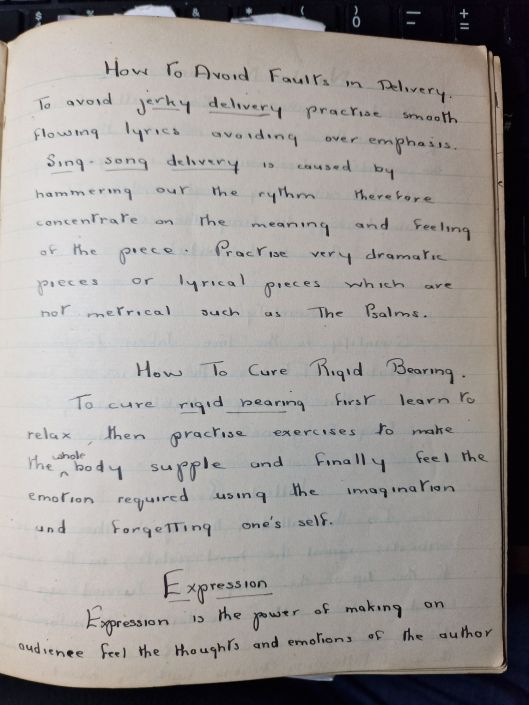
Drawing on another page from my grandmothers notebook on elecution, here is some widom on this topic, whether you’re standing in front of a packed theatre or telling stories around a family dinner table, your delivery and expression are the keys to captivating listeners.
How to avoid faults in delivery
To avoid jerky delivery practice smooth flowing lyrics avoiding over emphasis. Sing song delivery is cause by hammering out the rhythm therefore concentrate on the meaning and feeling of the piece. Practice very dramatic pieces or lyrical pieces which are not metrical such as The Psalms.
How to cure rigid bearing
To cure rigid bearing first learn to relax, then practice exercises to make the whole body supple and finally feel the emotion required using the imagination and forgetting one’s self.
Expression
Expression is the power of making an audience feel the thoughts and emotions of the author.
Source: An excerpt from my grandmothers notebook.
How to Avoid Faults in Delivery
“To avoid jerky delivery, practise smooth flowing lyrics, avoiding overemphasis. Sing-song delivery is caused by hammering out the rhythm; therefore, concentrate on the meaning and feeling of the piece.”
One of the most common pitfalls in storytelling is letting the flow become mechanical or forced. Your audience can sense when you are simply reciting words rather than sharing an experience. Instead of focusing solely on rhythm and pace, put your energy into the meaning and emotion behind your story. Read your piece aloud and pay attention to the natural cadences and inflections that emerge.This will help you create a smooth, engaging delivery that draws listeners into your narrative.
Practice by recording yourself on your phone and replaying it to learn from where you need to improve. Try practising with stories that are emotionally charged or richly detailed, such as a chapter from your favourate novel. This will encourage you to connect with the content rather than just the structure.
By letting the story guide your tone and pace, you’ll avoid falling into a monotonous pattern and keep your audience invested throughout.
How to Cure Rigid Bearing
“To cure rigid bearing, first learn to relax, then practise exercises to make the whole body supple, and finally feel the emotion required using imagination and forgetting one’s self.”
Physical rigidity can undermine your presence, making you appear closed off or uncomfortable. Before stepping onto the stage or beginning your presentation, take a moment to relax. Simple breathing exercises, gentle stretches, or even a short walk can help loosen tension. Once you feel physically at ease, allow your imagination to transport you into the world of your story.
Effective storytelling demands that you immerse yourself in the emotions and scenarios you’re describing. If you truly feel what you’re telling, your body will naturally reflect those feelings, making your gestures and movements more expressive and authentic. Remember, the goal is not to perform, but to share—and that requires letting go of self-consciousness and embracing the narrative.
Practice by standing in front of a mirror and try the presentation, noting your stance and actions.
The Essence of Expression
“Expression is the power of making an audience feel the thoughts and emotions of the author.”
The heart of a compelling presentation lies in your ability to transmit not just information but genuine emotion and ideas. Expression is the bridge between your story and your audience’s hearts. When you care deeply about your message, your listeners will too. Speak with passion, vary your tone and let your facial expressions and body language mirror your words.
Again practice by recording yourself on your phone and replaying it to learn from where you need to improve.
Ultimately, great storytelling is about forging a connection. Focusing on smooth delivery, relaxed bearing and expressive communication can ensure that your presentation doesn’t just inform but inspire.
Modern organisations operate within intricate ecosystems comprising applications, processes, data flows, technologies and external partners. Despite this complexity, many organisations still communicate their architecture using simple diagrams often created in Visio, PowerPoint or even hand drawn on paper and whiteboards. While these approaches offer flexibility and speed, they lack the structure and clarity essential for effective collaboration and robust governance at scale.
Limitations of Standard Diagrams
Ad-hoc diagrams are prevalent in many organisations, yet as business environments grow more complex, they introduce significant risks. The key issues include:
Inconsistent Interpretation: Stakeholders may interpret elements differently, leading to confusion and miscommunication.
Lack of Structured Layers: There is often no clear distinction between business, application and technology domains unless specifically drawn in or labelled.
Artistic Licence: There can be many differences in the way different architects draw their diagrams.
Limited Reusability: Diagrams are difficult to reuse or adapt, resulting in duplicated effort.
Weak Impact Analysis: The absence of defined relationships makes it challenging to assess the consequences of change.
Time to Change: Changes often need additional time as objects need to be manually moved around a page and lines redrawn to link these together.
These shortcomings create governance challenges, slow down transformation efforts and can hinder collaboration between teams.
While there will always be a place for these types of diagrams within architecture to address specific use cases, it is essential to adopt a holistic modelling framework or standard for comprehensive and effective enterprise architecture. There are two possible solutions to help.
The Case for ArchiMate
ArchiMate, developed by The Open Group, is a modelling language purpose built for Enterprise Architecture. It establishes a common language for architects, delivery teams and clients.
Structured Notation: ArchiMate offers clear, layered modelling across business, application and technology domains.
Multiple Viewpoints: With over twenty standard viewpoints, stakeholders can focus on the aspects most relevant to them.
Cross-Domain Consistency: ArchiMate ensures traceability from strategy through to execution, supporting alignment across the organisation.
Industry Alignment: The language integrates with frameworks like TOGAF, making it a natural choice for Enterprise Architecture teams.
By adopting ArchiMate, organisations can model not only their systems, but also how those systems underpin business capabilities, goals and strategic change.
The Case for UML
While ArchiMate addresses strategic and enterprise-level concerns, UML (Unified Modelling Language) specialises in detailed system and software design. UML is widely used to create precise models of software architectures, components, interfaces and behaviours.
Detailed Modelling: UML excels at capturing the intricacies of software systems, including classes and dynamic behaviours.
Clear Communication: UML diagrams provide developers and architects with a shared understanding of system structures and interactions.
Low-Level Design: UML’s strength lies in modelling dynamic behaviour and implementation details, complementing ArchiMate’s high-level abstraction.
For solution architects, UML is vital to ensuring rigorous design and a smooth handover to engineering teams.
Synergy: Using ArchiMate and UML Together
A combined approach leverages the strengths of both languages. ArchiMate provides the strategic, enterprise-wide context, while UML delivers the technical detail necessary for implementation. This synergy ensures a seamless transition from strategy to solution, bridging the gap between business vision and technology execution.
Business Benefits: Improved Communication, Risk Reduction and Scalability
Structured modelling languages offer clear advantages over informal diagrams:
Unambiguous Meaning: Every element and relationship has a defined semantic, removing ambiguity.
Effective Impact Analysis: Dependencies and consequences of change are visible early, supporting informed decision-making.
Governance and Compliance: Models support stronger oversight, risk management and regulatory compliance.
Scalability: Modular, reusable models can be shared and versioned across distributed teams and geographies.
These benefits help organisations reduce project risks, improve alignment and enable more efficient collaboration.
Tool Ecosystem: Supporting Modelling Quality
Modern modelling tools further enhance the value of ArchiMate and UML. Platforms such as Bizzdesign, Archi and Sparx EA provide:
Native Support: Tools offer built-in support for ArchiMate and UML streamlining modelling processes.
Integrated Repositories: Solutions like Sparx EA enable modelling across abstraction levels within a single environment.
Automated Consistency Checks: These tools help enforce standards and minimise human error.
Accessibility: Open-source options such as Archi make structured modelling accessible to all teams, regardless of licensing constraints.
This ecosystem of tools elevates modelling quality, maintains consistency and supports collaborative workflows.
Enabling Digital Transformation
Structured modelling languages are indispensable during periods of strategic transformation, cloud migration, and organisational modernisation. ArchiMate, in particular enables organisations to:
Reveal how capabilities, applications, data flows and infrastructure interrelate.
Align architecture decisions with business drivers, goals and expected outcomes.
Clarify large-scale change by unifying multiple perspectives within a single coherent model.
Transformation initiatives are far more likely to succeed when teams use structured models to guide and communicate change.
Summary Table: Standard Diagrams vs. ArchiMate/UML
Challenge with Standard Diagrams
Benefit with ArchiMate / UML
No semantics
Formal meaning and consistency
Inconsistent visuals
Standardised notation
Hard to scale
Reusable patterns and multi-stakeholder views
Limited impact analysis
Relationship driven modelling
No clear linkage from strategy to design
ArchiMate → strategy & enterprise UML → detailed system design
Tooling limited to drawing
Tools support modelling, versioning, analysis
Conclusion
Standard diagrams may suffice for informal, short-term communication, but they fall short in enterprise architecture, where clarity, consistency and strategic alignment are crucial. Structured modelling languages such as ArchiMate and UML form the foundation for modelling complex systems, reducing risk, and ensuring accurate communication between business and IT teams.
Organisations should invest in modelling guilds, shared training and cross-team practices to encourage adoption. Moving to formal modelling languages is not just a technical upgrade—it represents a strategic evolution, essential for digital-first enterprises.
Business and IT leaders should:
Establish an Enterprise Architecture Office.
Review current architecture practices and identify areas that would benefit from structured modelling.
Invest in training and tools that support ArchiMate and UML.
Promote collaboration across teams using shared modelling standards.
Leverage modelling languages to support transformation, governance and compliance initiatives.
By adopting these modelling languages organisations can unlock greater strategic value, drive successful digital transformation and ensure long-term resilience in an ever-evolving business landscape.
As 2026 begins, I am once again in the process of updating my Personal Knowledge Management System (PKMS). This update reflects the latest advancements in knowledge management, as well as my evolving personal priorities.
With an increase in walking I have been doing as part of my routine, my approach to learning has shifted towards podcasts and micro learning. Instead of spending time endlessly scrolling through information, I have leveraged AI to create podcasts and short, voiced snippets on various topics on interest. These concise audio segments help break down complex subjects into manageable, bite-sized chunks, making it easier to keep up with new ideas while on the move.
I am publishing these updates so that others may use this approach as a model for developing their own PKMS.
What is a PKMS?
The primary aim of a PKMS (Personal Knowledge Management System) is to enhance an individual’s capacity to learn, retain and apply knowledge efficiently in both their personal and professional life. By providing structure to the way information is handled, it supports ongoing development.
A well formed PKMS can help provide several benefits:
Continuous Learning: With the right mindset, a PKMS offers a systematic approach to acquiring, organising and reviewing knowledge, thereby supporting lifelong learning.
Increased Productivity: Having immediate access to relevant and organised information enables individuals to remain proactive and ahead of the curve.
Knowledge Retention: The ability to store information in an organised repository facilitates easy retrieval as and when needed.
Adaptability: As technology, information and data continue to evolve rapidly, a PKMS helps users stay informed and adaptable to change.
Maintaining a clear distinction between personal social and business social knowledge remains important, even though there are occasions when the two may overlap. While it is sometimes necessary for these areas to intersect, keeping them largely separate helps maintain clarity, focus and a layer of personal security.
Various tools are available that can be used to build a PKMS tailored to individual needs. The choice of tools may differ from person to person however, the underlying principle is to use resources that support the structured management of knowledge. The specific tools utilised can contribute greatly to the effectiveness of a PKMS.
Various tools are available that can be used to build a PKMS tailored to individual needs. The choice of tools may differ from person to person however, the underlying principle is to use resources that support the structured management of knowledge. The specific tools utilised can contribute greatly to the effectiveness of a PKMS.
Professional Life
Research
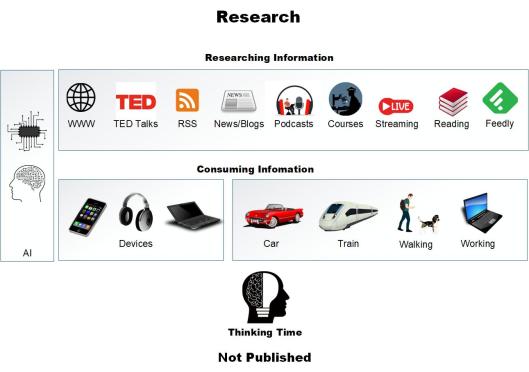
Research is an integral part of my Personal Knowledge Management System (PKMS). It involves gathering information that supports learning and integration into my work. Continuous learning is my key goal of my PKMS to stay ahead as a Technologist. Below is a high-level list of the types of content that I utilise for research and learning.
AI
Streaming Services
RSS Feeds
Podcasts
TED Talks
Web Searches
Blog Posts
Learning
Micro Learning
Reading
Some of these are fairly self explanatory as sources. I may expand on some of the sources I use in future posts.
AI (Artificial Intelligence)
Artificial Intelligence (AI) is growing in use and works well in my PKMS to enhance the way information is gathered, organised and retrieved.
AI is a good tool to ask as an assistant when researching, asking questions and can provide a reasonable summary of long documents and papers.
RSS
Some sites have an RSS feed which allows me to pull updates from sites directly into Feedly.
Podcasts
Podcasts cover both audio and video casts that I watch/stream online or download to my phone/media player to listen to when I am on journeys in the car or other transportation methods or out walking the dog. Daily walks with the dog provide a good time to listen to these acting as my daily comute to and from work (laptop).
Feedly
Feedly provides an aggregation tool that collects stories from various blogs and websites that I find useful for research and information . This generates a list of stories that can be quickly scanned on a single screen without having to visit multiple sites. Clicking on a story displays a snippet from the source site and provides a link to read the full article, if necessary. Using a series of keystrokes, it is possible to read the headlines, then move through the articles efficiently, stopping and opening them as needed.
Sources can be categorised to allow an all-view or just what’s new in a category.
Thinking Time
Thinking Time covers the time that I spend absorbing the PKMS information coming in from the different sources and then processing and applying it in different ways. It is also good to spend time reflecting on what I have learned and think of different and new ways to use the information and learnings.
Note Taking
I use two tools now for note-taking: OneNote and Obsidian. I favour Obsidian as it uses Markdown, which I use a lot for documentation and its ability to structure data in a logical way and allows you to query data in an interactive graph.
Being Social
I use several social channels to publish my thoughts as a Technologist. The main channel I use is this blog site.
Blog Site
www.maxhemingway.com is my main published site that I use to share my thoughts, leadership and updates through. From this I send out links to various social channels.
Podcast
My podcast “Technology Couch Podcast” has not had an update for a while (that said it does still get lots of downloads), but hopefully this will change soon. This can be found on my blog page and also normal podcast streaming sites.
Social Sites
I use social sites to publish my blog and podcast updates.
I use GitHub to store any code or projects that I want to publish externally.
Personal Life
Personal Journal
My personal journals have always been Moleskine plain pocket books, be more recently I have made a switch to using Rhodia range of pocket books with dots. My main reason was on price as Moleskine has risen a fair bit for their products. I have used a couple of Rhodia pocket books since my switch and I actually find the paper a lot better and its slightly thicker which can support more inks without a bleed through to the pages below.
I still favour the Pilot ball ink pens as before in 0.5 or 0.7 size.
To keep my work life separate from my personal life, I use social platforms like Instagram and Facebook for friends and family, ensuring that two-factor authentication and appropriate security settings are in place.
Even with these precautions, it’s essential to remember that anything posted online could potentially become public in the future.
Further Reading
If you are looking for inspiration in creating your own PKMS, Reddit has a great list of PKMS tools that is worth a look and a discussion board on setting up a PKMS.
As we begin the year the concept of what it means to be a well-rounded individual continues to evolve.
Traditionally, people were considered well-rounded if they demonstrated both intelligence and emotional awareness, measured through IQ (Intellectual Quotient) and EQ (Emotional Quotient). However with the demands of an increasing complexity of modern life, work and social environments, it now demands a more rounded and comprehensive suite of skills and attributes.
The addition of recognising and usinng more “Quotients” provides a broader framework for personal development, meeting the diverse challenges and opportunities we face.
Expanding Beyond IQ and EQ for a More Holistic Future
While IQ and EQ remain crucial, they can be accompanied by a range of other Quotients essential for success. Below is a list of the key Quotients and some of the reasons each is so important:
More Than Just IQ and EQ
AQ – Adversity Quotient: Represents the ability to withstand and recover from setbacks. Developing AQ involves learning to adapt, bounce back and thrive despite challenges.
BQ – Body Quotient: Encompasses physical health in a holistic sense, including fitness, nutrition, sleep, and overall wellness. Advances in technology (senors) allow people to better understand and improve their BQ, leading to enhanced quality of life and productivity.
CQ – Cultural Quotient: Highlights the importance of navigating diverse cultures with sensitivity and adaptability. CQ is important for building inclusive environments and succeeding in multicultural and diverse teams, both personally and professionally.
CQ – Curiosity Quotient: Reflects the motivation to pursue new knowledge, skills, and experiences. CQ helps individuals stay innovative and relevant.
DQ – Decency Quotient: Leadership requires more than intelligence and emotional awareness; it demands decency. DQ is about integrity, kindnes, and fairness, ensuring that everyone is valued and respected. DQ can help to distinguish good leaders.
EQ – Emotional Quotient: Mastery of one’s own emotions and understanding those of others is crucial for building relationships, resolving conflicts and leading with empathy. As collaboration is part of our daily lives EQ is increasingly valuable.
IQ – Intellectual Quotient: Cognitive ability remains fundamental for problem solving and analytical thinking. IQ should be integrated with other Quotients for genuine effectiveness.
LQ – Learning Quotient: The ability to unlearn old habits and embrace new ones is increasingly vital. Adaptability is anchored in continual learning and personal growth.
MQ – Moral Quotient: MQ serves as the moral compass, guiding individuals and organisations to act ethically and uphold values. With the onset of an AI world, dealing with complex ethical dilemmas and moral integrity is growing in importantance.
PQ – Physical Quotient: Focuses on self-awareness of bodily needs and limits, including stress and fatigue. Understanding PQ helps individuals maintain high performance and avoid burnout.
SQ – Spiritual Quotient: Involves seeking meaning, purpose and inner peace. SQ is not necessarily religious but about connecting with something greater and fostering a sense of balance and fulfilment.
SQ – Social Quotient: Social intelligence is essential for navigating complex networks, both online and offline. SQ supports trust-building, influencing others and effective teamwork.
TQ – Technology Quotient: As the transformation of technology and the workplace accelerates, comfort and fluency with technology (from artificial intelligence to remote collaboration tools) are fundamental for success in both professional and personal spheres.
Modernising the Equation for 2026
The well-rounded individual is defined not by a single strength, but by the ability to blend these Quotients into a harmonious whole. The equation for personal effectiveness is:
AQ + BQ + CQ (Cultural) + CQ (Curiosity) + DQ + EQ + IQ + LQ + MQ + PQ + SQ (Spiritual) + SQ (Social) + TQ = The Well-Rounded Person
Self-Reflection: Questions to Guide Your Growth
Which of these Quotients do you naturally excel in and which require more attention?
How can you combine your strengths across different Quotients to create greater impact?
What steps can you take to develop areas like AQ, CQ, LQ or TQ?
How might your Quotients support your personal and professional goals in 2026?
In what ways can you help others around you build their own Quotients?
The journey is ongoing, but the rewards (personal fulfilment, resilience and meaningful impact) make it a worthy pursuit.
Technology may operate through flashing lights, chips, logic, algorithms and code, yet every genuine advancement starts with something innately human. Beneath every illuminated screen and every written line of code lies curiosity, the powerful, persistent force propelling us to explore, experiment and imagine.
From the first glimmer of an unconventional idea to the determined effort required to realise an improbable dream, it is our creativity, passion and curiosity that infuse technology with life and mould the digital future.
The Human Element: Asking “What If?”
Computers excel at processing information at astonishing speeds, but it is humans who pose the question “What if?”. This essential question embodies curiosity, turning technology from something functional into something truly revolutionary.
Throughout history, trailblazers have personified this spirit.:
Ada Lovelace envisioned machines that could do more than simple calculations.
Alan Turing not only deciphered codes but also laid the theoretical groundwork for artificial intelligence by asking, “Can a machine think?”
The most significant breakthroughs occur when determined individuals challenge norms and conceive solutions that no machine could ever dream up on its own.
Cultivating the Innovator’s Mindset
Innovation is not a rare secret, it is a cultivated habit. To foster it:
Embracing Radical Questions: Do not hesitate to ask “why not?” or challenge longstanding assumptions. Such straightforward questions often ignite major ideas.
Collaborating Wildly: Engage with people beyond your immediate discipline. Diverse perspectives and cross-disciplinary teamwork are powerful drivers for original solutions.
Experimenting Fearlessly: Consider every setback not as a failure but as critical data. Every test, refinement and adjustment moves you closer to a breakthrough.
Creating Safe Space for Ideas: Innovation flourishes when teams feel free to share bold, unconventional concepts without fear of criticism or judgement.
Harnessing AI as an Assistant: Leverage Artificial Intelligence (AI) to enhance your creative process. AI can help generate new ideas, identify patterns in data you might overlook and automate repetitive tasks. This can help free up more time for experimentation and bold thinking. By using AI as a collaborator rather than just a tool, you can quickly test hypotheses, prototype solutions and gain fresh insights, all while maintaining the uniquely human spark that drives innovation.
Creativity: The Catalyst for Redefinition
Creativity turns a technical obstacle into a transformative opportunity.
Steve Jobs did not invent the computer, but he reimagined it. Transforming a complex technical instrument into a sleek, intuitive device that revolutionised daily life.
The team at DeepMind redefined artificial intelligence by teaching it to learn and play games (such as Go) modelling how people master intricate subjects.
These innovators did not merely improve what already existed; they redefined what was possible by daring to adopt a fresh perspective.
AI can also act as a creative partner, from generating design concepts and composing music to suggesting code improvements. AI can spark unexpected connections and offer alternatives you might not have considered. It provides not only efficiency but also an expanded canvas for human ingenuity.
Harnessing Creative Energy
To convert curiosity into real progress:
Look Beyond Your Industry: Seek inspiration from art, nature and everyday experiences. Solutions frequently originate from unexpected analogies.
Build an Iteration Loop:Test, learn, and iterate constantly. Rapid prototyping is a practical method for asking increasingly complex “what if” questions.
Take a Strategic Pause: Occasionally, stepping away from your work is the best route to a breakthrough. Reflection and a fresh viewpoint are invaluable.
Utilise AI for Creative Exploration: Use AI-powered tools to brainstorm alternatives, simulate scenarios, and visualise outcomes. AI can help you rapidly test new ideas, uncover hidden relationships and even provide creative prompts when you feel stuck, acting as a catalyst for your next breakthrough.
The Twin Engines: Curiosity and Passion
Curiosity raises the questions; passion discovers the answers. Together, they fuel the persistence required to overcome obstacles and turn nebulous visions into concrete realities.
Tim Berners-Lee was curious about enabling information to flow effortlessly across a global network. This curiosity led to the creation of the World Wide Web. It was his passion for an open, interconnected world that ensured the idea was pursued tirelessly and ultimately shared.
To sustain these vital engines:
Never Stop Learning: Curiosity is a flame that grows with new knowledge. Pursue subjects that truly fascinate you, even if they do not relate directly to your current work. AI can support lifelong learning by recommending resources, summarising complex materials and connecting you with experts and communities worldwide.
Embrace Serendipity: Welcome surprises, fortunate accidents, and unexpected discoveries. Many innovations originate from exploring something new. AI algorithms can sometimes surface surprising insights or connections in vast amounts of information, leading to opportunities you might not have found alone.
Share Your Enthusiasm: Passion is infectious. Sharing your excitement attracts collaborators, builds momentum, and makes the lengthy process of innovation rewarding. With AI-powered platforms, it’s easier than ever to connect with like-minded peers, showcase your projects and gather feedback globally.
Conclusion
As technology advances at an unprecedented pace, one truth remains: the true engine of innovation is not the code we craft or the silicon we use – it is the human spark within us. Our creativity, curiosity, and passion fuel the discoveries that truly shape the future.
Whether you are a developer, designer, entrepreneur or simply a deeply curious individual your most powerful tool is not the technology at your disposal, but the imagination that guides it.
Artificial intelligence is a remarkable ally, amplifying our strengths and extending our reach, but it is only through human ingenuity and vision that technology becomes truly transformative.
“Keep exploring. Keep dreaming. Keep asking why. Don’t settle for what you already know. Never stop believing in the power of your ideas, your imagination, your hard work to change the world.”
― Barack Obama
Ultimately, it is people (not machines) who make technology truly remarkable. AI may assist, but it is the uniquely human qualities of curiosity, passion and creativity that turn possibility into reality.
With constant deadlines, rapid innovation, and nonstop information, it’s easy to overlook the simple human factors that drive our best insights. One such element is casual conversation, unplanned, informal discussions that take place over beverages like tea or coffee (other beverages available).
These are often called “Watercooler Moments,” but with remote work, they’re more like “Video Chat Moments”. These moments, often seen as small breaks in the day, hold the potential to teach us profound lessons.
The Power of Unstructured Dialogue
Casual conversations differ from structured meetings by being spontaneous and unplanned, encouraging open idea exchange without a set agenda. This lack of structure allows for genuine exchange of ideas without the pressure of an agenda.
Where innovation thrives on creativity, these unstructured dialogues can spark new ideas and approaches that might not emerge in formal settings.
Building Relationships and Trust
Taking time to share a cup of tea or coffee with your colleagues does more than simply break up the workday by laying the groundwork for genuine camaraderie and mutual trust.
Informal interactions among team members contribute to a greater sense of belonging and cultivate an environment where individuals feel respected and acknowledged. Such exchanges enable colleagues to connect on a personal level, thereby facilitating more effective collaboration and communication.
Trust serves as the cornerstone of successful collaboration, while informal interactions contribute to fostering collegial relationships and facilitating cooperation towards shared objectives. Teams that engage in effective informal communication are typically better equipped to manage formal deliberations and address challenges constructively.
Learning from Diverse Perspectives
Engaging in informal dialogue encourages the exchange of diverse perspectives. In a comfortable environment, individuals are more inclined to contribute their experiences and viewpoints. Considering these varied insights can enhance comprehension and enable a multifaceted approach to challenges and solutions. This is especially relevant in the technology sector, where innovation frequently emerges from the integration of different ideas.
Reflecting on Personal and Professional Growth
Pausing for a tea/coffee break offers much more than a simple moment of respite, by providing a period of thoughtful reflection.
These informal breaks let you and your colleagues discuss personal and professional experiences. Sharing challenges and accomplishments in a relaxed setting can clarify goals, reinforce insights, and support growth.
Sharing your thoughts with trusted peers helps clarify ideas and invites valuable feedback. Conversations with colleagues can offer new perspectives, solutions, and encouragement, especially when diverse experiences are involved.
Inspiring Creativity and Innovation
Casual conversations can encourage creative thinking, without the restrictions of a formal meeting agenda. You and your colleagues may feel more at ease to share unconventional ideas and discuss hypothetical scenarios. These exchanges sometimes result in solutions and ideas that might not arise in structured settings.
Promoting Well-being and Work-Life Balance
Taking a break also helps as a reminder to step away from the screen, decompress, and enjoy a moment of human connection. These breaks can reduce stress, improve mood, and boost overall productivity. A healthy work-life balance is essential for sustained performance in an industry.
One of the skills a technologist needs and draws on is the ability to tell stories to help reach the goals and outcomes of the task at hand. So as a bit of fun, here is a comparison of today’s technologist and Homer’s Odyssey, drawing parallels between ancient adventures and modern innovation.
The journey of a technologist is much like the grandeur of an epic odyssey – an endless pursuit fuelled by curiosity, innovation, ingenuity, and the drive to reshape the world.
One of the skills a technologist needs and draws on is the ability to tell stories to help reach the goals and outcomes of the task at hand. So as a bit of fun, here is a comparison of today’s technologist and Homer’s Odyssey, drawing parallels between ancient adventures and modern innovation.
In Homer’s timeless masterpiece “The Odyssey”, we are taken on a journey of perseverance, discovery, and triumph over adversity. The tale of Odysseus navigating treacherous seas and facing formidable challenges resonates deeply with the modern odyssey undertaken by technologists today. While the landscapes may differ—one physical, the other digital—the indomitable spirit of curiosity, resilience, and ingenuity binds these stories across centuries.
The modern odyssey is a voyage of a technologist (in this case) marked by relentless exploration, failures (including learnings) and triumphs and a desire to transcend the limitations of today to and the promises of the future carve out the possibilities of tomorrow.
To quote a phrase that is often attributed to Homer’s The Odyssey but isn’t in translated text – “The journey is the thing.” This phrase emphasises the process which you go through in reaching your destination or goal (exploration, learning, failure, strength and growth).
Not every journey has a map, but you can chart your journey for others to follow. Although not every journey will be the same a guide helps keep you on the path.
The Hero’s Call: Beginnings of the Journey
In “The Odyssey”, Odysseus’s journey begins with the call to return home after the Trojan War. His longing for Ithaca symbolises a burning desire for purpose and belonging. This echoes the genesis of a technologist’s journey beginning usually with an ask to meet a business outcome, with the voyage being accepted often sparked by curiosity and wonder.
Whether it’s creating an architecture and system, dismantling an existing one to uncover its secrets or writing their first lines of code, technologists, too, experience their own call to adventure. The purpose of the journey being set by the outcome / goal to be achieved.
Homer writes, “Tell me, O Muse, of that ingenious hero who travelled far and wide…” (*The Odyssey*, Book 1), capturing the essence of exploration and ingenuity. For technologists, this “travelling far and wide” takes the form of navigating uncharted territories of innovation, driven by the same thirst to discover and create.
Trials and Tribulations: Overcoming Challenges
The path of innovation is rarely straightforward, much like Odysseus’s voyage through turbulent seas. Technologists encounter numerous challenges—developing solutions to existing problems, debugging seemingly insurmountable errors, adapting to rapid technological changes, and resolving complex issues. The ambiguity often faced by technologists requires an understanding and adaptation to change, both personally and professionally. Developing the ability to navigate uncertainty and act without complete information is essential, while also forming new habits that facilitate acceptance and management of change.
Odysseus’s encounter with the Cyclops Polyphemus teaches a valuable lesson about resourcefulness. “My name is Nobody; my mother and father call me Nobody…” (*The Odyssey*, Book 9) exemplifies his cleverness in overcoming adversity. Similarly, technologists use their creativity and problem-solving skills to “outwit” the hurdles that block their path toward innovation.
A significant similarity between *The Odyssey* and a technologist’s path is the role of collaboration. Odysseus’s crew supports him throughout his journey, highlighting teamwork in overcoming challenges. Homer writes, “So we sent out two picked men and a herald as third…” (*The Odyssey*, Book 9).
In the field of technology, collaboration is important. Teams of technologists exchange ideas, learn from each other, and leverage their combined strengths. This collective effort leads to significant innovations that expand the possibilities. This teamwork emphasises that no substantial progress is made independently (Pack Learning).
Moments of Revelation: The Spark of Innovation
Technologists have moments where ideas become reality, similar to Odysseus’s moments of clarity and accomplishment. These are the instances when a concept transforms into significant innovation. For example, Odysseus’s escape from the Sirens – “I stopped the ears of my men with wax…” (*The Odyssey*, Book 12) – illustrates human problem-solving and planning.
For technologists, these moments are comparable to developing a new solution, using emerging technologies, or creating the next innovative thing. Each milestone represents not only technical progress but also the results of creativity, collaboration, and effort.
Redefining Horizons: A Journey with Purpose
Ultimately, Odysseus’s journey is about finding Ithaca, which represents both home and the culmination of his experiences and perseverance. For technologists, their Ithaca is the continually changing field of technology, innovation and growth. The pursuit of innovation involves not just reaching the outcome / goal of the task, technical progress and growth in knowledge, but also purpose, collaboration, and human elements.
Homer’s words, “There is nothing worse for mortals than a wandering life…” (*The Odyssey*, Book 15), highlight the importance of having direction and meaning in our journeys. For technologists, their journey involves continuous learning, exploring new areas, and redefining possibilities. Set your goals and have a vision of where you want your journey to take you.
It is important to note though that the journey of learning and knowledge is one that is continual, with some rest stops along the way.
The course is aimed at Implementation Teams and Senior Leadership, however I would recommend this course having just completed it myself to anyone interested in AI and wanting to know more about the standard.
The learning objectives set out on the AIQI website are:
Understand the structure and key requirements of ISO/IEC 42001
Identify and analyze organizational context and requirements for AI management systems
Apply the standard’s framework to implement an effective AI management system
Understand relationships and differences between the standard and other relevant AI policies
I would recommend the course to anyone wanting a greater understanding of ISO 42001 and looking to implement it. The course contains a lot of useful information and is well structured and formatted stepping through the standard and how it can be implemented. Also how the standard works with other standards and frameworks.
The course also provides a workbook that can be downloaded to help through the course, but more importantly used with your business/organisation when looking to implement the standards.
It would have been nice to see a digital badge awarded at the end, however here is a screen grab of my completion of the course.
Most of use are all busy people across all aspects of life and have lots of pressures at times whether from work or home life. In those moments of crisis and pressure, what determines our actions? Is it our grand aspirations to do things or something more foundational?
“Under duress, we do not rise to our expectations, but fall to our level of training.”
This quote, often attributed to Bruce Lee (Martial Artist) is also often attributed to Archilochus, an ancient Greek poet and soldier. The quote speaks volumes about human behaviour under stress and illustrates a crucial principle when we are faced with challenging and pressured situations. It’s not our high hopes, aspirations or lofty goals that guide us, but the habits and skills we have learnt and consistently practiced.
The Reality of Pressure Situations
To highlight this, lets look at an example of an IT security analyst responding to a cyberattack on their company’s network.
When under the immense pressure of a breach, there’s no time to sit back and hope for the best. Instead, the analyst relies on their extensive training and established protocols to navigate the situation.
The analyst will follow a series of pre-determined steps, such as identifying the type of attack, isolating affected systems, and initiating incident response procedures. These steps have been practiced through countless drills and simulations, ensuring the analyst can act quickly and effectively.
In this high-stress and pressured scenario to work quickly and effectively, the analyst’s ability to fall back on their training (rather than relying on expectations or hopeful thinking) ensures a swift and appropriate response, minimizing the potential damage from the attack.
Training as the foundations of Performance
The same principle applies across various fields, whether it’s in business, sports, military operations, or even everyday life.
Athletes spend countless hours perfecting their techniques so that when they’re in the heat of competition, their muscle memory takes over.
Soldiers engage in relentless training exercises, ensuring their reactions in combat are swift and precise.
In the corporate world, professionals rely on their training to handle high-stakes negotiations or crisis management.
The Myth of Rising to the Occasion
It’s a comforting notion to believe that we can rise to any occasion, summoning extraordinary abilities (your own superpowers of knowledge, wisdom and experience) in these critical moments. However, this is often a myth as under stress, our cognitive resources are fully engaged and taxed, and our decision-making abilities can falter. What you have learned (training) and practiced provides a reliable fallback, guiding your actions when the conscious mind is overwhelmed.
Building Resilience Through Preparation
Understanding this principle – “build resilience through preparation” – encourages a shift in focus. Rather than solely aiming for high expectations, you should prioritise consistent and thorough training. By doing so, we build a foundation that can support us even in the most trying times. This approach not only enhances performance but also fosters resilience, as we’re better equipped to handle stress and adversity.
It is important to identify your training needs and how you can practice these so when you face a pressured situations, your muscle memory kicks in and you can easily respond to the situation. The strength to get though lies in preparation, guided by a solid foundation of practiced skills. Make sure it’s robust, consistent, and reliable.






 Max Hemingway