

• About Me Card

Max Hemingway

~ Musings as I work through life, career and everything.

Max Hemingway

Monthly Archives: July 2017

A-Z of Digital – J is for Jacking

26 Wednesday Jul 2017

Posted by Max Hemingway in Digital, Wearable Tech

≈ 3 Comments

Tags

Digital, Wearable Tech

Cyborg Eye

Following on from my blog post outlining an A-Z of Digital, here is “J is for Jacking”.

Jacking is a term used when you plug into something. Body Jacking is a growing area where the body is being used from generating power through movement to implanting chips to interact with the environment such as open a door or unlock a computer.

Previously the main development area for jackables has been in the medical industries with things like robotic limbs, artificial organs, pacemakers and implanted hearing aids. The market is now shifting with recent examples of this include someone who had lost their eye replacing an eye with camera to create films of what they see to employees being implanted with chips to open doors and use the vending machines. There are also Bioables which collect data on your body such as glucose levels using sensors that penetrate into the under the skin.

Whilst there are some medical and ethical questions to be looked at around the growing use of Jacking, the evolving market for non medical use (ie chips implanted under the skin) is starting to create a demand that will trigger these debates.

Being implanted with a chip under the skin may not be for everyone, this is a growing area where it may become part of an induction to a new company on your first day.

There are no clear standards at the moment and chips can use a number of technologies such as NFC or RFID to operate the surrounding environment. Consideration should be give to those that do not want to be implanted or contractors who may not want lots of chips in their bodies.

There have been a number of demonstrations around the insertion of the chips. In some instances professional tattoo artists are used to insert the chips as they have a level of training around injecting the skin. What has yet to be seen is the removal of the chip should someone leave a company or it needs replacing for some reason.

Share this:

  • Share on Facebook (Opens in new window) Facebook
  • Share on LinkedIn (Opens in new window) LinkedIn
  • Email a link to a friend (Opens in new window) Email
  • Share on Pinterest (Opens in new window) Pinterest
  • Share on Reddit (Opens in new window) Reddit
  • Share on X (Opens in new window) X
  • Share on Tumblr (Opens in new window) Tumblr
  • Share on Pocket (Opens in new window) Pocket
  • Share on Telegram (Opens in new window) Telegram
  • Share on Threads (Opens in new window) Threads
  • Share on WhatsApp (Opens in new window) WhatsApp
  • Share on Mastodon (Opens in new window) Mastodon
  • Share on Bluesky (Opens in new window) Bluesky
  • Share on Nextdoor (Opens in new window) Nextdoor
Like Loading...

A-Z of Digital – I is for IoT

25 Tuesday Jul 2017

Posted by Max Hemingway in Digital, IoT

≈ 2 Comments

Tags

Digital, IoT

ThingsFollowing on from my blog post outlining an A-Z of Digital, here is “I is for IoT”.

IoT (Internet of Things) is where physical things are connected by the internet using embedded sensors, software, networks and electronics. This allows the items to be managed, controlled and reported on.

There are lots of news stories of IoT devices being developed to enhance our lives. Some of these are user controlled and some with a central control such as the ability to turn on a washing machine when renewable energy is available. Some supermarkets already use a similar service to reduce power bills by allowing remote control of power to refridgerators.

There are many reports estimating the number of IoT devices likely to be connected in the future, these are between 20 and 50 Billion devices by the year 2020.

With all the developments in IoT, the main concern is that of security and the ability to stop a hack or a control takeover of the IoT devices.

Hybrid IoT networks will help with protection for businesses providing a perimeter for protecting IoT devices and data, but end users will need additional security to help protect themselves.

A number of IoT Standards have been drafted such as:

  • IOT Security Compliance Framework
  • Connected Consumer Products
  • Vulnerability Disclosure

however there are a number of groups introducing a set of standards and frameworks across the industry for IoT.

Choosing to follow best practices is a good thing. Choosing which best practice to follow can be a harder choice to make.

Until such time as a couple or even one set of standards, a hybrid Best Practice may present a good approach, picking the synergies between the best practices and standards, then bringing in the other ones needed.

These latest best practice standards do state that they are generic and up to the indivudal to adopt.

Further reading:

Blog Series on:  IoT Device Security Considerations and Security Layers. 

  • Power Source
  • Chipset
  • Storage/Data
  • Sensor/Instrument
  • Operating System
  • Application
  • Device/Application API’s
  • User Interface
  • Access Control & Authentication
  • Encryption
  • Network Communication
  • Security/Security API’s

Share this:

  • Share on Facebook (Opens in new window) Facebook
  • Share on LinkedIn (Opens in new window) LinkedIn
  • Email a link to a friend (Opens in new window) Email
  • Share on Pinterest (Opens in new window) Pinterest
  • Share on Reddit (Opens in new window) Reddit
  • Share on X (Opens in new window) X
  • Share on Tumblr (Opens in new window) Tumblr
  • Share on Pocket (Opens in new window) Pocket
  • Share on Telegram (Opens in new window) Telegram
  • Share on Threads (Opens in new window) Threads
  • Share on WhatsApp (Opens in new window) WhatsApp
  • Share on Mastodon (Opens in new window) Mastodon
  • Share on Bluesky (Opens in new window) Bluesky
  • Share on Nextdoor (Opens in new window) Nextdoor
Like Loading...

A-Z of Digital – H is for Hearable

20 Thursday Jul 2017

Posted by Max Hemingway in Uncategorized

≈ 1 Comment

microphone-1209816_1280Following on from my blog post outlining an A-Z of Digital, here is “H is for Hearable”.

A Hearable is a device that enhances or adapts our hearing. The most common developments in this area is the hearing aids to help with hearing and the headphones.

Hearing aids have come a long way from being a large unit sometimes carried on straps around the body to small devices that fit around the back of the ear. There have also been developments which implants have been used to enhance these devices helping the user to hear sounds. Headphones have also used these developments with Bluetooth earpieces that allow the user to listen and talk as an extension to a mobile phone.

Bone Conducting devices allow a device to be placed next to the ear and allow sound to be heard by sending sound from transducers to the inner ear through the skull. This technology allows the user to hear a conversation or sounds through the transducers whilst still being able to hear the surrounding environment. Popular with runners as they can hear the traffic for crossing the road whilst listening to a podcast or music.

Devices are being developed to provide Layering to the sounds to allow the filtering out of some sounds and allowing others. You can purchase noise cancelling headphones today that filter out all of the background noise, however some of this we may still need to hear. Going the other way, Personal Sound Amplifier’s are also available on the market for boosting sounds. Working in a similar way to a hearing aid, a search and rescue team use them for listening for small faint sounds of someone trapped under rubble in a building collapse. shrinking these devices and placing one in every teams ears increases the chances of someone being found in this scenario.

Language translation is another growing area in hearables. The Babel Fish first introduced in the Hitchhikers Guide to the Galaxy by Douglas Adams has spurred a range of companies to design a 21st century digital version in the form of hearable that can translate languages.

“The Babel fish is small, yellow, leech-like, and probably the oddest thing in the Universe. It feeds on brainwave energy received not from its own carrier, but from those around it. It absorbs all unconscious mental frequencies from this brainwave energy to nourish itself with. It then excretes into the mind of its carrier a telepathic matrix formed by combining the conscious thought frequencies with nerve signals picked up from the speech centres of the brain which has supplied them. The practical upshot of all this is that if you stick a Babel fish in your ear you can instantly understand anything said to you in any form of language. The speech patterns you actually hear decode the brainwave matrix which has been fed into your mind by your Babel fish”

Source: http://hitchhikers.wikia.com/wiki/Babel_Fish

We are not walking round with small, yellow, leech-like fish in our ears, however we are using the next best thing – the Earbud. Language translators and headphones are being modeled around this concept, providing a compact device that can fit inside your ear with enough charge to keep it running for a few hours and  recharging when placed back into its carry case.

The next level of hearables will probably take the form of thin tattoo electronics that could be placed on the skin around the ear and provide bone conduction through small. Hand Phone anyone?  (Total Recall 2012) Just place it against a solid surface…”


Share this:

  • Share on Facebook (Opens in new window) Facebook
  • Share on LinkedIn (Opens in new window) LinkedIn
  • Email a link to a friend (Opens in new window) Email
  • Share on Pinterest (Opens in new window) Pinterest
  • Share on Reddit (Opens in new window) Reddit
  • Share on X (Opens in new window) X
  • Share on Tumblr (Opens in new window) Tumblr
  • Share on Pocket (Opens in new window) Pocket
  • Share on Telegram (Opens in new window) Telegram
  • Share on Threads (Opens in new window) Threads
  • Share on WhatsApp (Opens in new window) WhatsApp
  • Share on Mastodon (Opens in new window) Mastodon
  • Share on Bluesky (Opens in new window) Bluesky
  • Share on Nextdoor (Opens in new window) Nextdoor
Like Loading...

A-Z of Digital – G is for Geolocation

12 Wednesday Jul 2017

Posted by Max Hemingway in Uncategorized

≈ 1 Comment

earth-2254769_640Following on from my blog post outlining an A-Z of Digital, here is “G is for Geolocation”.
The ability to track items and devices is a common technology these days with the prime example being a mobile phone. From being able to pin point a device using triangulation of cell towers being developed into onboard GPS passing location details into applications.

Geolocation provides one of the backbone services of Digital and IoT (Internet of Things) being able to track item or triggering things to happen at certain locations (Automating leaving a geolocation area).

An example of an application using Geolocation is Google. Having Google maps installed on your mobile device and being sigend in allows your location to be tracked. This has the advantages of providing related services:

  • Traffic Reports
  • Weather Reports
  • Location reviews
  • Local Photos
  • Events in the location

A new Location Sharing tool allows family members to share their locations with each other. There is also the ability to upload photos of locations based on the GPS tagged information that can be added to the photo when taken.

Location based events can also be triggered using beacons (such as Estimote Beacons) set in locations that can be triggered using applications such as Google or Physical Web. An example of this is beacons placed in a shopping mall by shops providing offers and discounts to those with the applications running, or using the beacons to track shoppers around the shop to identify browsing and buying patterns.

Leisure based activities and gaming are making use of geolocation with the ability to find things such as Geocaches, which has been around since 30 May 2000.  Geocaching has evolved to using additional beacons (such as Chirp) and GPS location tools to provide a popular game with over 2.5 million caches and 10 million registered users located around the world.

Games such as Pokemon Go use location and mapping to show Pokemon, Pokestops and Gyms in your area.

As with all services there are opt out options in the applications not to be tracked or give out location, however as we move to a more social and digital society does opting out mean your missing out on services and information.

Share this:

  • Share on Facebook (Opens in new window) Facebook
  • Share on LinkedIn (Opens in new window) LinkedIn
  • Email a link to a friend (Opens in new window) Email
  • Share on Pinterest (Opens in new window) Pinterest
  • Share on Reddit (Opens in new window) Reddit
  • Share on X (Opens in new window) X
  • Share on Tumblr (Opens in new window) Tumblr
  • Share on Pocket (Opens in new window) Pocket
  • Share on Telegram (Opens in new window) Telegram
  • Share on Threads (Opens in new window) Threads
  • Share on WhatsApp (Opens in new window) WhatsApp
  • Share on Mastodon (Opens in new window) Mastodon
  • Share on Bluesky (Opens in new window) Bluesky
  • Share on Nextdoor (Opens in new window) Nextdoor
Like Loading...

A-Z of Digital – F is for Fitness Trackers

11 Tuesday Jul 2017

Posted by Max Hemingway in Uncategorized

≈ 1 Comment

Fitness TrackerFollowing on from my blog post outlining an A-Z of Digital, here is “F is for Fitness Trackers”.

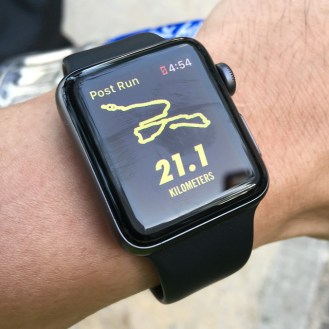
Fitness Trackers are one of the most popular wearables available today. They can take many forms with the most recognisable being ones worn on the wrist, others using capablities on mobile phones or devices worn on the chest or embeded into clothing.

The number of devices being sold in 2017 is estimated by Gartner to be around 176 million, taking the categories that have fitness tracking capabilities.

From a basic pedometer function to recording additional statistics such as Heart Rate, Location, Altitude etc. these devices are collecting and generating a huge amount of data. Mainly used on a personal basis, industries are now tapping into this information bank such as Health Care looking at monitoring the health of patients and Insurance companies looking at how an adaptive health insurance policy can be influenced by our fitness.

The power of this data can be seen in the data collected through a popular application called Strava which connects people together to record and share their activities. in 2016 350 million Strava activies were collected and the data is availble to view via Strava Labs which has clustered the information together over a map of the world. At a high level there doesnt look to be a lot of data highlighted however zooming in shows a lot of data in different areas around the world.

Businesses are starting to utilise these devices to benefit the business and employees by collecting data to monitor and analyse areas such as:

  • Employee Health – working in areas of concern
  • Monitoring for lone workers

The devices are also adapting and evolving to meeting this growing demand.

The trackers are only one part of a solution for collecting the information as shown in the Strava example an integrated analaytical back end is needed to gain useful meaning to the data.


Share this:

  • Share on Facebook (Opens in new window) Facebook
  • Share on LinkedIn (Opens in new window) LinkedIn
  • Email a link to a friend (Opens in new window) Email
  • Share on Pinterest (Opens in new window) Pinterest
  • Share on Reddit (Opens in new window) Reddit
  • Share on X (Opens in new window) X
  • Share on Tumblr (Opens in new window) Tumblr
  • Share on Pocket (Opens in new window) Pocket
  • Share on Telegram (Opens in new window) Telegram
  • Share on Threads (Opens in new window) Threads
  • Share on WhatsApp (Opens in new window) WhatsApp
  • Share on Mastodon (Opens in new window) Mastodon
  • Share on Bluesky (Opens in new window) Bluesky
  • Share on Nextdoor (Opens in new window) Nextdoor
Like Loading...

A-Z of Digital – E is for Evolution

06 Thursday Jul 2017

Posted by Max Hemingway in Uncategorized

≈ Leave a comment

earth-2254769_640Following on from my blog post outlining an A-Z of Digital, here is “E is for Evolution”.

Evolution covers the advancements and new technologies that are shaping the Journey to Digital.

The most impacting area that is shaping the conceptions around Digital is that of the end user devices. End user devices such as Tablets, Mobiles, Watches, Smart Glasses, Augmented Reality, Virtual Reality, 3D Printing, 360 Degree Cameras, Voice Activated Home Interfaces and Fitness Trackers are probably the most reported on items shaping how we consume and use services and data.

A good way to look at evolution is to recall the number of mobile phones you have had and how they have changed over the years from being large and heavy with the ability to just make a call to being a smartphone capable of providing information and take pictures as well as make a call.

The Evolution of the Mobile Phone in Pictures provides a brief history of these devices and how they have evolved.

From this evolution, the mobile phone is becoming the central hub of the connected person allowing connectivity of the devices that we wear and use and send data to and from the various related services.

Other areas of technology sees competition between vendors driving new developments as they become the first to patent and develop new technologies. Games consoles providing Virtual Reality capability with some vendors now developing Mixed Reality for future releases.

There are also lots of new ideas and products coming out of sites such as crowdfunding and crowd-sourcing sites, some work however some do fail or not enough funding is reached. These sites are worth tracking to see what developments are coming around the corner. (Sites such as https://www.kickstarter.com and https://www.indiegogo.com can provide a glimpse into what is being developed).

However there is as much innovation and development happening in the back end such as  Virtualisation, Cloud Computing, Containers, Micro-Services, API’s and Automation. These form an important part of the Digital Evolution as they help deliver the applications and delivery to the end user devices.

Examples of technologies proving containers and enabling micro-services would be a service running on Amazon Cloud, using Docker and Ansible to script automated deployments of servers and solutions with the ability to grow or shrink as need by a business or service.

It is important to understand what is available and feasible by taking advantage of today’s technologies as a step on the Journey to Digital, whilst also keeping a view on the future to help shape a roadmap for your business.


Share this:

  • Share on Facebook (Opens in new window) Facebook
  • Share on LinkedIn (Opens in new window) LinkedIn
  • Email a link to a friend (Opens in new window) Email
  • Share on Pinterest (Opens in new window) Pinterest
  • Share on Reddit (Opens in new window) Reddit
  • Share on X (Opens in new window) X
  • Share on Tumblr (Opens in new window) Tumblr
  • Share on Pocket (Opens in new window) Pocket
  • Share on Telegram (Opens in new window) Telegram
  • Share on Threads (Opens in new window) Threads
  • Share on WhatsApp (Opens in new window) WhatsApp
  • Share on Mastodon (Opens in new window) Mastodon
  • Share on Bluesky (Opens in new window) Bluesky
  • Share on Nextdoor (Opens in new window) Nextdoor
Like Loading...

A-Z of Digital – D is for Digital

03 Monday Jul 2017

Posted by Max Hemingway in Digital

≈ 1 Comment

Tags

Digital

superhero-534120_640Following on from my blog post outlining an A-Z of Digital, here is “D is for Digital”.

Digital is a word that we hear in everyday conversations and its connotations grow on a daily basis. In short it is a term that is used to describe the advancements in how we consume and use technology within our everyday lives and enhance and improve businesses and it’s effects on the human race.

Being Digital is not necessarily just about having the latest gadgets, but more around how you are using them and what you do to intergrate things together, automate things and improve your work and home lives.

From a business view this is about growth and transforming through processes and technology, utilising the latest inventions and ideas to automate and reduce costs. Bringing together systems and solutions through API’s and Intergration, changing the way business is done.

The “Journey to Digital” (#Journey2Digital) is about how you can achieve these things in little or big steps depending upon what your goals are.

The journey can include:

  • Strategy and Direction
  • Vision and Roadmap
  • Outside-in approach
  • Working with partners and companies that can provide digital capabilities
  • Agile approach
  • Funding digital changes and learning to fail fast
  • Customer demands
  • Competition advancements
  • Industry directions (ie Industry 4.0 for Manufacturing)

The main part of the journey is being able to accept change and encourage innovation to create enhancements that drive the direction towards being digital.


Share this:

  • Share on Facebook (Opens in new window) Facebook
  • Share on LinkedIn (Opens in new window) LinkedIn
  • Email a link to a friend (Opens in new window) Email
  • Share on Pinterest (Opens in new window) Pinterest
  • Share on Reddit (Opens in new window) Reddit
  • Share on X (Opens in new window) X
  • Share on Tumblr (Opens in new window) Tumblr
  • Share on Pocket (Opens in new window) Pocket
  • Share on Telegram (Opens in new window) Telegram
  • Share on Threads (Opens in new window) Threads
  • Share on WhatsApp (Opens in new window) WhatsApp
  • Share on Mastodon (Opens in new window) Mastodon
  • Share on Bluesky (Opens in new window) Bluesky
  • Share on Nextdoor (Opens in new window) Nextdoor
Like Loading...

Follow Me on LinkedIn

www.linkedin.com – Click to Follow 

RSS Feed

RSS Feed RSS - Posts

Other Publications I contribute to

https://sparrowhawkbushcraft.com/

Recent Posts

  • The Business Value of Enterprise Architecture Explored
  • Celebrating 150+ Hours of STEM Impact
  • The Importance of ArchiMate and UML in Modern Organisations
  • Preparing for Post Quantum Security: Key EA Strategies
  • Graceful Speech & Timeless Tales: The Complete Series Index

Categories

  • 21st Century Human
  • 3D Printing
  • AI
  • Applications
  • ArchiMate
  • Architecture
  • Arduino
  • Automation
  • BCS
  • Big Data
  • Certification
  • Climate Change
  • Cloud
  • Cobotics
  • Connected Home
  • Data
  • Data Fellowship
  • Data Science
  • Development
  • DevOps/OpsDev
  • Digital
  • DigitalFit
  • Drone
  • Enterprise Architecture
  • F-TAG
  • Governance
  • Health
  • Innovation
  • IoT
  • IT Strategy
  • Machine Learning
  • Metaverse
  • Micro:Bit
  • Mindset
  • Mobiles
  • Networks
  • Open Source
  • Podcasts
  • Productivity
  • Programming
  • Quantum
  • Raspberry Pi
  • Robotics
  • Scouting
  • Scouts
  • Security
  • Smart Home
  • Social Media
  • Space
  • STEM
  • Story Telling
  • Technologists Toolkit
  • Tools
  • Uncategorized
  • Wearable Tech
  • Windows
  • xR

Archives

Reading Shelf

Archives

Recent Posts

  • The Business Value of Enterprise Architecture Explored
  • Celebrating 150+ Hours of STEM Impact
  • The Importance of ArchiMate and UML in Modern Organisations
  • Preparing for Post Quantum Security: Key EA Strategies
  • Graceful Speech & Timeless Tales: The Complete Series Index

Top Posts & Pages

  • Why Boards Overlook Enterprise Architecture
  • The Business Value of Enterprise Architecture Explored
  • The Fusion of Tech and Creativity Driving Innovation
  • 8 Free "For Dummies" books you should read in 2016
  • 20 Informative Podcasts for 2025: Boost Your PKMS
  • Key Steps for a Successful Migration to Post-Quantum Cryptography
  • Preparing for Post Quantum Security: Key EA Strategies
  • Professional vs Personal Social Media
  • Personal Knowledge Management System - Revised for 2016

Category Cloud

21st Century Human Architecture Big Data Cloud Data Data Science Development DevOps/OpsDev Digital DigitalFit Enterprise Architecture Governance Innovation IoT Machine Learning Mindset Open Source Podcasts Productivity Programming Raspberry Pi Robotics Security Social Media STEM Story Telling Technologists Toolkit Tools Uncategorized Wearable Tech

Tags

3D Printing 21st Century Human AI Applications ArchiMate Architecture Automation BCS Big Data Blockchain business Certification Cloud Cobot Cobotics Coding Communication Connected Home CPD cybersecurity Data Data Fellowship Data Science Delivery Development DevOps Digital DigitalFit Digital Human Drone Email Enterprise Architecture Governance GTD Infographic Information Theory Innovation IoT Journal Knowledge learning Machine Learning Metaverse MicroLearning Mindset Mixed Reality Networks Open Source OpsDev PKMS Podcasts Productivity Programming Proving It Quantum quantum-computing R RaspberryPI Robot Robotics Scouts Security Smart Home Social Media STEM Story Telling Technologists Toolkit technology Technology Couch Podcast Thinking Tools Visualisation Voice Wearable Tech xR

License

Creative Commons Licence
This work is licensed under a Creative Commons Attribution-NonCommercial-ShareAlike 4.0 International License.

Meta

  • Create account
  • Log in
  • Entries feed
  • Comments feed
  • WordPress.com

Blog at WordPress.com.

  • Subscribe Subscribed
    • Max Hemingway
    • Join 82 other subscribers
    • Already have a WordPress.com account? Log in now.
    • Max Hemingway
    • Subscribe Subscribed
    • Sign up
    • Log in
    • Report this content
    • View site in Reader
    • Manage subscriptions
    • Collapse this bar
 

Loading Comments...
 

    %d