
With the world overflowing with messages, videos, social media and influencers, making a presentation or story truly resonate is key to engaging an audience and attracting new views. The answer to this lies not just in the words we choose, but in how we deliver them through the colour and quality of our voice.
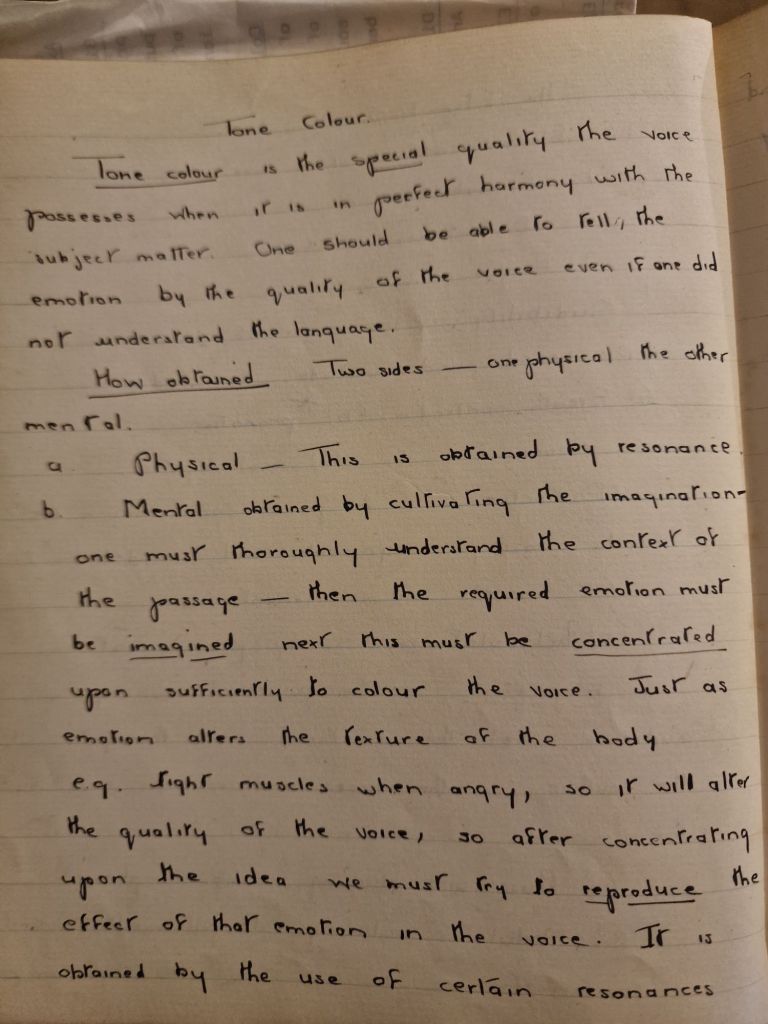
Drawing inspiration from a excerpt in my grandmother’s notebook, the art of tone remains as vital today as it was in generations past.
The Timeless Impact of Tone: More Than Just Sound
Tone is the unique character our voices take on, reflecting our connection to what we’re saying. Even if the audience doesn’t understand the language, the emotion behind the words can still be felt. This universal quality is why great presenters and storytellers engage an audiences hearts as well as their minds.
It is important to consider the actual language that you use and any words that are specific to your trade or industry are simplified for the audience. Not everyone will know what a Wobjiglinkthingibob is!
Physical and Mental Aspects: A Two-Pronged Approach
The notes describe tone colour as having two sides: the physical and the mental. Modern voice coaches echo this, emphasising both body and mind.
- Physical Resonance: Today, we know that the way sound vibrates in our chest, throat and head shapes our vocal tone. Good posture, relaxed muscles, and proper breathing allow your voice to carry emotion more naturally. This means practising vocal exercises and staying mindful of tension and anger, as this can often tighten the muscles and constrict the voice.
- Mental Imagination: To truly connect, you must immerse yourself in the content and envision its emotional landscape. The best storytellers use empathy and imagination to internalise the mood of their message, letting genuine feeling colour their voice. Mindfulness and visualisation techniques help cultivate mental quickness, helping speakers pivot smoothly between emotions as their story unfolds.
Modern Applications: Engaging Today’s Audience
Presenting and storytelling in the digital era offer new challenges and opportunities. Audiences are diverse, attention spans are short (20-40 mins) and authenticity is prized. To stand out:
- Be Present: Before speaking, centre yourself. Take a deep breath and mentally step into the scene you’re about to describe.
- Feel the Emotion: Don’t just recite, relive the emotions behind your words. Let your voice reflect your excitement, concern, joy or suspense.
- Adapt and Respond: Modern presenters read the room, whether in person or online. Adjust your tone in real time to maintain connection and engagement.
Tone Colour is the special quality the voice possesses when it is in perfect harmony with the subject matter. One should be able to tell the emotion by the quality of the voice even if one did not understand the language.
How obtained: Two sides – one physical the other mental
Physical – This is obtained be resonance
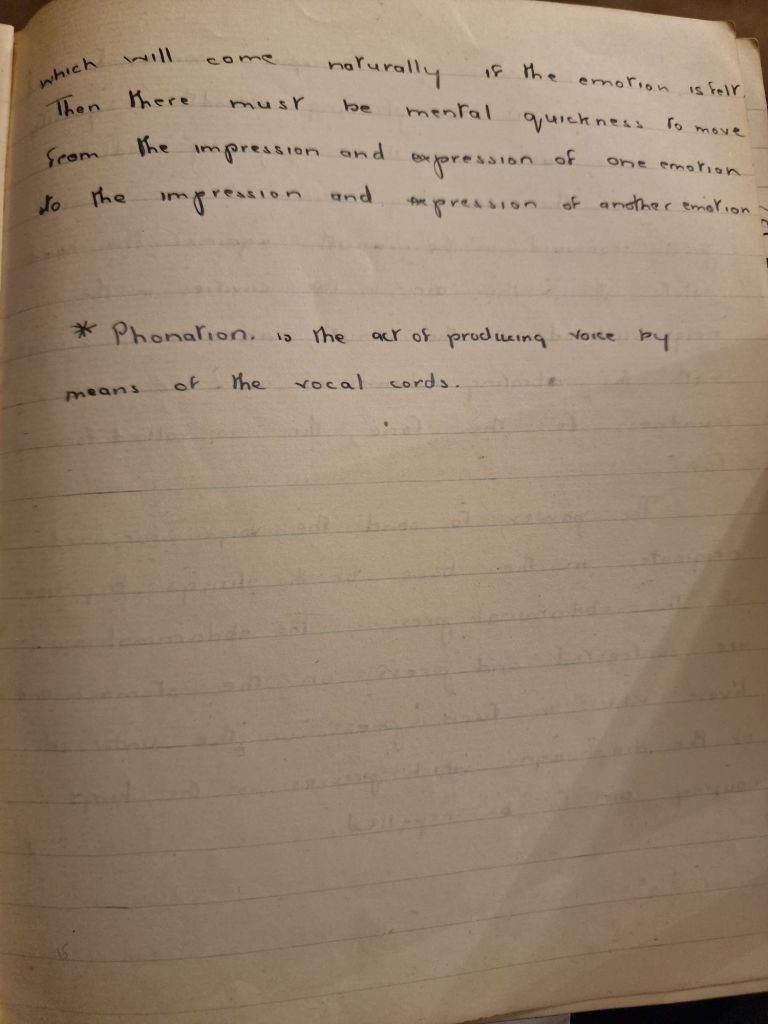
Mental – obtained by cultivating the imagination one must thoroughly understand the context if the passage – then the required emotion must be imagined next this must be concentrated upon sufficiently to colour the voice. Just as emotion alters the texture of the body. Eg. Tight muscles when angry, so it will alter the quality of the voice, so after concentrating upon the idea we must try to reproduce the effect of that emotion in the voice. It is obtained by the use of certain resonances which will come naturally if the emotion is felt then there must be mental quickness to move from the impression and expression of one emotion to the impression and expression of another emotion.
Above are an excerpt from my grandmothers notebook.
By balancing physical technique with emotional intelligence, presenters and storytellers can ensure their message not only reaches the audience but resonates long after the final word.




 Max Hemingway
Leave a comment