Graceful Speech & Timeless Tales: The Power of the Pause
Storytelling and presenting utilise silence as a powerful tool. Pauses enhance storytelling by allowing breath, clarifying meaning, emphasising words, conveying emotion, and maintaining rhythm. Different types of pauses exist—breath, emphatic, end line, and caesural—each serving to enrich communication. Effective speech often relies on the strategic use of silence.
Storytelling and presenting are crafts shaped as much by silence as by speech. Where words often tumble out in rapid succession and trying to get your message out quickly, the pause remains a storyteller’s most understated yet powerful tool.
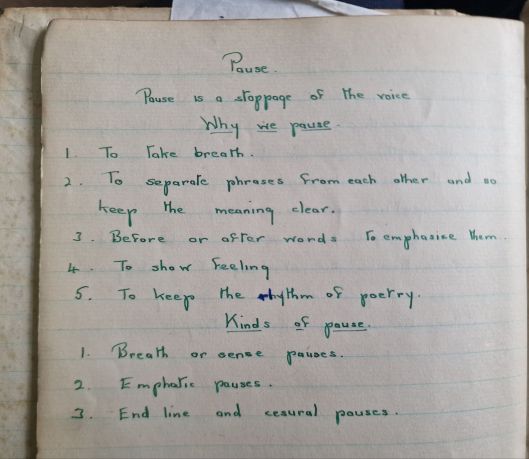
Pause is a stoppage of the voice
Why we pause:
To take breath
To separate phrases from each other and so keep the meaning clear
Before or after words to emphasise them
To show feeling
To keep the rhythm of poetry
Kinds of pause:
Breath or sense pauses
Emphatic pauses
End line and caesural pauses
Excerpt from my grandmothers notebook.
Drawing inspiration from this excerpt, let’s break down further why pausing is essential for anyone looking to captivate an audience, whether on stage or around a dinner table.
What Is a Pause?
At its simplest, a pause is a deliberate stoppage of the voice. It is a moment of silence that gives your words weight, your audience space and your message clarity.
Why Do We Pause?
To take a breath: Speaking is as physical as it is mental. Pausing allows you to breathe, keeping your delivery steady and your nerves in check.
To separate phrases and clarify meaning: Without pauses, sentences blur together and the story loses its thread. Pausing makes sure each idea stands out, helping listeners follow your narrative with ease.
To emphasise words: A well-timed pause before or after a key word draws attention to it, making your message linger in the minds of your audience.
To show feeling: Silence can convey emotion that words sometimes cannot—a pause after a heartfelt confession, for instance, lets the weight of the moment settle.
To maintain the rhythm of storytelling: Just as music relies on rests, stories and presentations need pauses to keep their natural flow and prevent monotony.
Pauses allow you small gaps to check your audience and message: are they still listening?, is the message on track?
The Different Kinds of Pauses
Breath or sense pauses: These occur where you would naturally take a breath or where the sense of the phrase demands a break.
Emphatic pauses: Used for dramatic effect, these pauses highlight a point or create suspense.
End line and caesural pauses: In poetry and prose, these pauses mark the end of a line or a significant division within a line, contributing to rhythm and structure.
Next time you stand up to speak or sit down to share a story, remember: grace in speech often lies not in what you say, but in the silences you allow.





 Max Hemingway
Leave a comment