• About Me Card

Max Hemingway

~ Musings as I work through life, career and everything.

Max Hemingway

Tag Archives: Digital

A-Z of Digital – Q is for Quantum Computing

28 Monday Aug 2017

Posted by Max Hemingway in Digital

≈ 1 Comment

Tags

Digital

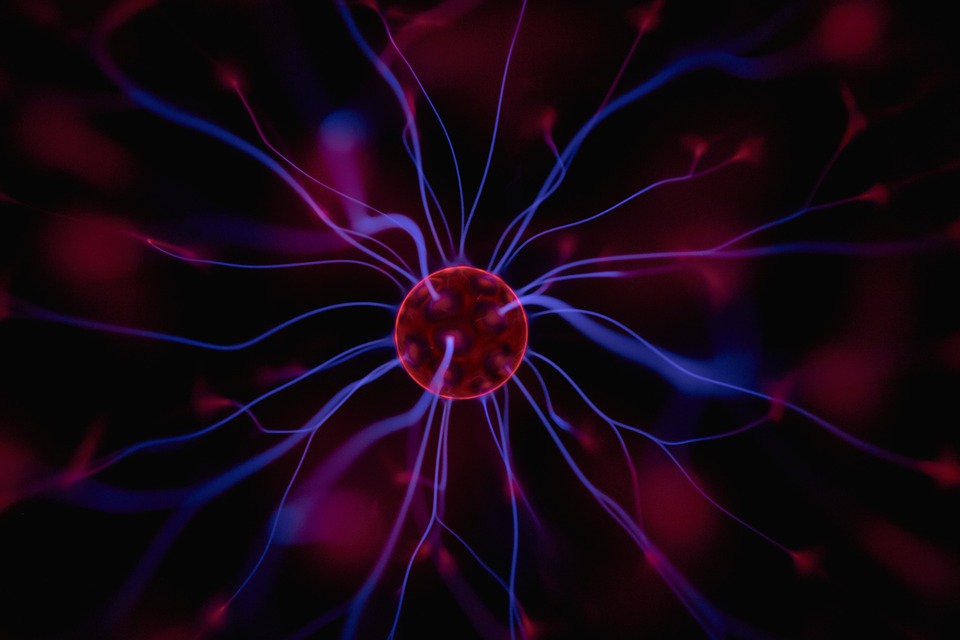
QuantumFollowing on from my blog post outlining an A-Z of Digital, here is “Q is for Quantum Computing”.

A computer which makes use of the quantum states of subatomic particles to store information (Source: Dictionary)

Although still in its infancy, there have already been huge developments in the field of Quantum Computing and predictions are showing a mass market in the future “Quantum Computing Market – Will Reach $10.7bn by 2024‎”.

Today’s computers make use of transistors to compute binary states (on/off, 1/0) where as Quantum Computers are based on quantum-mechanical phenomena, superposition and entanglement. See a colleagues post “Through the looking-glass: Quantum computing 101” for an explanation of these.

So what is special about Quantum Computers? Its their ability to compute data at an exponential rate allowing for quick computing of complex data. This is boosting the abilities of Machine Learning and AI to quickly deliver results and allow for greater computations to take place.

The measure of quantum information is called a qubit (the quantum version of the binary bit). Google already have a 20 qubit processor in test and are working on higher speeds. There have already been large systems capable of 2000 qubits (with a cost of around £15m the system). Higher qubit counts are expected as developments continue by the industry. MIT are looking at how “Ultracold molecules hold promise for quantum computing”

The applications for business and industry are vast with the ability to process information quickly, provide predictive analytics and machine learning, tackle cyber threats and provide a system for AI.

It will be a while before Quantum Computing becomes fully mainstream with some analysts predicting this around 2025. In the meantime there are advancements in existing computer methods with companies making new developments around Machine Learning and AI- e.g. “Google says its custom machine learning chips are often 15-30x faster than GPUs and CPUs“.


Share this:

  • Click to share on Facebook (Opens in new window) Facebook
  • Click to share on LinkedIn (Opens in new window) LinkedIn
  • Click to email a link to a friend (Opens in new window) Email
  • Click to share on Pinterest (Opens in new window) Pinterest
  • Click to share on Reddit (Opens in new window) Reddit
  • Click to share on X (Opens in new window) X
  • Click to share on Tumblr (Opens in new window) Tumblr
  • Click to share on Pocket (Opens in new window) Pocket
  • Click to share on Telegram (Opens in new window) Telegram
  • Click to share on Threads (Opens in new window) Threads
  • Click to share on WhatsApp (Opens in new window) WhatsApp
  • Click to share on Mastodon (Opens in new window) Mastodon
  • Click to share on Bluesky (Opens in new window) Bluesky
  • Click to share on Nextdoor (Opens in new window) Nextdoor
Like Loading...

A-Z of Digital – P is for Programming

24 Thursday Aug 2017

Posted by Max Hemingway in Digital, Programming

≈ 1 Comment

Tags

Digital, Programming

code2Following on from my blog post outlining an A-Z of Digital, here is “P is for Programming”.

Programming or Coding is something that everyone should learn (How you can begin to code), even if its just to produce a simple programme to print  “Hello World” to the screen.

Why? Because programming/coding is becoming an integral part of businesses moving towards its Digital Transformation. Having an understanding of code or being able to write it, helps understand whats behind as code services, automation and connecting systems together with API’s. The manual tasks of today should be the Automated tasks of tomorrow.

The phrase “Learning to code” may strike fear and thoughts of hundreds of lines text and numbers, but it doesn’t need to. The ability to learn to code has grown with the availability of free resources, books and videos available on the internet that takes you through from a beginner upwards.

Choosing a language will depend on what you are looking to achieve, but if your starting out try Scratch (https://scratch.mit.edu/) as its based around blocks to create a programme. Alternatively there are lots of languages to try and below is a list of the current top 10 languages compiled by RedMonk.

Top 10 Programming Languages from RedMonk (June 2017)

1 JavaScript
2 Java
3 Python
4 PHP
5 C#
6 C++
7 CSS
8 Ruby
9 C
10 Objective-C

Source: http://redmonk.com/sogrady/2017/06/08/language-rankings-6-17/

What language will you try?

Further Reading:

  • A-Z of Digital – A is for Automation
  • How you can begin to Code
  • Taking your coding to the next level – Scratch to Python
  • Programming Nostalgia – Back to the 1980’s
  • Learning to Program


Share this:

  • Click to share on Facebook (Opens in new window) Facebook
  • Click to share on LinkedIn (Opens in new window) LinkedIn
  • Click to email a link to a friend (Opens in new window) Email
  • Click to share on Pinterest (Opens in new window) Pinterest
  • Click to share on Reddit (Opens in new window) Reddit
  • Click to share on X (Opens in new window) X
  • Click to share on Tumblr (Opens in new window) Tumblr
  • Click to share on Pocket (Opens in new window) Pocket
  • Click to share on Telegram (Opens in new window) Telegram
  • Click to share on Threads (Opens in new window) Threads
  • Click to share on WhatsApp (Opens in new window) WhatsApp
  • Click to share on Mastodon (Opens in new window) Mastodon
  • Click to share on Bluesky (Opens in new window) Bluesky
  • Click to share on Nextdoor (Opens in new window) Nextdoor
Like Loading...

A-Z of Digital – O is for Organisation

21 Monday Aug 2017

Posted by Max Hemingway in Digital

≈ Leave a comment

Tags

Digital

Organisation

Organisation

Following on from my blog post outlining an A-Z of Digital, here is “O is for Organisation”.

The “As Code” economy is growing at a fast rate with computing services being consumed as code rather than physical entities (Cloud, As a Service , etc.) Infrastructure as Code looks at making hardware being able to be controlled at a code level, enabling Micro Services and the ability to consume capability quickly.

This is allowing organisations to grow without the need for real-estate or physical assets such as an office or IT system.  This is moving organisations to the next stage of “Organisation as Code”. Companies such as Airbnb and Uber provide a good example of an Organisation as Code, building services and the supporting organisation in the cloud allowing it to be consumed anywhere by users across the world.

Currently there is still a need for a physical presence, as an organisation grows, to meet laws and criteria for operating a business across the many countries they operate, however some of these criteria are starting to be challenged through automation of processes.  Other demands such as security create a need for staff to monitor, patch and maintain the levels of security required for the code and organisation, drive the need for staff and ultimately an HR person or department.

AI bots can be used to interface with the users of the system and employees, but ultimately there is a need for a human at the some point in the conversation.

It may be some time before we see a fully coded organisation, but we are moving that way in small and big steps over time.

Digital Transformation is after all a Business Transformation activity not just  Technical Transformation. One aspect of business change will always be organisational change.


Share this:

  • Click to share on Facebook (Opens in new window) Facebook
  • Click to share on LinkedIn (Opens in new window) LinkedIn
  • Click to email a link to a friend (Opens in new window) Email
  • Click to share on Pinterest (Opens in new window) Pinterest
  • Click to share on Reddit (Opens in new window) Reddit
  • Click to share on X (Opens in new window) X
  • Click to share on Tumblr (Opens in new window) Tumblr
  • Click to share on Pocket (Opens in new window) Pocket
  • Click to share on Telegram (Opens in new window) Telegram
  • Click to share on Threads (Opens in new window) Threads
  • Click to share on WhatsApp (Opens in new window) WhatsApp
  • Click to share on Mastodon (Opens in new window) Mastodon
  • Click to share on Bluesky (Opens in new window) Bluesky
  • Click to share on Nextdoor (Opens in new window) Nextdoor
Like Loading...

A-Z of Digital – N is for Networks

12 Saturday Aug 2017

Posted by Max Hemingway in Digital, Networks

≈ Leave a comment

Tags

Digital, Networks

Network CablesFollowing on from my blog post outlining an A-Z of Digital, here is “N is for Networks”.

Networking in general is well known and understood as its an integral part of the worlds infrastructure today. In this post I will cover two areas at a high level where there is significant developments going on – Neural Networks and 5G.

Neural Networks

A Neural network is a network that is modeled on a biological brain and nervous systems pathways (synapses) that allows computations to take place at speed and across many nodes.  Neural networks have been used across a vast number of tasks but are probably best recognised  today as the underlying network of AI (Artificial Intelligence) and Machine Learning.

You are using neural networks in your every day lives without knowing it with things like the voice activated assistants Alexa, Siri, Google Home, Cortana, which deploy neural networks at the back end to provide the basis of the AI and machine learning algorithms that take your voice commands and transact the outcomes based on the instruction. These networks are constantly being developed and improved to provide the services of today and tomorrow.  There are lots of other services that we use daily that have neural networks behind them.

Businesses are looking at neural networks as part of their move to AI and machine learning, especially as neural networks are becoming easier to use with availability via online services for developers, scientists, companies or even a home user to start to consume.

A great site to play with a neural network and look what they can achieve is at Tensorflow (Google).  http://playground.tensorflow.org/ Here you can operate a neural network in your browser and increase and decrease the input and hidden layers to change the output.

Tensorflow

Further Reading

  • How do you build an AI? We gave it a try
  • The challenge of scaling AI technology
  • Automating AI to make enterprises smarter, faster
  • The challenge of scaling AI technology
  • Neural Networks and Deep Learning
  • Deep Learning


5G

One of the latest developments in networking and mobile communications is 5G (the fifth generation of wireless systems). A set of criteria that 5G should fulfill has been set out by the Next Generation Mobile Network Alliance:

  • Data rates of tens of megabits per second for tens of thousands of users
  • Data rates of 100 megabits per second for metropolitan areas
  • 1 Gb per second simultaneously to many workers on the same office floor
  • Several hundreds of thousands of simultaneous connections for wireless sensors
  • Spectral efficiency significantly enhanced compared to 4G
  • Coverage improved
  • Signalling efficiency enhanced
  • Latency reduced significantly compared to LTE.

Source: https://en.wikipedia.org/wiki/5G

There are currently field trials of test networks across the world operated by some of the telecom providers using the 28GHz spectrum band and development in to using Drones across the 5G networks.

5G will not only provide improved bandwidth to mobile devices, but provide the next generation communications infrastructure to things like autonomous cars requiring a low latency (around 20Gbps download, 10Gbps upload speeds and 1ms latency) and the IoT (Internet of Things) allowing a greater performance for large scale deployments.

The timescales for 5G are expected around 2020 for a release of the networks following development and testing till then.

Further Reading

  • 5G will transform enterprise mobile
  • 5G to control drones and keep them airborne
  • 5G Fixed wireless access trial now live in the 28GHz band in central London 


Share this:

  • Click to share on Facebook (Opens in new window) Facebook
  • Click to share on LinkedIn (Opens in new window) LinkedIn
  • Click to email a link to a friend (Opens in new window) Email
  • Click to share on Pinterest (Opens in new window) Pinterest
  • Click to share on Reddit (Opens in new window) Reddit
  • Click to share on X (Opens in new window) X
  • Click to share on Tumblr (Opens in new window) Tumblr
  • Click to share on Pocket (Opens in new window) Pocket
  • Click to share on Telegram (Opens in new window) Telegram
  • Click to share on Threads (Opens in new window) Threads
  • Click to share on WhatsApp (Opens in new window) WhatsApp
  • Click to share on Mastodon (Opens in new window) Mastodon
  • Click to share on Bluesky (Opens in new window) Bluesky
  • Click to share on Nextdoor (Opens in new window) Nextdoor
Like Loading...

A-Z of Digital – M is for Machine Learning

08 Tuesday Aug 2017

Posted by Max Hemingway in Digital, Machine Learning

≈ 1 Comment

Tags

Digital, Machine Learning

learnFollowing on from my blog post outlining an A-Z of Digital, here is “M for Machine Learning”.

Machine Learning (ML) allows a computer to learn and act without being explicitly programmed with that knowledge. For example, if you get a computer to recognise a picture of a car and show it some examples of a car, it will then be able to recognise cars going forward and apply what it has learnt against new pictures shown.

Machine learning tasks are typically classified into three broad categories, depending on the nature of the learning signal or feedback available to a learning system. These are

Supervised learning: The computer is presented with example inputs and their desired outputs, given by a “teacher”, and the goal is to learn a general rule that maps inputs to outputs.

Unsupervised learning: No labels are given to the learning algorithm, leaving it on its own to find structure in its input. Unsupervised learning can be a goal in itself (discovering hidden patterns in data) or a means towards an end (feature learning).

Reinforcement learning: A computer program interacts with a dynamic environment in which it must perform a certain goal (such as driving a vehicle or playing a game against an opponent). The program is provided feedback in terms of rewards and punishments as it navigates its problem space.

Source: https://en.wikipedia.org/wiki/Machine_learning

Machine Learning has opened a lot of uses and applications within business and industry such as a manufacturing process that looks for defects in products by telling the computer what good looks like, with imperfections being identified for further investigation.

One common place for interacting with Machine Learning is through the use of Chat Bots. You may have used a chat bot without knowing it, with machine learning helping to provide the answers to your queries.

An interesting chat bot to try out through Facebook Messenger is Keiko, a people search droid. The search can provide a series of questions to help narrow the search to who you are looking for. Yes you could do this through a normal search engine, but the thing I like about Keiko is the ability to interact and respond to the query with additional questions or suggestions for the search. Keiko can provide other functions other than just searching for a person. Search engines themselves have a lot of machine learning involved in ensuring that the results returned are the best match to the person searching and the search criteria.

If you want to have a go with a Machine Learning program try Googles Autodraw https://www.autodraw.com/. In this application you can draw an object and Google will try and suggest clip art that is similar to your drawing. As the program is used it learns from the drawings and selections that people make.

Further Reading

  • Visual introduction to Machine Learning
  • Deal or no deal? Training AI bots to negotiate
  • How to get started with machine learning in manufacturing
  • Putting machine learning into context
  • How machine learning and AI are transforming the workplace
  • Enrolling in Artificial Intelligence Kindergarten
  • The digital twin
  • Hesitant to adopt machine learning in 2017? This might change your mind
  • Machine intelligence still requires gray matter
  • Why artificial intelligence will never be smart enough to replace a good leader
  • Is the fusion of AI and cloud the future?
  • A primer on personal AI assistants
  • Visual Introduction to Machine Learning
  • In-depth Introduction to Machine Learning


Share this:

  • Click to share on Facebook (Opens in new window) Facebook
  • Click to share on LinkedIn (Opens in new window) LinkedIn
  • Click to email a link to a friend (Opens in new window) Email
  • Click to share on Pinterest (Opens in new window) Pinterest
  • Click to share on Reddit (Opens in new window) Reddit
  • Click to share on X (Opens in new window) X
  • Click to share on Tumblr (Opens in new window) Tumblr
  • Click to share on Pocket (Opens in new window) Pocket
  • Click to share on Telegram (Opens in new window) Telegram
  • Click to share on Threads (Opens in new window) Threads
  • Click to share on WhatsApp (Opens in new window) WhatsApp
  • Click to share on Mastodon (Opens in new window) Mastodon
  • Click to share on Bluesky (Opens in new window) Bluesky
  • Click to share on Nextdoor (Opens in new window) Nextdoor
Like Loading...

A-Z of Digital – L is for Legal

06 Sunday Aug 2017

Posted by Max Hemingway in Digital

≈ 3 Comments

Tags

Digital

Legal

Following on from my blog post outlining an A-Z of Digital, here is “L is for Legal”.

With the increasing about of things interacting with our daily lives, the area of Legal and Security play a big part.

The most common of these is the Terms and Conditions (T’s and C’s).  We are presented with a myriad or applications each with their own T’s and C’s to tick a check box to say we have read them when we install or update them. Most people will just click the box and accept them, but when was the last time you actually read the Terms and Conditions and you have just signed up to clean toilets for a couple of weeks? Makes you wonder what you have actually agreed to in all those T’s and C’s previously accepted!

With further adoption of the as a service economy, it is important to  read the T’s and C’s and keep up to date with any changes that are made to them as they are updated. Changes could mean that your data can be used by the provider – e.g. Robot vacuum company mulls selling maps of homes.

One of the next big legal items to come along is GDPR (General Data Protection Regulation);

The General Data Protection Regulation (GDPR) (Regulation (EU) 2016/679) is a regulation by which the European Parliament, the Council of the European Union and the European Commission intend to strengthen and unify data protection for all individuals within the European Union (EU). It also addresses the export of personal data outside the EU. The primary objectives of the GDPR are to give control back to citizens and residents over their personal data and to simplify the regulatory environment for international business by unifying the regulation within the EU. When the GDPR takes effect, it will replace the data protection directive (officially Directive 95/46/EC) from 1995. The regulation was adopted on 27 April 2016. It becomes enforceable from 25 May 2018 after a two-year transition period and, unlike a directive, it does not require any enabling legislation to be passed by national governments and is thus directly binding and applicable.

Source: Wikipedia

GDPR will introduce one of the biggest shakeups of data protection in years. Understanding its impact on your businesses is an important role for legal, IT and the business to ensure compliance going forward when it takes over the current data protection laws on 25 May 2018.

The main points of GDPR cover new rights that need to be considered include:

  • Valid consent must be obtained to store data
  • Right to be forgotten
  • Access to data and sharing and portability of data
  • Protection of data by design and default
  • Obligation to notify of any breaches

Are you ready for GDPR?

Further Reading

  • Whats ahead for security and cloud adoption
  • Retail data and the brexit vote
  • The impact of GDPR on the Public Sector
  • IoT Device Security Considerations and Security Layers


Share this:

  • Click to share on Facebook (Opens in new window) Facebook
  • Click to share on LinkedIn (Opens in new window) LinkedIn
  • Click to email a link to a friend (Opens in new window) Email
  • Click to share on Pinterest (Opens in new window) Pinterest
  • Click to share on Reddit (Opens in new window) Reddit
  • Click to share on X (Opens in new window) X
  • Click to share on Tumblr (Opens in new window) Tumblr
  • Click to share on Pocket (Opens in new window) Pocket
  • Click to share on Telegram (Opens in new window) Telegram
  • Click to share on Threads (Opens in new window) Threads
  • Click to share on WhatsApp (Opens in new window) WhatsApp
  • Click to share on Mastodon (Opens in new window) Mastodon
  • Click to share on Bluesky (Opens in new window) Bluesky
  • Click to share on Nextdoor (Opens in new window) Nextdoor
Like Loading...

A-Z of Digital – K is for Knowledge

02 Wednesday Aug 2017

Posted by Max Hemingway in Tools

≈ 15 Comments

Tags

Digital, Journal, Knowledge, learning, Tools

books-2158737_1920Following on from my blog post outlining an A-Z of Digital, here is “K is for Knowledge”.

Understanding what is going on in your streams, market places and industries is a big task. We can be deluged with information, news and articles coming in on a daily basis through many streams/channels (as well as all the work emails you get in a day)  means that we tend to drink from the fire hose and not be able to assimilate all of the data coming in.

One way of helping is to create your own Personal Knowledge Management System, that will help navigate the sea of information and pick out what is key to your requirements and what can be dropped.

Here is my updated Personal Knowledge Management System that I use to sort and store useful artefacts, blogs, information, inspiration, articles and bits that get in a day.

Personal Knowledge Management System

Personal Life

Personal Journal

Journalling in both a Personal and Work life is a useful tool to keep notes on your thoughts and ideas. In my personal life I opt for recording these in a Moleskine – See my blog post No batteries required for further details.

Social Media

I separate from my work life from my personal life using things like Instagram and Facebook for friends and family with appropriate security settings in place. Even with those settings you still need to consider that once something is online, it could be public in the future.

Work Life

Research

This is split into several areas and these are a few of the inputs that I use to grab information, feeds, data from:

  • Podcasts
  • Audio subscriptions
  • RSS Feeds
  • Web Searches
  • Blog Posts

Podcasts cover both Audio and Video casts that I watch/stream online or download to my Media Player (Audio and Videos) to listen to on journeys (Audio)

Flipboard

Flipboard provides another stream of data that I consume bringing in news feeds from many sources around a series of topics. It does work well on a mobile device allowing you to flip the pages through the articles.

Feedly

Feedly provides an aggregation tool which I use to collect the stories from blogs and web sites I regularly pull information from.  This provides a list of stories that can be scanned tin a few minutes on a single screen without going via multiple sites. Clicking on a story will bring up a snippet from the source site and provide the link to read the source article if required. Using a series of key strokes you can read the headlines, then move down the articles at a reasonable speed, stopping and opening when needed.

Sources can be categorised to allow an all view or just whats new in a category.  There is a new noise filter to take out articles that are not relevant which I will be looking at shortly (paid for version).

Instapaper

Instapaper is one of several tools I use to store the articles I need to keep to refer back to and want to save. There is a link from Feedly to provide this (paid for version) which saves the articles. Instapaper then tweets the link out on a separate @Hemingwayreads Twitter Account when I want it to.

IFTTT

IFTTT (If This Then That) provides a level of automation to my lists from saving articles to creating alerts on topics and triggering different actions as needed to my devices.

Thinking Time

This is where view the data streams through the tools and assimilate and think about what has been reported/said.

Blogging and Being Social

From thoughts and research I will write about things through my blogs and publish these into Social Media streams such as Twitter, Linkedin and G+/

Future Tools

Future additions to my tools will probably include some machine learning and further automation to bring out more of the articles I am interested in and filter out the noise. Then bringing in a voice based capability to read out targeted articles to me when I am mobile and travelling.

Do you have a Personal Knowledge Management System or using tools not mentioned above?

Further Inspiration from others

Some other good Personal Knowledge Management Systems from colleagues:

  • Chris Swan – I read tech news so you don’t have to
  • Graham Chastney – How I process information
  • Stuart Downes – My Personal Knowledge Management Systems
  • Steve Richards – My personal work style

Share this:

  • Click to share on Facebook (Opens in new window) Facebook
  • Click to share on LinkedIn (Opens in new window) LinkedIn
  • Click to email a link to a friend (Opens in new window) Email
  • Click to share on Pinterest (Opens in new window) Pinterest
  • Click to share on Reddit (Opens in new window) Reddit
  • Click to share on X (Opens in new window) X
  • Click to share on Tumblr (Opens in new window) Tumblr
  • Click to share on Pocket (Opens in new window) Pocket
  • Click to share on Telegram (Opens in new window) Telegram
  • Click to share on Threads (Opens in new window) Threads
  • Click to share on WhatsApp (Opens in new window) WhatsApp
  • Click to share on Mastodon (Opens in new window) Mastodon
  • Click to share on Bluesky (Opens in new window) Bluesky
  • Click to share on Nextdoor (Opens in new window) Nextdoor
Like Loading...

A-Z of Digital – J is for Jacking

26 Wednesday Jul 2017

Posted by Max Hemingway in Digital, Wearable Tech

≈ 3 Comments

Tags

Digital, Wearable Tech

Cyborg Eye

Following on from my blog post outlining an A-Z of Digital, here is “J is for Jacking”.

Jacking is a term used when you plug into something. Body Jacking is a growing area where the body is being used from generating power through movement to implanting chips to interact with the environment such as open a door or unlock a computer.

Previously the main development area for jackables has been in the medical industries with things like robotic limbs, artificial organs, pacemakers and implanted hearing aids. The market is now shifting with recent examples of this include someone who had lost their eye replacing an eye with camera to create films of what they see to employees being implanted with chips to open doors and use the vending machines. There are also Bioables which collect data on your body such as glucose levels using sensors that penetrate into the under the skin.

Whilst there are some medical and ethical questions to be looked at around the growing use of Jacking, the evolving market for non medical use (ie chips implanted under the skin) is starting to create a demand that will trigger these debates.

Being implanted with a chip under the skin may not be for everyone, this is a growing area where it may become part of an induction to a new company on your first day.

There are no clear standards at the moment and chips can use a number of technologies such as NFC or RFID to operate the surrounding environment. Consideration should be give to those that do not want to be implanted or contractors who may not want lots of chips in their bodies.

There have been a number of demonstrations around the insertion of the chips. In some instances professional tattoo artists are used to insert the chips as they have a level of training around injecting the skin. What has yet to be seen is the removal of the chip should someone leave a company or it needs replacing for some reason.

Share this:

  • Click to share on Facebook (Opens in new window) Facebook
  • Click to share on LinkedIn (Opens in new window) LinkedIn
  • Click to email a link to a friend (Opens in new window) Email
  • Click to share on Pinterest (Opens in new window) Pinterest
  • Click to share on Reddit (Opens in new window) Reddit
  • Click to share on X (Opens in new window) X
  • Click to share on Tumblr (Opens in new window) Tumblr
  • Click to share on Pocket (Opens in new window) Pocket
  • Click to share on Telegram (Opens in new window) Telegram
  • Click to share on Threads (Opens in new window) Threads
  • Click to share on WhatsApp (Opens in new window) WhatsApp
  • Click to share on Mastodon (Opens in new window) Mastodon
  • Click to share on Bluesky (Opens in new window) Bluesky
  • Click to share on Nextdoor (Opens in new window) Nextdoor
Like Loading...

A-Z of Digital – I is for IoT

25 Tuesday Jul 2017

Posted by Max Hemingway in Digital, IoT

≈ 2 Comments

Tags

Digital, IoT

ThingsFollowing on from my blog post outlining an A-Z of Digital, here is “I is for IoT”.

IoT (Internet of Things) is where physical things are connected by the internet using embedded sensors, software, networks and electronics. This allows the items to be managed, controlled and reported on.

There are lots of news stories of IoT devices being developed to enhance our lives. Some of these are user controlled and some with a central control such as the ability to turn on a washing machine when renewable energy is available. Some supermarkets already use a similar service to reduce power bills by allowing remote control of power to refridgerators.

There are many reports estimating the number of IoT devices likely to be connected in the future, these are between 20 and 50 Billion devices by the year 2020.

With all the developments in IoT, the main concern is that of security and the ability to stop a hack or a control takeover of the IoT devices.

Hybrid IoT networks will help with protection for businesses providing a perimeter for protecting IoT devices and data, but end users will need additional security to help protect themselves.

A number of IoT Standards have been drafted such as:

  • IOT Security Compliance Framework
  • Connected Consumer Products
  • Vulnerability Disclosure

however there are a number of groups introducing a set of standards and frameworks across the industry for IoT.

Choosing to follow best practices is a good thing. Choosing which best practice to follow can be a harder choice to make.

Until such time as a couple or even one set of standards, a hybrid Best Practice may present a good approach, picking the synergies between the best practices and standards, then bringing in the other ones needed.

These latest best practice standards do state that they are generic and up to the indivudal to adopt.

Further reading:

Blog Series on:  IoT Device Security Considerations and Security Layers. 

  • Power Source
  • Chipset
  • Storage/Data
  • Sensor/Instrument
  • Operating System
  • Application
  • Device/Application API’s
  • User Interface
  • Access Control & Authentication
  • Encryption
  • Network Communication
  • Security/Security API’s

Share this:

  • Click to share on Facebook (Opens in new window) Facebook
  • Click to share on LinkedIn (Opens in new window) LinkedIn
  • Click to email a link to a friend (Opens in new window) Email
  • Click to share on Pinterest (Opens in new window) Pinterest
  • Click to share on Reddit (Opens in new window) Reddit
  • Click to share on X (Opens in new window) X
  • Click to share on Tumblr (Opens in new window) Tumblr
  • Click to share on Pocket (Opens in new window) Pocket
  • Click to share on Telegram (Opens in new window) Telegram
  • Click to share on Threads (Opens in new window) Threads
  • Click to share on WhatsApp (Opens in new window) WhatsApp
  • Click to share on Mastodon (Opens in new window) Mastodon
  • Click to share on Bluesky (Opens in new window) Bluesky
  • Click to share on Nextdoor (Opens in new window) Nextdoor
Like Loading...

A-Z of Digital – D is for Digital

03 Monday Jul 2017

Posted by Max Hemingway in Digital

≈ 1 Comment

Tags

Digital

superhero-534120_640Following on from my blog post outlining an A-Z of Digital, here is “D is for Digital”.

Digital is a word that we hear in everyday conversations and its connotations grow on a daily basis. In short it is a term that is used to describe the advancements in how we consume and use technology within our everyday lives and enhance and improve businesses and it’s effects on the human race.

Being Digital is not necessarily just about having the latest gadgets, but more around how you are using them and what you do to intergrate things together, automate things and improve your work and home lives.

From a business view this is about growth and transforming through processes and technology, utilising the latest inventions and ideas to automate and reduce costs. Bringing together systems and solutions through API’s and Intergration, changing the way business is done.

The “Journey to Digital” (#Journey2Digital) is about how you can achieve these things in little or big steps depending upon what your goals are.

The journey can include:

  • Strategy and Direction
  • Vision and Roadmap
  • Outside-in approach
  • Working with partners and companies that can provide digital capabilities
  • Agile approach
  • Funding digital changes and learning to fail fast
  • Customer demands
  • Competition advancements
  • Industry directions (ie Industry 4.0 for Manufacturing)

The main part of the journey is being able to accept change and encourage innovation to create enhancements that drive the direction towards being digital.


Share this:

  • Click to share on Facebook (Opens in new window) Facebook
  • Click to share on LinkedIn (Opens in new window) LinkedIn
  • Click to email a link to a friend (Opens in new window) Email
  • Click to share on Pinterest (Opens in new window) Pinterest
  • Click to share on Reddit (Opens in new window) Reddit
  • Click to share on X (Opens in new window) X
  • Click to share on Tumblr (Opens in new window) Tumblr
  • Click to share on Pocket (Opens in new window) Pocket
  • Click to share on Telegram (Opens in new window) Telegram
  • Click to share on Threads (Opens in new window) Threads
  • Click to share on WhatsApp (Opens in new window) WhatsApp
  • Click to share on Mastodon (Opens in new window) Mastodon
  • Click to share on Bluesky (Opens in new window) Bluesky
  • Click to share on Nextdoor (Opens in new window) Nextdoor
Like Loading...
← Older posts
Newer posts →

Follow Me on LinkedIn

www.linkedin.com – Click to Follow 

RSS Feed

RSS Feed RSS - Posts

Other Publications I contribute to

https://sparrowhawkbushcraft.com/

Recent Posts

  • Graceful Speech & Timeless Tales: Breathing
  • The Quotient Revolution: Building the Well-Rounded Person
  • Ditch Resolutions: Embrace Habit-Building for Success
  • Pen based Productivity Tools: The Chronodex 2026
  • Understanding ETSI TS 104 223 and ISO/IEC 42006

Categories

  • 21st Century Human
  • 3D Printing
  • AI
  • Applications
  • ArchiMate
  • Architecture
  • Arduino
  • Automation
  • BCS
  • Big Data
  • Certification
  • Climate Change
  • Cloud
  • Cobotics
  • Connected Home
  • Data
  • Data Fellowship
  • Data Science
  • Development
  • DevOps/OpsDev
  • Digital
  • DigitalFit
  • Drone
  • Enterprise Architecture
  • F-TAG
  • Governance
  • Health
  • Innovation
  • IoT
  • Machine Learning
  • Metaverse
  • Micro:Bit
  • Mindset
  • Mobiles
  • Networks
  • Open Source
  • Podcasts
  • Productivity
  • Programming
  • Quantum
  • Raspberry Pi
  • Robotics
  • Scouting
  • Scouts
  • Security
  • Smart Home
  • Social Media
  • Space
  • STEM
  • Story Telling
  • Technologists Toolkit
  • Tools
  • Uncategorized
  • Wearable Tech
  • Windows
  • xR

Archives

Reading Shelf

Archives

Recent Posts

  • Graceful Speech & Timeless Tales: Breathing
  • The Quotient Revolution: Building the Well-Rounded Person
  • Ditch Resolutions: Embrace Habit-Building for Success
  • Pen based Productivity Tools: The Chronodex 2026
  • Understanding ETSI TS 104 223 and ISO/IEC 42006

Top Posts & Pages

  • About Me Card
  • Ditch Resolutions: Embrace Habit-Building for Success
  • The Quotient Revolution: Building the Well-Rounded Person
  • 20 Informative Podcasts for 2025: Boost Your PKMS
  • Pen based Productivity Tools: The Chronodex 2026
  • Graceful Speech & Timeless Tales: Breathing
  • Embracing Humility: Staying Open to Feedback and Continuous Improvement in Tech
  • Understanding ISO/IEC 42001: A Course Review
  • The Impact of Enterprise Architecture on Innovation Culture
  • 2015 State of DevOps Report

Category Cloud

21st Century Human Architecture Automation Big Data Cloud Data Data Science Development DevOps/OpsDev Digital DigitalFit Enterprise Architecture Innovation IoT Machine Learning Mindset Open Source Podcasts Productivity Programming Raspberry Pi Robotics Security Social Media STEM Story Telling Technologists Toolkit Tools Uncategorized Wearable Tech

Tags

3D Printing 21st Century Human AI Applications Architecture artificial-intelligence Automation BCS Big Data Blockchain business Certification Cloud Cobot Cobotics Coding Communication Connected Home CPD creativity cybersecurity Data Data Fellowship Data Science Delivery Development DevOps Digital DigitalFit Digital Human Drone Email Enterprise Architecture GTD Infographic Information Theory Innovation IoT Journal Knowledge learning Machine Learning Metaverse MicroLearning Mindset Mixed Reality Networks Open Source OpsDev PKMS Podcasts Productivity Programming Proving It Quantum R RaspberryPI Robot Robotics Scouts Security Smart Home Social Media STEM Story Telling Technologists Toolkit technology Technology Couch Podcast Thinking Tools Training Visualisation Voice Wearable Tech xR

License

Creative Commons Licence
This work is licensed under a Creative Commons Attribution-NonCommercial-ShareAlike 4.0 International License.

Meta

  • Create account
  • Log in
  • Entries feed
  • Comments feed
  • WordPress.com

Blog at WordPress.com.

  • Subscribe Subscribed
    • Max Hemingway
    • Join 82 other subscribers
    • Already have a WordPress.com account? Log in now.
    • Max Hemingway
    • Subscribe Subscribed
    • Sign up
    • Log in
    • Report this content
    • View site in Reader
    • Manage subscriptions
    • Collapse this bar
 

Loading Comments...
 

    %d