• About Me Card

Max Hemingway

~ Musings as I work through life, career and everything.

Max Hemingway

Tag Archives: Story Telling

Graceful Speech & Timeless Tales: The Art of Articulation

12 Wednesday Nov 2025

Posted by Max Hemingway in 21st Century Human, Story Telling

≈ Leave a comment

Tags

21st Century Human, Story Telling

Delivering your message with clarity and conviction is not just a skill to be mastered, but rather an art to be cultivated. Whether you’re pitching an idea, leading a team meeting or captivating an audience at a conference, your ability to articulate your thoughts can be the difference between being heard and being remembered.

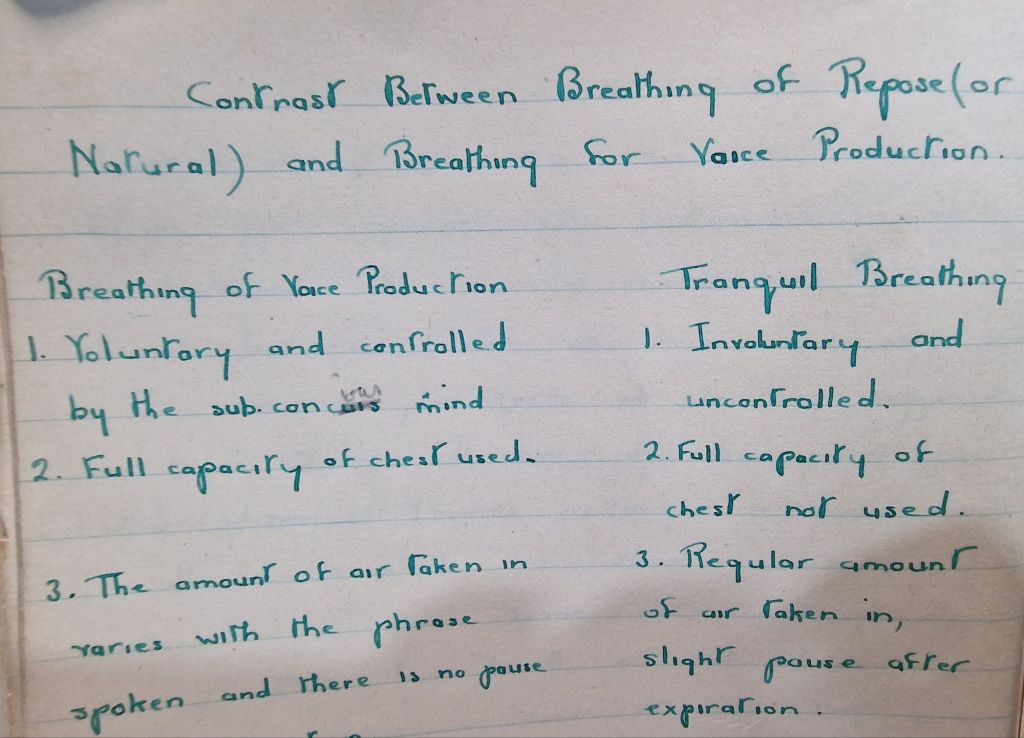
As my grandmother scribed in her notebook on elocution:

Articulation is the moulding of the breath into vowels and consonants and combining these into syllables and words. Vowels help with the music of speech. Consonants help to make speech distinct.

For good articulation there should be accuracy of contact, firmness of contact, crispness of contact and fluency of moving from one sound to the next – Excerpt from my grandmothers notebook.

I have taken these words and expanded upon them and infused with some modern thinking.

The Power of Articulation in Presentations

When presenting in any setting, every word matters. Articulation ensures your message is not only delivered but also understood. Clear enunciation makes complex ideas accessible, while a rhythmic flow keeps your audience engaged.

The phrase “Vowels help with the music of speech. Consonants help to make speech distinct.” stands out to me as one of the keyways to master communication for impactful presentations.

Vowels provide the melody (music,) making your speech pleasant to listen to. Consonants sharpen your delivery (distinct), lending authority and precision to your words.

Articulation: the way in which you pronounce words or produce sounds.

https://dictionary.cambridge.org/dictionary/english/articulation

Breathing Life into Storytelling

Storytelling lies at the very core (the heart) of effective communication. While facts and figures are useful for delivering information, they rarely move people to take action. It is through stories that we truly connect with our audience and encourage them to respond.

Combining articulated and graceful speech with compelling narratives can create a memorable experience for the audience. Making the story more personable and relateable helps the audience feel that the speaker is genuine and approachable, they are more likely to be receptive, engaged and emotionally invested in what is being presented.

Practical Tips for Storytelling

  • Practice Clarity: Slow down and focus on crisp pronunciation, especially when introducing key concepts or statistics.
  • Use Pauses Effectively: Allow your audience time to absorb information and use pauses to emphasise important points.
  • Vary Your Tone: Let your voice reflect the highs and lows of your story, bring data to life with inflection and enthusiasm.
  • Connect with Your Audience: Personalise your tales, making them relatable with anecdotes and natural language.
  • Refine Your Delivery: Record yourself and listen back, focusing on the accuracy, firmness and fluency of your speech.
  • Personable and Relatable: Let your personality shine through. Smile, use appropriate humour and maintain eye contact if in person or on camera. A conversational tone helps build trust and rapport.
  • Know Your Material: Be thoroughly familiar with your content so that you can adapt if questions arise or if your audience’s energy shifts.
  • Engage with Visuals: Support your narrative with relevant visuals or props to reinforce your message and keep your audience interested. Keep the visuals simple and not cluttered with words.
  • Encourage Interaction: Invite questions, feedback and participation to make your storytelling session more dynamic and memorable.

Leave a Lasting Impression

Embrace the music and precision of speech and let your stories stand the test of time. Carefully chosen words, delivered with rhythm and clarity have the power to captivate listeners and ensure your message resonates long after it is heard.

Further Reading

Lessons from my Grandmother’s Notebook: Rediscovering the Art of Speaking
Data Storytelling
Mastering Storytelling Through Dungeons & Dragons: A Guide for Technologists

Share this:

  • Share on Facebook (Opens in new window) Facebook
  • Share on LinkedIn (Opens in new window) LinkedIn
  • Email a link to a friend (Opens in new window) Email
  • Share on Pinterest (Opens in new window) Pinterest
  • Share on Reddit (Opens in new window) Reddit
  • Share on X (Opens in new window) X
  • Share on Tumblr (Opens in new window) Tumblr
  • Share on Pocket (Opens in new window) Pocket
  • Share on Telegram (Opens in new window) Telegram
  • Share on Threads (Opens in new window) Threads
  • Share on WhatsApp (Opens in new window) WhatsApp
  • Share on Mastodon (Opens in new window) Mastodon
  • Share on Bluesky (Opens in new window) Bluesky
  • Share on Nextdoor (Opens in new window) Nextdoor
Like Loading...

Lessons from my Grandmother’s Notebook: Rediscovering the Art of Speaking

04 Tuesday Nov 2025

Posted by Max Hemingway in 21st Century Human, Story Telling

≈ 12 Comments

Tags

21st Century Human, Story Telling

Recently I have inherited a worn, well-used notebook from my late grandmother. Reading through these notes has felt like rediscovering a part of my grandmother’s voice and my own. Like a conversation across generations and I can still hear her voice all these years later as I read the notebook.

My grandmother was an elocution teacher and she understood that the art of speaking blends clarity, confidence and grace. Her pages and lessons remind me that carefully spoken words still have the power to move hearts and minds.

Elocution means to speak audibly (so that the voice may be heard), distinctly (so that words can be recognised), naturally and with expression, according to the custom of educated people of the day.

Excerpt from my grandmothers notebook.

Her notes are more than remnants of her learning and own discovery in the art of elocution. They are timeless lessons for anyone seeking to speak well. Of course modern practices may have overtaken some of the notes, but the core still remains the same.

Why Elocution Still Matters

Today where communication is often reduced to quick texts, brief social media posts and video calls about another meeting agenda, the power of spoken words can be easily overlooked. The ability to speak with clarity and confidence is just as important today as when my grandmother penned the paged.

Effective speech can:

  • Transform a presentation into a memorable story that resonates with listeners.
  • Build trust and rapport during interviews and negotiations.
  • Elevate everyday conversations into meaningful and impactful exchanges.

My grandmother deeply understood this and that speaking well is not about sounding grand or overly formal, it is about being understood.

Wisdom from the Notebook

Drawing from her teachings I have rephrased and reflected on a few key insights

  • Respect Every Syllable: Do not rush your words. Allow each word to breathe and carry its full meaning.
  • The Power of Pause: Silence is not empty; it serves to emphasise what comes next.
  • Projection with Purpose: Speak so that even the farthest listener can hear you, without resorting to shouting. The focus is on intention and clarity, not just volume.
  • Clarity Over Complexity: Simple, well-enunciated words often leave the most lasting impression.
  • Emphasis for Impact: Highlight important words or phrases to draw your listener’s attention. Emphasis can transform a mundane statement into something memorable and powerful.
  • Articulation and Precision: Pronounce each sound clearly, shaping your words so that they are easily understood. Good articulation ensures your message is not lost or misinterpreted.
  • Inflection for Expression: Vary the pitch and tone of your voice to convey meaning, emotion and interest. Thoughtful inflection keeps your audience engaged and brings your words to life.

An Excerpt from the Notebook

Emphasis is the promonence given to the most important word or words in a sentence. The function of emphasis is to make the exact meaning clear.

The ways of giving emphosis:

By stress of extra force on the word e.g you must do that.

By pause. pause can be made before or after the word or phrase to be emphasised or both before and after. e.g. Morning will find me / gone. And what is mre you’ll be a man / my son.

By a change of pace. This refers to phrases.

By inflection. Often rising inflection is used to give emphasis, sometimes instead of stress and sometimes with stress.

By the use of gesture.

You only emphasise the important words. Over emphasis results in a jerky delivery and does not make the meaning clear.

Excerpt from my grandmothers notebook.

Practical Exercises to Try

Adapted from her notes, these exercises can help anyone improve their speech:

  • Breathing for Control: Before speaking, take a deep breath from your diaphragm. This steadies your voice and helps calm any nerves.
  • Tongue Twisters for Agility: Practise phrases such as: “Crisp clear consonants create confident communication.” Start slowly, then increase your speed, ensuring you do not lose clarity.
  • Mirror Practice: Speak in front of a mirror to observe your posture and facial expressions. Remember confidence is expressed visually as well as vocally.

Trying it Yourself

If you have ever struggled with public speaking or wish to refine your own voice, start with the basics. Respect the pause, breathe deeply and speak with intention. In doing so you may discover that the art of elocution is not lost – it is simply waiting to be heard once more.

Going forward as I read through I will post more from the insightful pages.

Share this:

  • Share on Facebook (Opens in new window) Facebook
  • Share on LinkedIn (Opens in new window) LinkedIn
  • Email a link to a friend (Opens in new window) Email
  • Share on Pinterest (Opens in new window) Pinterest
  • Share on Reddit (Opens in new window) Reddit
  • Share on X (Opens in new window) X
  • Share on Tumblr (Opens in new window) Tumblr
  • Share on Pocket (Opens in new window) Pocket
  • Share on Telegram (Opens in new window) Telegram
  • Share on Threads (Opens in new window) Threads
  • Share on WhatsApp (Opens in new window) WhatsApp
  • Share on Mastodon (Opens in new window) Mastodon
  • Share on Bluesky (Opens in new window) Bluesky
  • Share on Nextdoor (Opens in new window) Nextdoor
Like Loading...

The Technologist’s Odyssey: A Modern Epic Inspired by Homer

19 Monday May 2025

Posted by Max Hemingway in 21st Century Human, Mindset, Story Telling, Technologists Toolkit

≈ Leave a comment

Tags

AI, artificial-intelligence, creativity, Innovation, Mindset, philosophy, Story Telling, Technologists Toolkit, technology

One of the skills a technologist needs and draws on is the ability to tell stories to help reach the goals and outcomes of the task at hand. So as a bit of fun, here is a comparison of today’s technologist and Homer’s Odyssey, drawing parallels between ancient adventures and modern innovation.

The journey of a technologist is much like the grandeur of an epic odyssey – an endless pursuit fuelled by curiosity, innovation, ingenuity, and the drive to reshape the world.

One of the skills a technologist needs and draws on is the ability to tell stories to help reach the goals and outcomes of the task at hand. So as a bit of fun, here is a comparison of today’s technologist and Homer’s Odyssey, drawing parallels between ancient adventures and modern innovation.

In Homer’s timeless masterpiece “The Odyssey”, we are taken on a journey of perseverance, discovery, and triumph over adversity. The tale of Odysseus navigating treacherous seas and facing formidable challenges resonates deeply with the modern odyssey undertaken by technologists today. While the landscapes may differ—one physical, the other digital—the indomitable spirit of curiosity, resilience, and ingenuity binds these stories across centuries.

The modern odyssey is a voyage of a technologist (in this case) marked by relentless exploration, failures (including learnings) and triumphs and a desire to transcend the limitations of today to and the promises of the future carve out the possibilities of tomorrow.

To quote a phrase that is often attributed to Homer’s The Odyssey but isn’t in translated text – “The journey is the thing.” This phrase emphasises the process which you go through in reaching your destination or goal (exploration, learning, failure, strength and growth).

Not every journey has a map, but you can chart your journey for others to follow. Although not every journey will be the same a guide helps keep you on the path.

The Hero’s Call: Beginnings of the Journey

In “The Odyssey”, Odysseus’s journey begins with the call to return home after the Trojan War. His longing for Ithaca symbolises a burning desire for purpose and belonging. This echoes the genesis of a technologist’s journey beginning usually with an ask to meet a business outcome, with the voyage being accepted often sparked by curiosity and wonder.

Whether it’s creating an architecture and system, dismantling an existing one to uncover its secrets or writing their first lines of code, technologists, too, experience their own call to adventure. The purpose of the journey being set by the outcome / goal to be achieved.

Homer writes, “Tell me, O Muse, of that ingenious hero who travelled far and wide…” (*The Odyssey*, Book 1), capturing the essence of exploration and ingenuity. For technologists, this “travelling far and wide” takes the form of navigating uncharted territories of innovation, driven by the same thirst to discover and create.

Trials and Tribulations: Overcoming Challenges

The path of innovation is rarely straightforward, much like Odysseus’s voyage through turbulent seas. Technologists encounter numerous challenges—developing solutions to existing problems, debugging seemingly insurmountable errors, adapting to rapid technological changes, and resolving complex issues. The ambiguity often faced by technologists requires an understanding and adaptation to change, both personally and professionally. Developing the ability to navigate uncertainty and act without complete information is essential, while also forming new habits that facilitate acceptance and management of change.

Odysseus’s encounter with the Cyclops Polyphemus teaches a valuable lesson about resourcefulness. “My name is Nobody; my mother and father call me Nobody…” (*The Odyssey*, Book 9) exemplifies his cleverness in overcoming adversity. Similarly, technologists use their creativity and problem-solving skills to “outwit” the hurdles that block their path toward innovation.

Challenges foster growth, helping technologists build resilience and enhance their skills. Overcoming obstacles leads to new discoveries.

The Collaborative Spirit: Navigating Together

A significant similarity between *The Odyssey* and a technologist’s path is the role of collaboration. Odysseus’s crew supports him throughout his journey, highlighting teamwork in overcoming challenges. Homer writes, “So we sent out two picked men and a herald as third…” (*The Odyssey*, Book 9).

In the field of technology, collaboration is important. Teams of technologists exchange ideas, learn from each other, and leverage their combined strengths. This collective effort leads to significant innovations that expand the possibilities. This teamwork emphasises that no substantial progress is made independently (Pack Learning).

Moments of Revelation: The Spark of Innovation

Technologists have moments where ideas become reality, similar to Odysseus’s moments of clarity and accomplishment. These are the instances when a concept transforms into significant innovation. For example, Odysseus’s escape from the Sirens – “I stopped the ears of my men with wax…” (*The Odyssey*, Book 12) – illustrates human problem-solving and planning.

For technologists, these moments are comparable to developing a new solution, using emerging technologies, or creating the next innovative thing. Each milestone represents not only technical progress but also the results of creativity, collaboration, and effort.

Redefining Horizons: A Journey with Purpose

Ultimately, Odysseus’s journey is about finding Ithaca, which represents both home and the culmination of his experiences and perseverance. For technologists, their Ithaca is the continually changing field of technology, innovation and growth. The pursuit of innovation involves not just reaching the outcome / goal of the task, technical progress and growth in knowledge, but also purpose, collaboration, and human elements.

Homer’s words, “There is nothing worse for mortals than a wandering life…” (*The Odyssey*, Book 15), highlight the importance of having direction and meaning in our journeys. For technologists, their journey involves continuous learning, exploring new areas, and redefining possibilities. Set your goals and have a vision of where you want your journey to take you.

It is important to note though that the journey of learning and knowledge is one that is continual, with some rest stops along the way.

Further Reading

Mastering Performance Under Pressure: The Importance of Training
Embracing Humility: Staying Open to Feedback and Continuous Improvement in Tech
Turning Failures into Success: The Mindset of Failing Forward for Technologists
Using the best of the Q Continuum
Stay Ahead of the Curve: Essential Strategies for Technologists to Stay Informed
Mastering the CPD Cycle for Professional Growth

Share this:

  • Share on Facebook (Opens in new window) Facebook
  • Share on LinkedIn (Opens in new window) LinkedIn
  • Email a link to a friend (Opens in new window) Email
  • Share on Pinterest (Opens in new window) Pinterest
  • Share on Reddit (Opens in new window) Reddit
  • Share on X (Opens in new window) X
  • Share on Tumblr (Opens in new window) Tumblr
  • Share on Pocket (Opens in new window) Pocket
  • Share on Telegram (Opens in new window) Telegram
  • Share on Threads (Opens in new window) Threads
  • Share on WhatsApp (Opens in new window) WhatsApp
  • Share on Mastodon (Opens in new window) Mastodon
  • Share on Bluesky (Opens in new window) Bluesky
  • Share on Nextdoor (Opens in new window) Nextdoor
Like Loading...

Mastering Storytelling Through Dungeons & Dragons: A Guide for Technologists

21 Friday Jun 2024

Posted by Max Hemingway in 21st Century Human, Story Telling, Technologists Toolkit, Tools

≈ 1 Comment

Tags

21st Century Human, Story Telling, Technologists Toolkit, Tools

Let’s geek out for a moment. If you’re a technologist eager to master storytelling, Dungeons & Dragons (D&D) might just be your secret weapon. Whether you’re a seasoned player from your school days or someone who’s never rolled a twenty-sided die, there’s something in D&D for you. And if you’re new to the realm of tabletop RPGs, buckle up for an adventure that’s as educational as it is entertaining.

D&D is a fantasy table top role-playing game (RPG) where players embark on imaginary adventures within a fantasy setting. A player designated as the Dungeon Master (DM) serves as the game’s referee and storyteller, while also maintaining the setting in which the adventures occur, and playing the role of the inhabitants. Players each create characters to represent themselves within the game, making choices for their characters and engaging in a structured yet open-ended storytelling experience. The outcomes of the characters’ choices are determined by the rules of the game, how the DM tells the story and player choices guided by dice rolls which add an element of chance to the proceedings. It provides a unique blend of structured rules and spontaneous storytelling which allow for an immersive gaming experience that encourages creativity, collaboration, and problem-solving.

Storytelling is an essential skill in the world of business and technology. It’s not just about conveying information; it’s about engaging your audience, sharing experiences, and inspiring action.

For technologists, whose work often involves complex concepts, data and understanding the customers business needs and outcomes. The ability to tell a compelling story can be the difference between being heard and being overlooked.

Enter Dungeons & Dragons (D&D), the classic fantasy role-playing game known for its rich narratives and imaginative gameplay. You may be familiar with D&D and it may seem like a something that should be dismissed, however it is a powerful tool for honing the art of storytelling and building your skills.

If you get an opportunity to try, it is worth a go. If not there are lots of good videos on YouTube with games you can watch and learn from.

Also worth noting that this Saturday 22nd June is Free RPG Day where you can go to a gaming shop and try out some RPG and walk away with a short free game to play. Some will be available on the internet if your not able to attend an event.

Here’s how playing D&D can transform technologists into master storytellers.

Embrace Creativity and Improvisation

D&D is a game of imagination. Players create characters and embark on adventures in a fantasy world, guided by a Dungeon Master (DM) who narrates the story. This requires a high level of creativity and the ability to improvise, as the narrative can change with each roll of the dice.

Technologists can learn from this by practicing how to think on their feet and adapt their narratives to suit different audiences and situations. Whether you’re explaining a new software feature or pitching an innovative product, the ability to weave a story that resonates with your listeners is invaluable.

Understand Your Audience

A good DM knows their players and crafts a story that caters to their interests and motivations. Similarly, technologists must understand their audience to communicate effectively. By playing D&D, you learn to anticipate reactions, tailor your message, and engage listeners by addressing their needs and desires.

Understanding your audience is a critical skill for technologists including recognising the diverse needs, preferences, and challenges faced by business and the end users. A technologist needs to tailor the approach to the audience’s level of expertise, interests, and expectations using language that is accessible, providing examples that are relatable, and anticipating questions or concerns that may arise. Storytelling provides the way to do this and by putting yourself in the audience’s shoes, you can communicate more effectively, and ultimately, ensure that your story achieves the intended impact.

Develop Empathy

Role-playing in D&D requires players to step into the shoes of their characters, understanding their backgrounds, motivations, and emotions. This exercise in empathy is directly transferable to the world of technology. By understanding the user’s perspective, technologists can create more user-centric products and explain them in a way that highlights their benefits to the end-user.

For technologists, developing empathy is about more than just understanding users’ needs. Developing skills and ability to see beyond the data and algorithm, to the people they impact provides a deeper prospective and helps build a stronger story to tell. It is also important to listen actively, asking the right questions, and being open to feedback.

Collaborate and Build Teamwork

D&D is a collaborative game. Players work together, each contributing their unique skills to achieve a common goal. In the tech industry, collaboration is key. Working on projects, especially in agile environments, mirrors the teamwork in D&D. Learning to collaborate in the game can improve how you work with others professionally, leading to more cohesive and successful outcomes.

Collaboration and teamwork are not just beneficial to a technologist; they are essential. Building a culture of teamwork means fostering an environment where diverse ideas and skills converge to innovate and solve complex problems. A good technologist recognises that the sum of a team’s collective expertise is greater than its individual parts. Using a team to help develop the story and sound/test it on can help push the boundaries of what’s possible and drive technological advancement.

Playing Dungeons & Dragons is more than just entertainment; it’s a training ground for the mind. It teaches technologists to be creative, empathetic, and collaborative storytellers. Playing games like D&D (other RPG’s are available) can help sharpen your storytelling skills as well as having some fun.

Further Reading

Data Storytelling

Share this:

  • Share on Facebook (Opens in new window) Facebook
  • Share on LinkedIn (Opens in new window) LinkedIn
  • Email a link to a friend (Opens in new window) Email
  • Share on Pinterest (Opens in new window) Pinterest
  • Share on Reddit (Opens in new window) Reddit
  • Share on X (Opens in new window) X
  • Share on Tumblr (Opens in new window) Tumblr
  • Share on Pocket (Opens in new window) Pocket
  • Share on Telegram (Opens in new window) Telegram
  • Share on Threads (Opens in new window) Threads
  • Share on WhatsApp (Opens in new window) WhatsApp
  • Share on Mastodon (Opens in new window) Mastodon
  • Share on Bluesky (Opens in new window) Bluesky
  • Share on Nextdoor (Opens in new window) Nextdoor
Like Loading...
Newer posts →

Follow Me on LinkedIn

www.linkedin.com – Click to Follow 

RSS Feed

RSS Feed RSS - Posts

Other Publications I contribute to

https://sparrowhawkbushcraft.com/

Recent Posts

  • Graceful Speech & Timeless Tales: The Complete Series Index
  • Graceful Speech & Timeless Tales: Unlocking the Power of Tone
  • Why Boards Overlook Enterprise Architecture
  • Graceful Speech & Timeless Tales: The Elements of Elocution
  • 2026 PKMS Updates: Boost Productivity and Knowledge Retention

Categories

  • 21st Century Human
  • 3D Printing
  • AI
  • Applications
  • ArchiMate
  • Architecture
  • Arduino
  • Automation
  • BCS
  • Big Data
  • Certification
  • Climate Change
  • Cloud
  • Cobotics
  • Connected Home
  • Data
  • Data Fellowship
  • Data Science
  • Development
  • DevOps/OpsDev
  • Digital
  • DigitalFit
  • Drone
  • Enterprise Architecture
  • F-TAG
  • Governance
  • Health
  • Innovation
  • IoT
  • Machine Learning
  • Metaverse
  • Micro:Bit
  • Mindset
  • Mobiles
  • Networks
  • Open Source
  • Podcasts
  • Productivity
  • Programming
  • Quantum
  • Raspberry Pi
  • Robotics
  • Scouting
  • Scouts
  • Security
  • Smart Home
  • Social Media
  • Space
  • STEM
  • Story Telling
  • Technologists Toolkit
  • Tools
  • Uncategorized
  • Wearable Tech
  • Windows
  • xR

Archives

Reading Shelf

Archives

Recent Posts

  • Graceful Speech & Timeless Tales: The Complete Series Index
  • Graceful Speech & Timeless Tales: Unlocking the Power of Tone
  • Why Boards Overlook Enterprise Architecture
  • Graceful Speech & Timeless Tales: The Elements of Elocution
  • 2026 PKMS Updates: Boost Productivity and Knowledge Retention

Top Posts & Pages

  • Why Boards Overlook Enterprise Architecture
  • Data Fellowship - BCS Level 4 Diploma in Data Analysis Concepts
  • Graceful Speech & Timeless Tales: The Complete Series Index
  • Moving to a Smart Meter
  • 2026 PKMS Updates: Boost Productivity and Knowledge Retention
  • 2015 State of DevOps Report
  • Technology Couch Podcast - Episode 1
  • Data Storytelling
  • IT Professionals and Continuing Professional Development (CPD) Hours
  • Data Fellowship - Passed

Category Cloud

21st Century Human Architecture Automation Big Data Cloud Data Data Science Development DevOps/OpsDev Digital DigitalFit Enterprise Architecture Innovation IoT Machine Learning Mindset Open Source Podcasts Productivity Programming Raspberry Pi Robotics Security Social Media STEM Story Telling Technologists Toolkit Tools Uncategorized Wearable Tech

Tags

3D Printing 21st Century Human AI Applications ArchiMate Architecture artificial-intelligence Automation BCS Big Data Blockchain business Certification Cloud Cobot Cobotics Coding Communication Connected Home CPD creativity cybersecurity Data Data Fellowship Data Science Delivery Development DevOps Digital DigitalFit Digital Human Drone Email Enterprise Architecture GTD Infographic Information Theory Innovation IoT Journal Knowledge learning Machine Learning Metaverse MicroLearning Mindset Mixed Reality Networks Open Source OpsDev PKMS Podcasts Productivity Programming Proving It Quantum R RaspberryPI Robot Robotics Scouts Security Smart Home Social Media STEM Story Telling Technologists Toolkit technology Technology Couch Podcast Thinking Tools Visualisation Voice Wearable Tech xR

License

Creative Commons Licence
This work is licensed under a Creative Commons Attribution-NonCommercial-ShareAlike 4.0 International License.

Meta

  • Create account
  • Log in
  • Entries feed
  • Comments feed
  • WordPress.com

Blog at WordPress.com.

  • Subscribe Subscribed
    • Max Hemingway
    • Join 82 other subscribers
    • Already have a WordPress.com account? Log in now.
    • Max Hemingway
    • Subscribe Subscribed
    • Sign up
    • Log in
    • Report this content
    • View site in Reader
    • Manage subscriptions
    • Collapse this bar
 

Loading Comments...
 

    %d