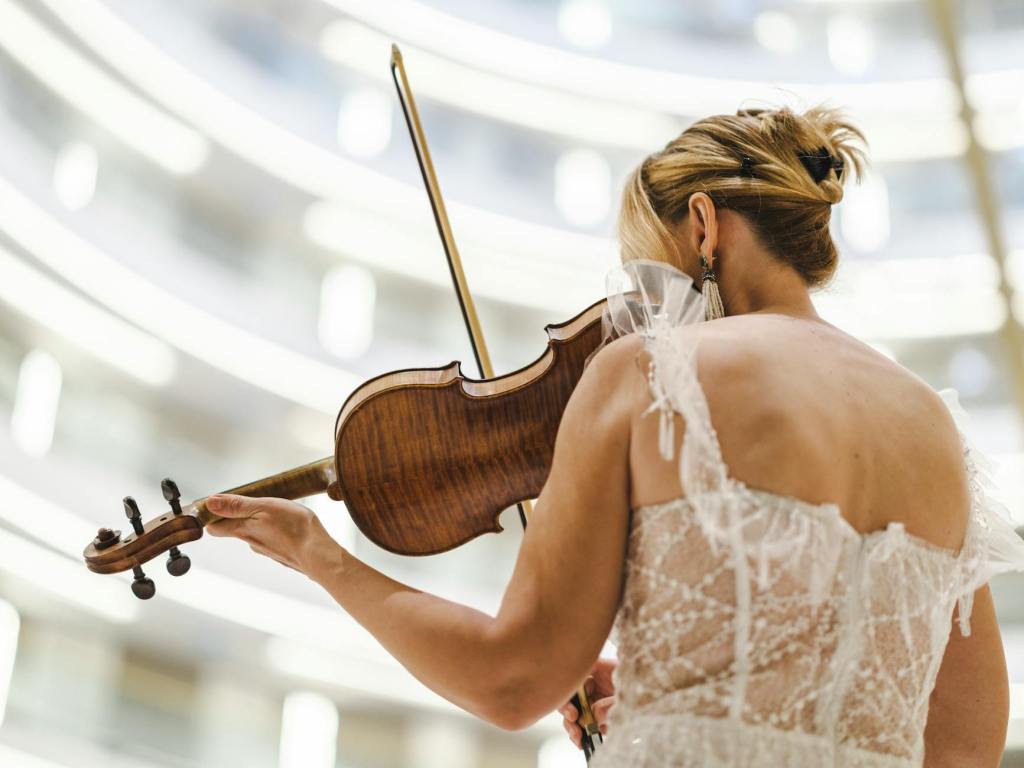
The way we use our voice can make all the difference. One of the most subtle yet powerful tools in a speaker’s arsenal is pitch. The very note on which our words begin and the emotional current that runs through our spoken stories.
The Essence of Pitch
Pitch simply refers to how high or low our voice sounds as we speak. Just as a musical instrument offers a wide range of notes, our voices too have a spectrum of pitches.
We normally group pitch into three main categories: high, middle (or normal) and low.
- High pitch is often reserved for moments of joy, excitement or surprise. Think of the thrill in your voice when recounting a plot twist of a book or movie or announcing good news.
- Middle pitch is the mainstay for most descriptions and narratives. It is the comfortable, conversational tone that carries your story along.
- Low pitch is best suited for conveying sorrow, solemnity or gravity. When sharing a poignant moment or delivering a serious message, a deeper tone draws listeners in and signals importance.
Adapting Pitch for Maximum Impact
Masterful presenters and storytellers instinctively adjust their pitch to reflect changes in subject, introduce new paragraphs or mark the entrance of different characters in a narrative. Even passages enclosed in parentheses often benefit from a subtle shift in pitch, helping listeners follow the thread of the story or presentation.
The Science Behind the Sound
So, what actually causes these changes in pitch? It all comes down to the vocal cords. When we speak in a higher pitch, our vocal cords tighten and only a small part of their inner edges vibrate rapidly.
With a lower pitch, the cords are looser and vibrate more fully across their length, breadth and thickness. The faster the vibration, the higher the pitch.
Pitch Versus Inflection: Knowing the Difference
It’s easy to confuse pitch with inflection, but they serve different purposes. Pitch is about the overall note on which a sentence or paragraph is set, determining the general ‘mood music’ of our delivery. Inflection meanwhile, is the subtle rise and fall on individual words or syllables, giving nuance and meaning to our message.
- Pitch shapes the expression of entire sentences or sections, guiding the emotional journey of your audience.
- Inflection dances within the pitch, clarifying meaning and intent word by word.
Bringing Stories to Life
Next time you share a story from your own life or step up to present,
Remember: the art of pitch isn’t just for singers, it is a vital skill you should use when next presenting or telling a story. Harness the heights, depths and comfortable middles of your voice and watch your words come alive.
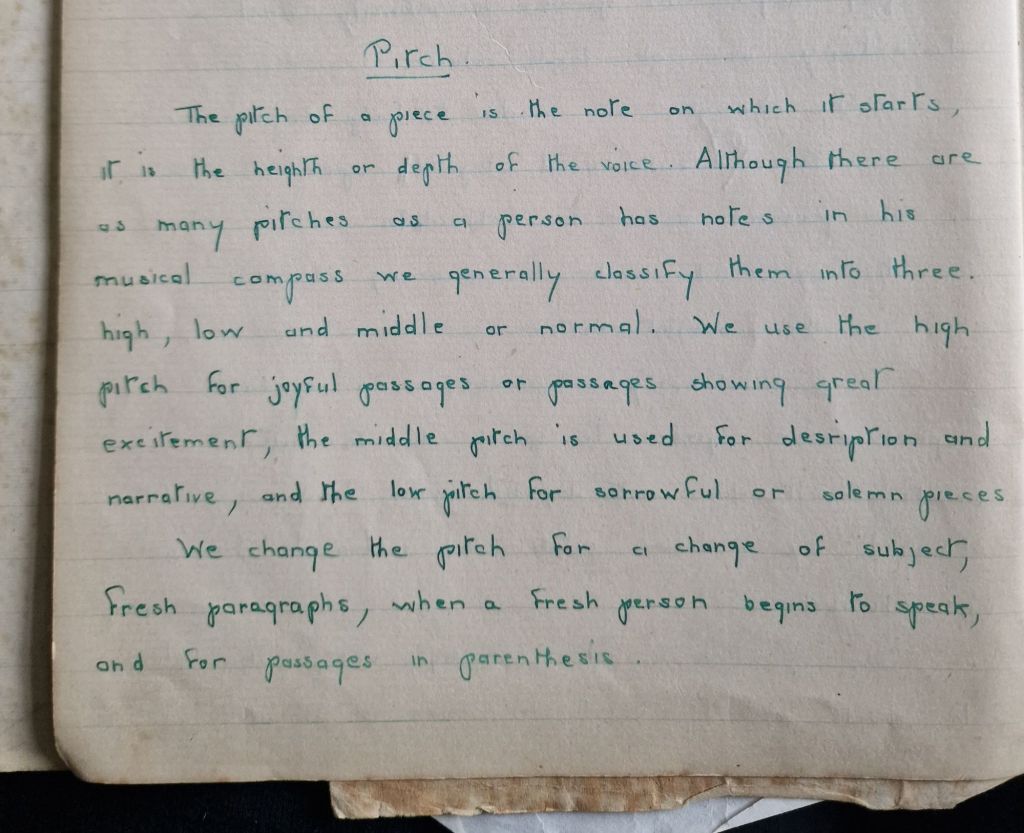
The pitch is a piece is the note on which it starts, it is the height or depth of the voice. Although there are as many pitches as a person has notes in their musical compass we generally classify them into three. High, low and middle or normal. We use the high pitch for joyful passages or passages showing great excitement, the middle pitch is used for description and narrative and the low pitch for sorrowful or solemn pieces.
We change the pitch for a change of subject, fresh paragraphs, when a fresh person begins to speak and for passages in parenthesis.
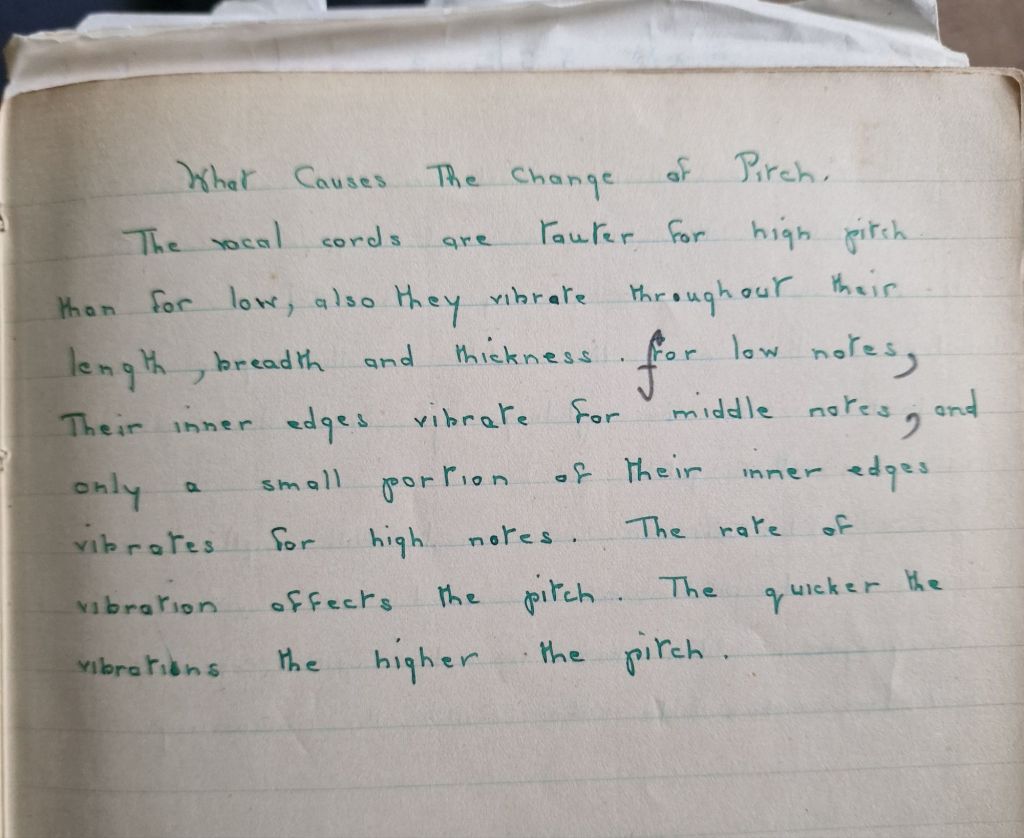
What causes the change in pitch
The vocal cords are tauter for high pitch than for low, also they vibrate throughout their length, breadth and thickness for the low notes. Their inner edges vibrate for the middle notes and only a small portion of their inner edges vibrate for the high notes. The rate of vibration affects the pitch. The quicker the vibrations the higher the pitch.
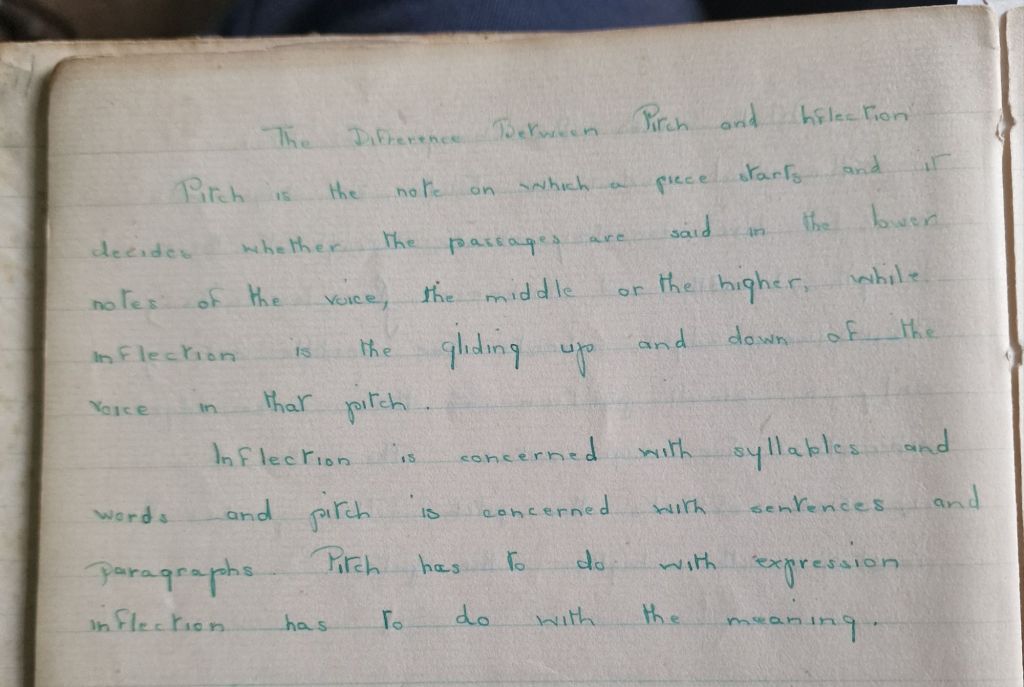
The Difference Between Pitch and inflection
Pitch is the note on which a piece starts and it decides whether the passages are said in the lower notes of the voice, the middle or the higher, while inflection is the gliding up and down of the voice in that pitch.
Inflection is concerned with syllables and words and pitch is concerned with sentences and paragraphs. Pitch has to do with expression. Inflection has to do with the meaning.
Excerpt from my grandmothers notebook.
Inspired by wisdom from my grandmother’s notebook, these insights remind us that the heart of storytelling and presenting lies not only in the words we choose, but in the way we bring them to life through the music of our voices.
Further Reading
https://maxhemingway.com/2025/11/26/graceful-speech-timeless-tales-harnessing-inflection/




 Max Hemingway
Leave a comment