Graceful Speech & Timeless Tales: The Art of Articulation
Effective communication hinges on clarity and conviction, merging the art of articulation with impactful storytelling. Articulation shapes speech through proper pronunciation of vowels and consonants, enhancing engagement. Mastering this allows speakers to deliver memorable narratives, using practical tips like pacing, tone variation, and personal connections to leave a lasting impression.
Delivering your message with clarity and conviction is not just a skill to be mastered, but rather an art to be cultivated. Whether you’re pitching an idea, leading a team meeting or captivating an audience at a conference, your ability to articulate your thoughts can be the difference between being heard and being remembered.
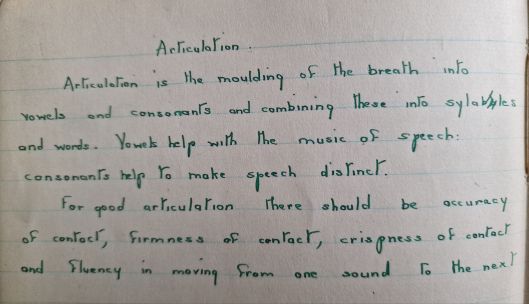
As my grandmother scribed in her notebook on elocution:
Articulation is the moulding of the breath into vowels and consonants and combining these into syllables and words. Vowels help with the music of speech. Consonants help to make speech distinct.
For good articulation there should be accuracy of contact, firmness of contact, crispness of contact and fluency of moving from one sound to the next – Excerpt from my grandmothers notebook.
I have taken these words and expanded upon them and infused with some modern thinking.
The Power of Articulation in Presentations
When presenting in any setting, every word matters. Articulation ensures your message is not only delivered but also understood. Clear enunciation makes complex ideas accessible, while a rhythmic flow keeps your audience engaged.
The phrase “Vowels help with the music of speech. Consonants help to make speech distinct.” stands out to me as one of the keyways to master communication for impactful presentations.
Vowels provide the melody (music,) making your speech pleasant to listen to. Consonants sharpen your delivery (distinct), lending authority and precision to your words.
Articulation: the way in which you pronounce words or produce sounds.
Storytelling lies at the very core (the heart) of effective communication. While facts and figures are useful for delivering information, they rarely move people to take action. It is through stories that we truly connect with our audience and encourage them to respond.
Combining articulated and graceful speech with compelling narratives can create a memorable experience for the audience. Making the story more personable and relateable helps the audience feel that the speaker is genuine and approachable, they are more likely to be receptive, engaged and emotionally invested in what is being presented.
Practical Tips for Storytelling
Practice Clarity: Slow down and focus on crisp pronunciation, especially when introducing key concepts or statistics.
Use Pauses Effectively: Allow your audience time to absorb information and use pauses to emphasise important points.
Vary Your Tone: Let your voice reflect the highs and lows of your story, bring data to life with inflection and enthusiasm.
Connect with Your Audience: Personalise your tales, making them relatable with anecdotes and natural language.
Refine Your Delivery: Record yourself and listen back, focusing on the accuracy, firmness and fluency of your speech.
Personable and Relatable: Let your personality shine through. Smile, use appropriate humour and maintain eye contact if in person or on camera. A conversational tone helps build trust and rapport.
Know Your Material: Be thoroughly familiar with your content so that you can adapt if questions arise or if your audience’s energy shifts.
Engage with Visuals: Support your narrative with relevant visuals or props to reinforce your message and keep your audience interested. Keep the visuals simple and not cluttered with words.
Encourage Interaction: Invite questions, feedback and participation to make your storytelling session more dynamic and memorable.
Leave a Lasting Impression
Embrace the music and precision of speech and let your stories stand the test of time. Carefully chosen words, delivered with rhythm and clarity have the power to captivate listeners and ensure your message resonates long after it is heard.





 Max Hemingway
Leave a comment